Saponara Maristella, Urbini Milena, Astolfi Annalisa, Indio Valentina, Ercolani Giorgio, Del Gaudio Massimo, Santini Donatella, Pirini Maria Giulia, Fiorentino Michelangelo, Nannini Margherita, Lolli Cristian, Mandrioli Anna, Gatto Lidia, Brandi Giovanni, Biasco Guido, Pinna Antonio Daniele, Pantaleo Maria Abbondanza
Department of Specialized, Experimental, and Diagnostic Medicine, Sant'Orsola-Malpighi Hospital, University of Bologna, Bologna, Italy.
Interdepartmental Centre of Cancer Research "G. Prodi", University of Bologna, Bologna, Italy.
Oncotarget. 2015 Dec 8;6(39):42243-57. doi: 10.18632/oncotarget.6278.
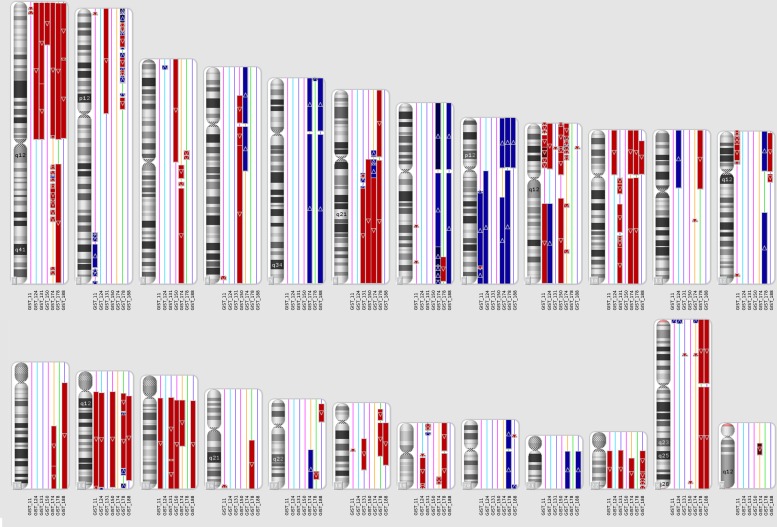
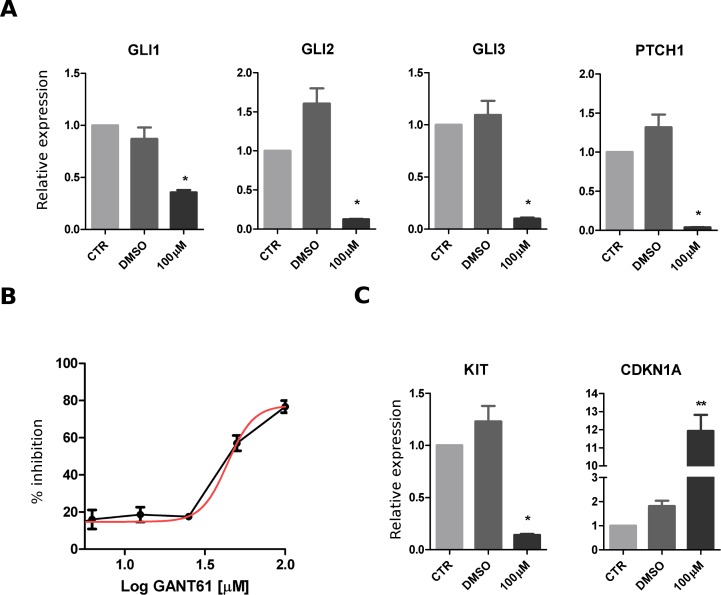
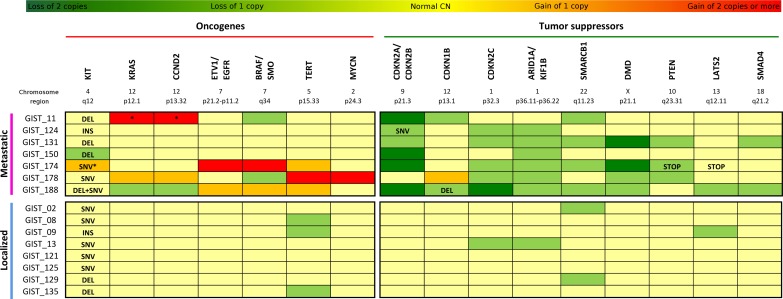
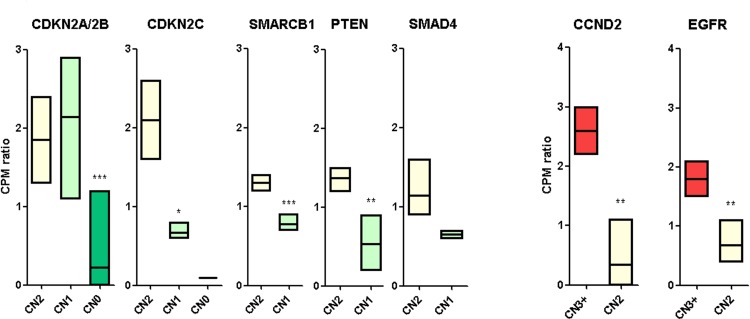
About 85% of GISTs are associated with KIT and PDGFRα gene mutations, which predict response to tyrosine kinase inhibitors. Although the outcomes in patients affected by GIST have dramatically improved, tumor progression control still remains a challenge. The aim of this study is the genomic characterization of individual metastatic KIT-exon 11-mutant GIST to identify additional aberrations and simultaneous molecular events representing potential therapeutic targets.Seven patients with metastatic GIST were studied with whole transcriptome sequencing and copy number analysis. Somatic single nucleotide variations were called; however, no shared mutated genes were detected except KIT. Almost all patients showed loss of genomic regions containing tumor suppressor genes, sometimes coupled with single nucleotide mutation of the other allele. Additionally, six fusion transcripts were found and three patients showed amplifications involving known oncogenes.Evaluating the concordance between CN status and mRNA expression levels, we detected overexpression of CCND2 and EGFR and silencing of CDKN2A, CDKN2C, SMARCB1, PTEN and DMD. Altered expression of these genes could be responsible for aberrant activation of signaling pathways that support tumor growth. In this work, we assessed the effect of Hedgehog pathway inhibition in GIST882 cells, which causes decrement of cell viability associated with reduction of KIT expression.Additional genomic alterations not previously reported in GIST were found even if not shared by all samples. This contributes to a more detailed molecular understanding of this disease, useful for identification of new targets and novel therapeutics and representing a possible point of departure for a truly individualized clinical approach.
约85%的胃肠道间质瘤(GIST)与KIT和血小板衍生生长因子受体α(PDGFRα)基因突变相关,这些突变可预测对酪氨酸激酶抑制剂的反应。尽管GIST患者的治疗效果已显著改善,但肿瘤进展的控制仍然是一项挑战。本研究的目的是对单个转移性KIT外显子11突变型GIST进行基因组特征分析,以识别其他异常和同时发生的分子事件,这些事件可能代表潜在的治疗靶点。对7例转移性GIST患者进行了全转录组测序和拷贝数分析。检测到体细胞单核苷酸变异;然而,除了KIT外,未检测到共享的突变基因。几乎所有患者都显示出包含肿瘤抑制基因的基因组区域缺失,有时还伴有另一个等位基因的单核苷酸突变。此外,发现了6种融合转录本,3例患者显示涉及已知癌基因的扩增。评估拷贝数状态与mRNA表达水平之间的一致性,我们检测到细胞周期蛋白D2(CCND2)和表皮生长因子受体(EGFR)的过表达以及细胞周期蛋白依赖性激酶抑制剂2A(CDKN2A)、细胞周期蛋白依赖性激酶抑制剂2C(CDKN2C)、SWI/SNF相关、基质相关、肌动蛋白依赖的染色质调节因子1(SMARCB1)、磷酸酶和张力蛋白同源物(PTEN)以及肌营养不良蛋白(DMD)的沉默。这些基因的表达改变可能导致支持肿瘤生长的信号通路异常激活。在这项研究中,我们评估了刺猬信号通路抑制对GIST882细胞的影响,结果显示细胞活力下降与KIT表达降低有关。即使并非所有样本都有,但仍发现了先前未在GIST中报道的其他基因组改变。这有助于更详细地从分子层面理解这种疾病,有助于识别新的靶点和新型治疗方法,并可能为真正的个体化临床治疗方法提供一个出发点。