Chauton Matilde Skogen, Galloway Trina Falck, Kjørsvik Elin, Størseth Trond Røvik, Puvanendran Velmurugu, van der Meeren Terje, Karlsen Ørjan, Rønnestad Ivar, Hamre Kristin
Department of Marine Resources Technology, SINTEF Fiskeri og Havbruk, Trondheim N-7465, Norway
Department of Marine Resources Technology, SINTEF Fiskeri og Havbruk, Trondheim N-7465, Norway.
Biol Open. 2015 Nov 6;4(12):1671-8. doi: 10.1242/bio.014431.
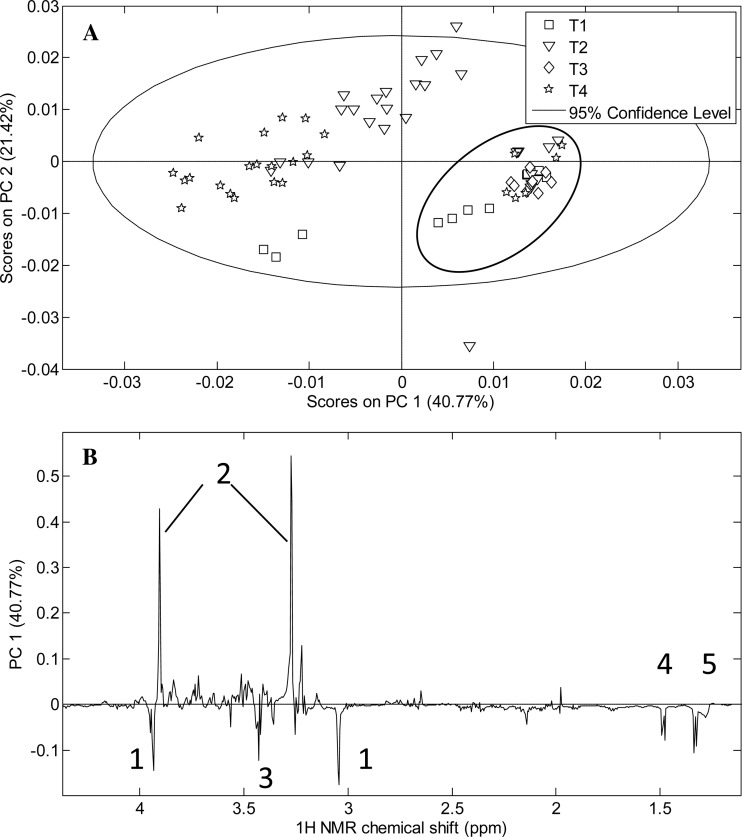
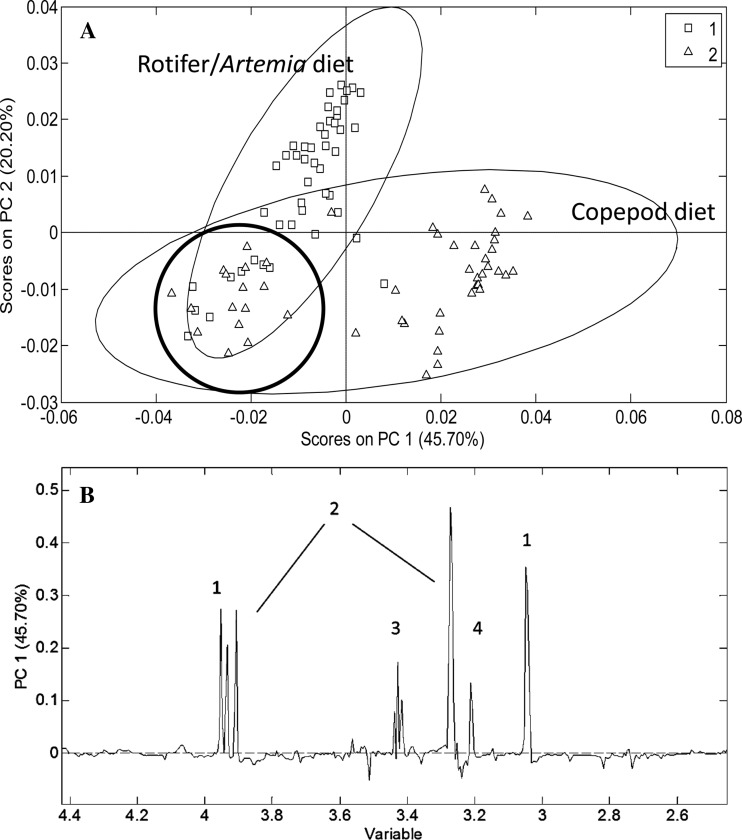
Marine aquaculture offers a great source of protein for the increasing human population, and farming of, for example, Atlantic salmon is a global industry. Atlantic cod farming however, is an example of a promising industry where the potential is not yet realized. Research has revealed that a major bottleneck to successful farming of cod is poor quality of the larvae and juveniles. A large research program was designed to increase our understanding of how environmental factors such as temperature and nutrition affects cod larvae development. Data on larvae growth and development were used together with nuclear magnetic resonance. The NMR data indicated that the temperature influenced the metabolome of the larvae; differences were related to osmolytes such as betaine/TMAO, the amino acid taurine, and creatine and lactate which reflect muscle activity. The larvae were fed Artemia from stage 2, and this was probably reflected in a high taurine content of older larvae. Larvae fed with copepods in the nutrition experiment also displayed a high taurine content, together with higher creatine and betaine/TMAO content. Data on the cod larvae metabolome should be coupled to data on gene expression, in order to identify events which are regulated on the genetic level versus regulation resulting from temperature or nutrition during development, to fully understand how the environment affects larval development.
海水养殖为不断增长的人口提供了丰富的蛋白质来源,例如养殖大西洋鲑鱼就是一个全球性产业。然而,大西洋鳕鱼养殖是一个有潜力但尚未充分实现的产业范例。研究表明,鳕鱼成功养殖的一个主要瓶颈是幼鱼的质量较差。一项大型研究计划旨在增进我们对温度和营养等环境因素如何影响鳕鱼幼鱼发育的理解。幼鱼生长和发育的数据与核磁共振数据一同使用。核磁共振数据表明,温度影响幼鱼的代谢组;差异与渗透溶质有关,如甜菜碱/三甲胺氧化物、氨基酸牛磺酸、肌酸和反映肌肉活动的乳酸。幼鱼从第2阶段开始投喂卤虫,这可能反映在大龄幼鱼中牛磺酸含量较高。在营养实验中投喂桡足类的幼鱼也显示出较高的牛磺酸含量,以及较高的肌酸和甜菜碱/三甲胺氧化物含量。鳕鱼幼鱼代谢组的数据应与基因表达数据相结合,以识别在发育过程中受遗传水平调控的事件与由温度或营养导致的调控,从而全面了解环境如何影响幼鱼发育。