Alves Joao M, Lima Ana C, Pais Isa A, Amir Nadir, Celestino Ricardo, Piras Giovanna, Monne Maria, Comas David, Heutink Peter, Chikhi Lounès, Amorim António, Lopes Alexandra M
Doctoral Program in Areas of Basic and Applied Biology (GABBA), University of Porto, Portugal Instituto de Investigação e Inovação em Saúde, Universidade do Porto, Portugal Instituto de Patologia e Imunologia Molecular da Universidade do Porto-IPATIMUP, Portugal Instituto Gulbenkian de Ciência (IGC), Oeiras, Portugal Present address: Department of Biochemistry, Genetics and Immunology and Institute of Biomedical Research of Vigo (IBIV), University of Vigo, Vigo, Spain
Doctoral Program in Areas of Basic and Applied Biology (GABBA), University of Porto, Portugal Instituto de Investigação e Inovação em Saúde, Universidade do Porto, Portugal Instituto de Patologia e Imunologia Molecular da Universidade do Porto-IPATIMUP, Portugal Department of Genetics, Washington University School of Medicine, St. Louis.
Genome Biol Evol. 2015 Nov 11;7(12):3239-48. doi: 10.1093/gbe/evv214.
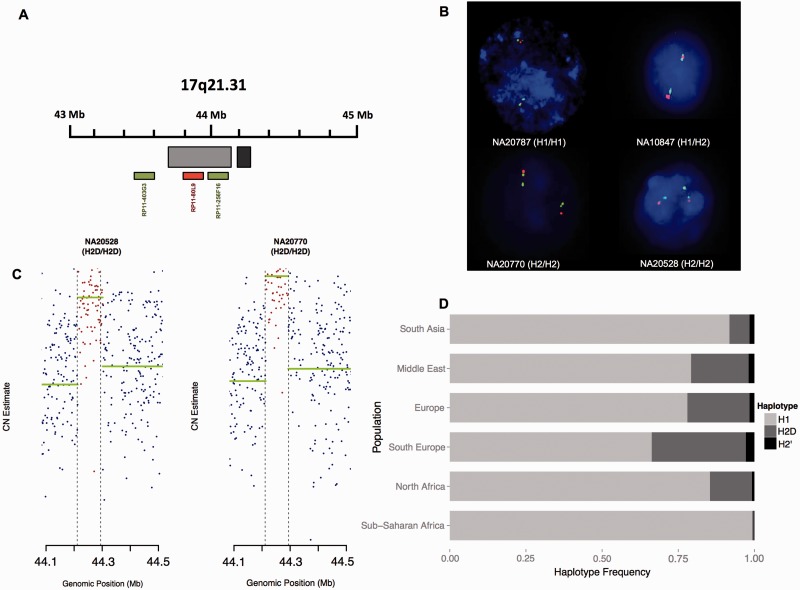
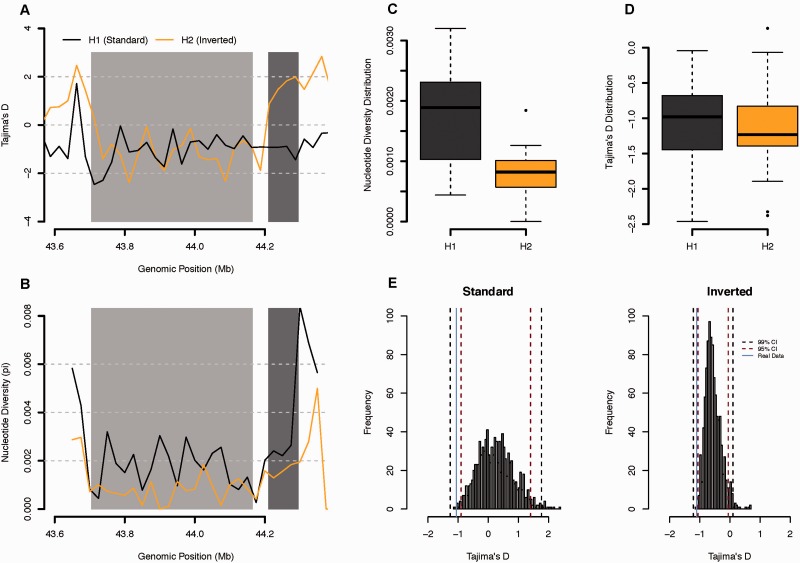
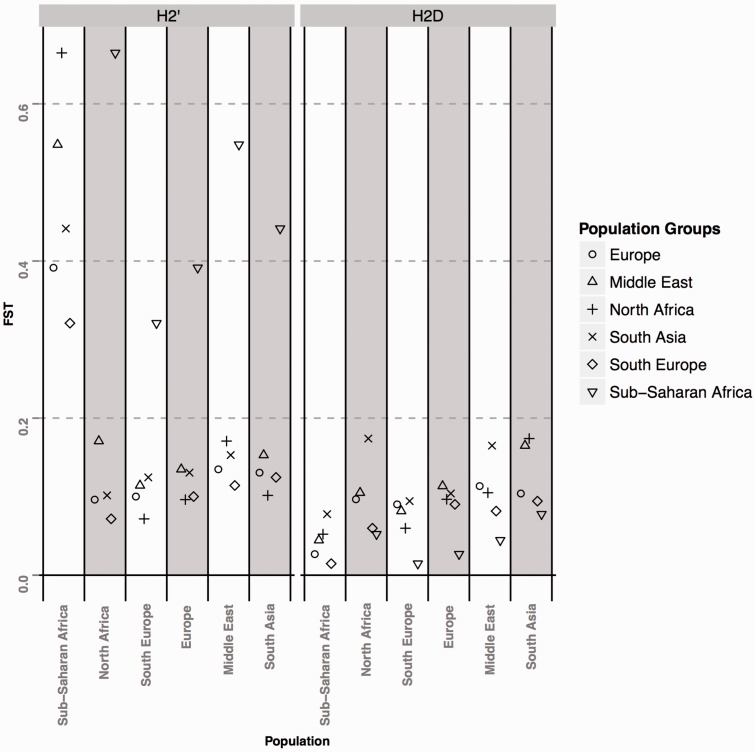
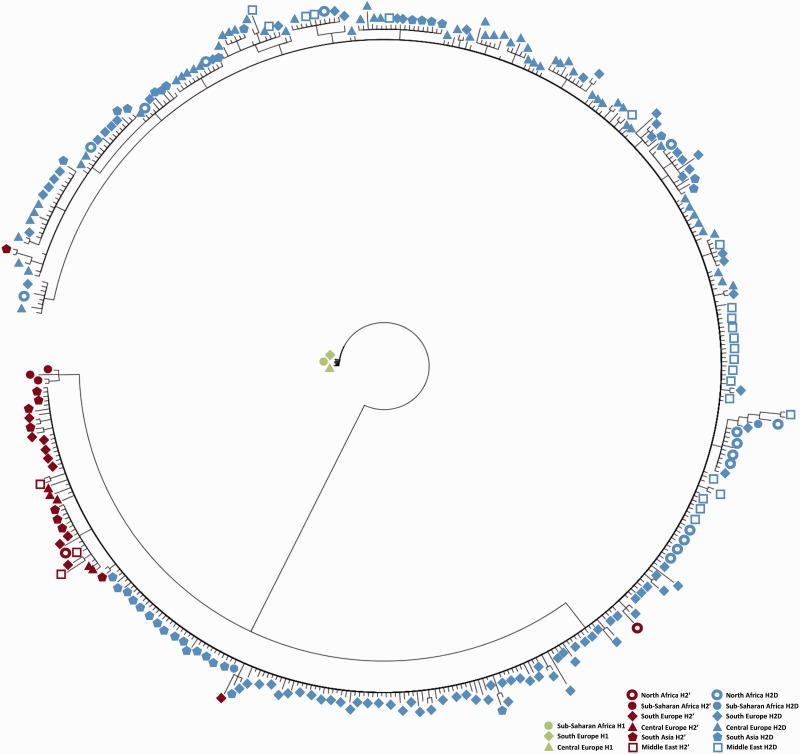
A polymorphic inversion that lies on chromosome 17q21 comprises two major haplotype families (H1 and H2) that not only differ in orientation but also in copy-number. Although the processes driving the spread of the inversion-associated lineage (H2) in humans remain unclear, a selective advantage has been proposed for one of its subtypes. Here, we genotyped a large panel of individuals from previously overlooked populations using a custom array with a unique panel of H2-specific single nucleotide polymorphisms and found a patchy distribution of H2 haplotypes in Africa, with North Africans displaying a higher frequency of inverted subtypes, when compared with Sub-Saharan groups. Interestingly, North African H2s were found to be closer to "non-African" chromosomes further supporting that these populations may have diverged more recently from groups outside Africa. Our results uncovered higher diversity within the H2 family than previously described, weakening the hypothesis of a strong selective sweep on all inverted chromosomes and suggesting a rather complex evolutionary history at this locus.
位于17号染色体q21位置的一个多态性倒位包含两个主要的单倍型家族(H1和H2),它们不仅在方向上不同,在拷贝数上也存在差异。尽管驱动倒位相关谱系(H2)在人类中传播的过程仍不清楚,但已有人提出其一种亚型具有选择优势。在此,我们使用包含独特的H2特异性单核苷酸多态性的定制芯片,对来自先前被忽视人群的大量个体进行了基因分型,发现H2单倍型在非洲呈斑驳分布,与撒哈拉以南群体相比,北非人显示出更高频率的倒位亚型。有趣的是,发现北非的H2与“非非洲”染色体更为接近,这进一步支持了这些人群可能最近才与非洲以外的群体分化的观点。我们的结果揭示了H2家族内部的多样性比先前描述的更高,削弱了对所有倒位染色体进行强烈选择清除的假设,并表明该位点具有相当复杂的进化历史。