Qi Lin, Sun Xue, Li Feng-E, Zhu Bao-Song, Braun Frank K, Liu Zhi-Qiang, Tang Jin-Le, Wu Chao, Xu Fei, Wang Hui-Han, Velasquez Luis A, Zhao Kui, Lei Feng-Rui, Zhang Ji-Gang, Shen Yun-Tian, Zou Jian-Xuan, Meng Hui-Min, An Gang-Li, Yang Lin, Zhang Xing-Ding
Hematology Center, Cyrus Tang Medical Institute, Soochow University, Suzhou, Jiangsu, China.
Laboratory of Molecular Neuro-Oncology, Texas Children's Hospital, Baylor College of Medicine, Houston, TX, United States of America.
PLoS One. 2015 Nov 13;10(11):e0142901. doi: 10.1371/journal.pone.0142901. eCollection 2015.
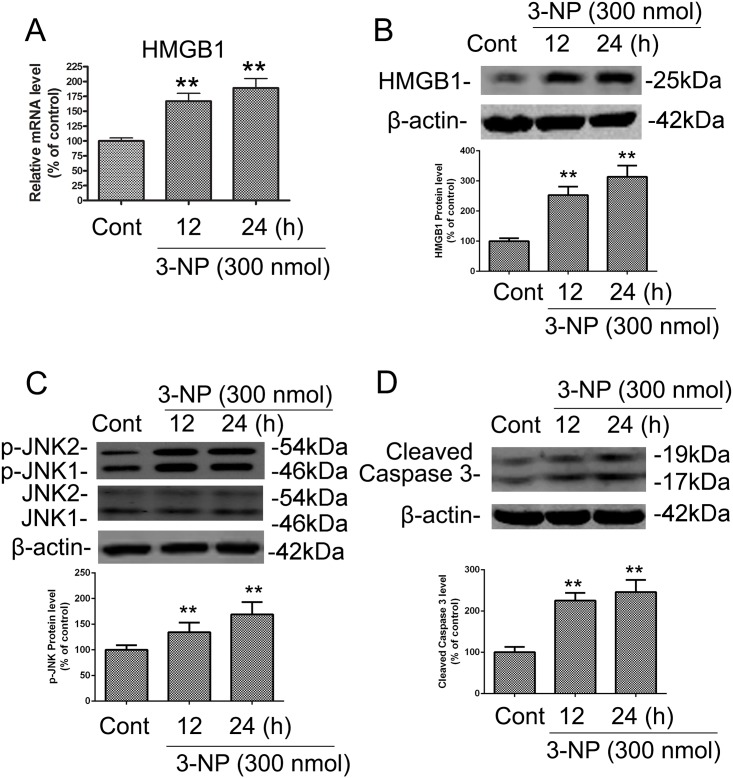
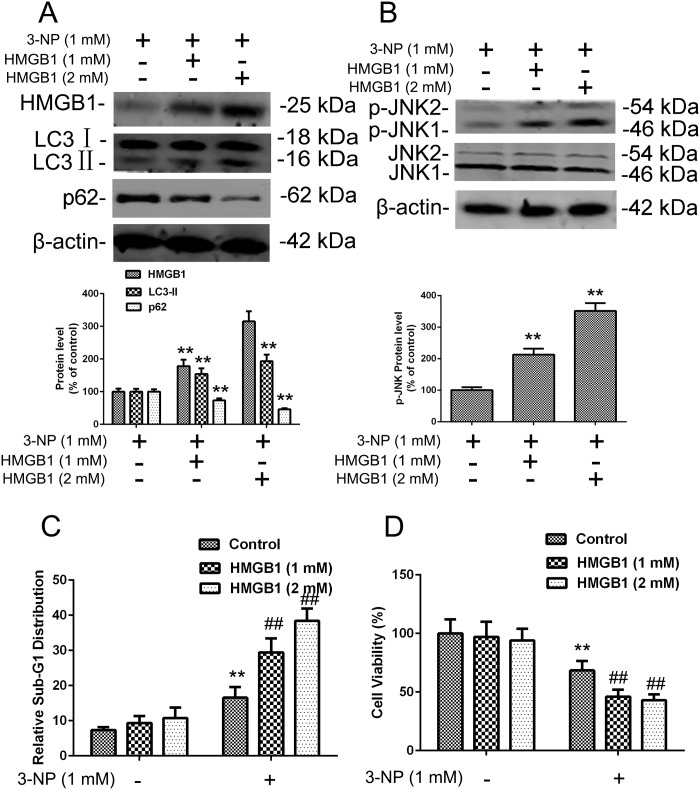
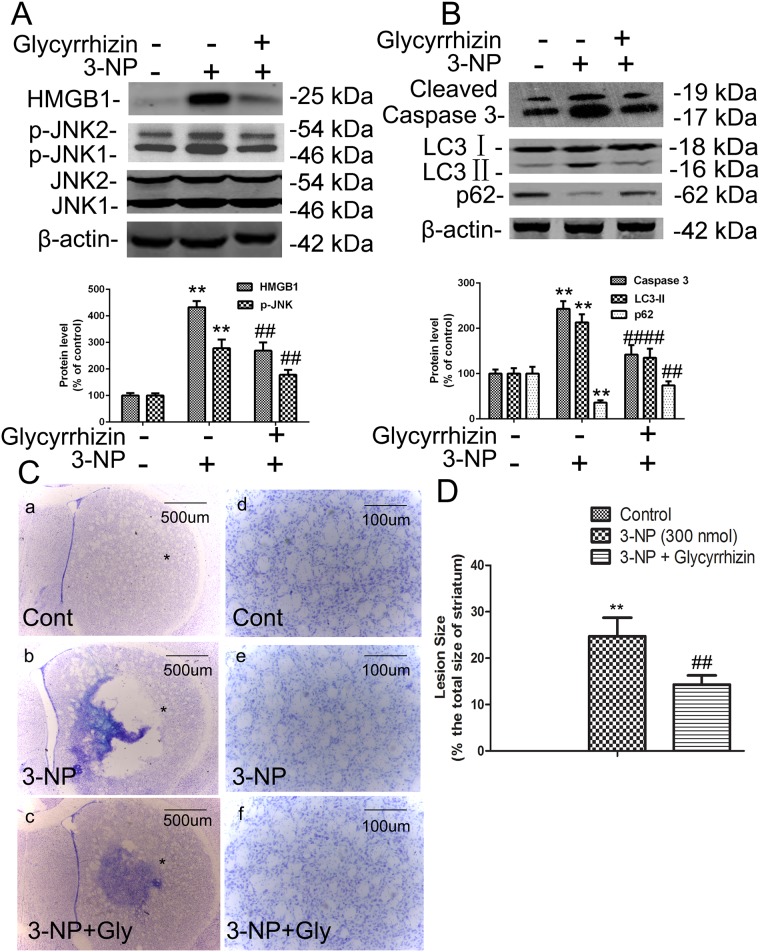
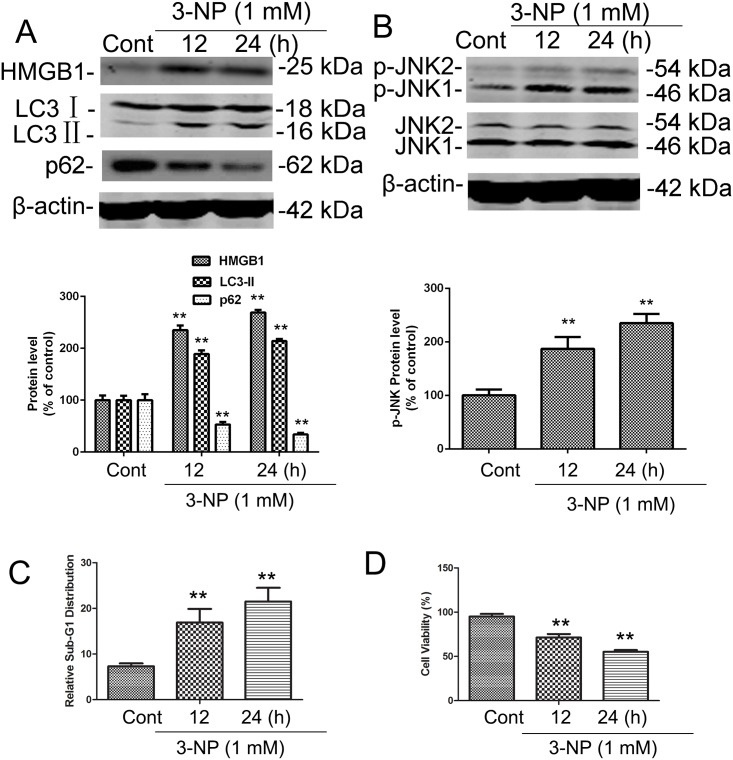
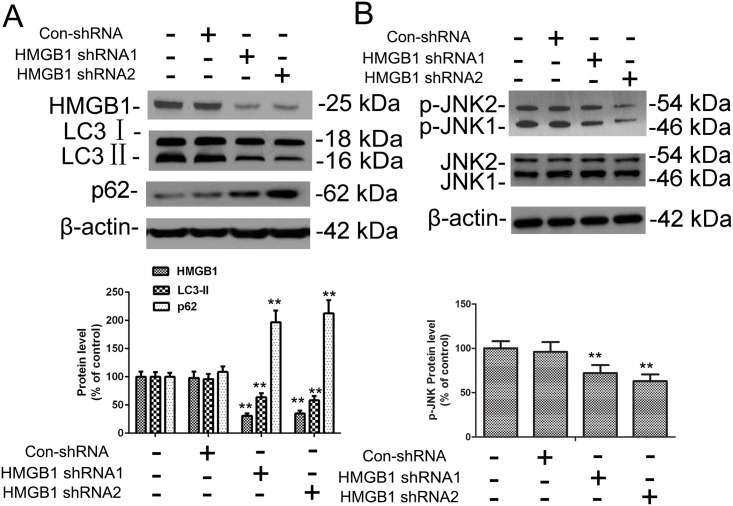
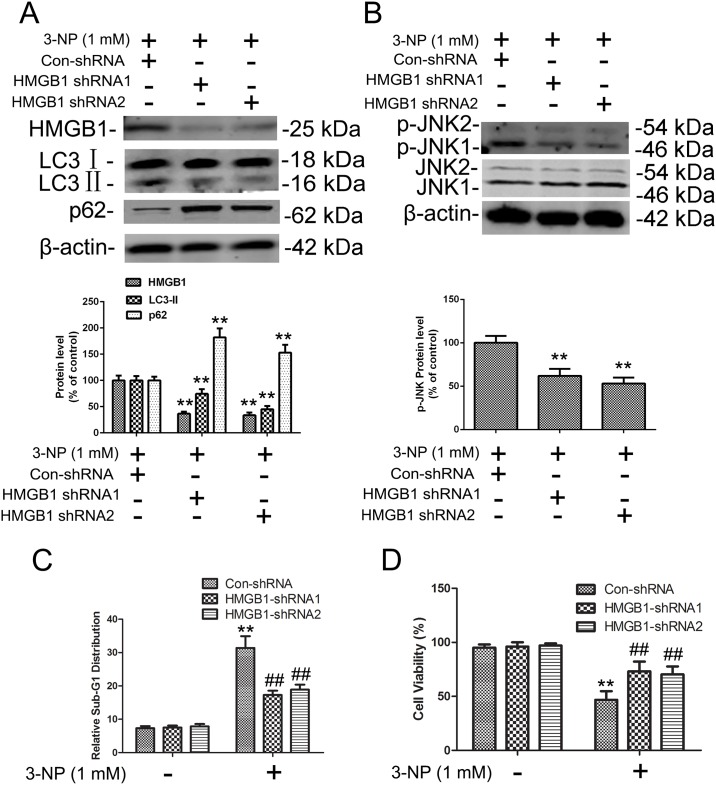
Impairments in mitochondrial energy metabolism are thought to be involved in many neurodegenerative diseases. The mitochondrial inhibitor 3-nitropropionic acid (3-NP) induces striatal pathology mimicking neurodegeneration in vivo. Previous studies showed that 3-NP also triggered autophagy activation and apoptosis. In this study, we focused on the high-mobility group box 1 (HMGB1) protein, which is important in oxidative stress signaling as well as in autophagy and apoptosis, to explore whether the mechanisms of autophagy and apoptosis in neurodegenerative diseases are associated with metabolic impairment. To elucidate the role of HMGB1 in striatal degeneration, we investigated the impact of HMGB1 on autophagy activation and cell death induced by 3-NP. We intoxicated rat striata with 3-NP by stereotaxic injection and analyzed changes in expression HMGB1, proapoptotic proteins caspase-3 and phospho-c-Jun amino-terminal kinases (p-JNK). 3-NP-induced elevations in p-JNK, cleaved caspase-3, and autophagic marker LC3-II as well as reduction in SQSTM1 (p62), were significantly reduced by the HMGB1 inhibitor glycyrrhizin. Glycyrrhizin also significantly inhibited 3-NP-induced striatal damage. Neuronal death was replicated by exposing primary striatal neurons in culture to 3-NP. It was clear that HMGB1 was important for basal autophagy which was shown by rescue of cells through HMGB1 targeting shRNA approach.3-NP also induced the expression of HMGB1, p-JNK, and LC3-II in striatal neurons, and p-JNK expression was significantly reduced by shRNA knockdown of HMGB1, an effect that was reversed by exogenously increased expression of HMGB1. These results suggest that HMGB1 plays important roles in signaling for both autophagy and apoptosis in neurodegeneration induced by mitochondrial dysfunction.
线粒体能量代谢受损被认为与许多神经退行性疾病有关。线粒体抑制剂3-硝基丙酸(3-NP)在体内诱导出类似神经退行性变的纹状体病变。先前的研究表明,3-NP还会引发自噬激活和细胞凋亡。在本研究中,我们聚焦于高迁移率族蛋白B1(HMGB1),其在氧化应激信号传导以及自噬和细胞凋亡中都很重要,以探究神经退行性疾病中的自噬和细胞凋亡机制是否与代谢受损相关。为了阐明HMGB1在纹状体变性中的作用,我们研究了HMGB1对3-NP诱导的自噬激活和细胞死亡的影响。我们通过立体定向注射用3-NP使大鼠纹状体中毒,并分析HMGB1、促凋亡蛋白半胱天冬酶-3和磷酸化c-Jun氨基末端激酶(p-JNK)的表达变化。HMGB1抑制剂甘草酸显著降低了3-NP诱导的p-JNK、裂解的半胱天冬酶-3和自噬标志物LC3-II的升高以及SQSTM1(p62)的减少。甘草酸还显著抑制了3-NP诱导的纹状体损伤。通过将培养的原代纹状体神经元暴露于3-NP来复制神经元死亡。很明显,HMGB1对基础自噬很重要,这通过靶向HMGB1的短发夹RNA(shRNA)方法挽救细胞得以证明。3-NP还诱导纹状体神经元中HMGB1、p-JNK和LC3-II的表达,并且通过shRNA敲低HMGB1可显著降低p-JNK表达,而外源性增加HMGB1的表达可逆转这一效应。这些结果表明,HMGB1在由线粒体功能障碍诱导的神经退行性变中的自噬和细胞凋亡信号传导中起重要作用。