Demosthenous Christos, Han Jing Jing, Hu Guangzhen, Stenson Mary, Gupta Mamta
Division of Hematology, Department of Internal Medicine, Mayo Clinic, College of Medicine, Rochester, MN, USA.
Oncotarget. 2015 Dec 29;6(42):44703-13. doi: 10.18632/oncotarget.6300.
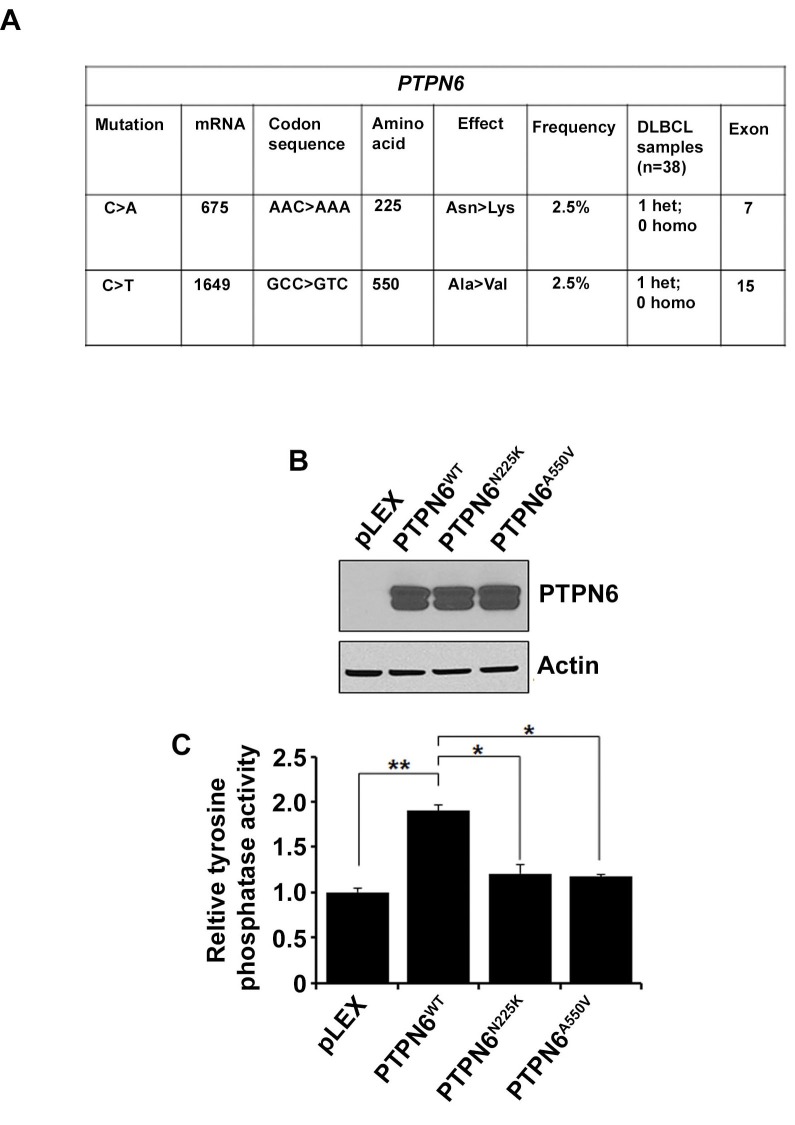
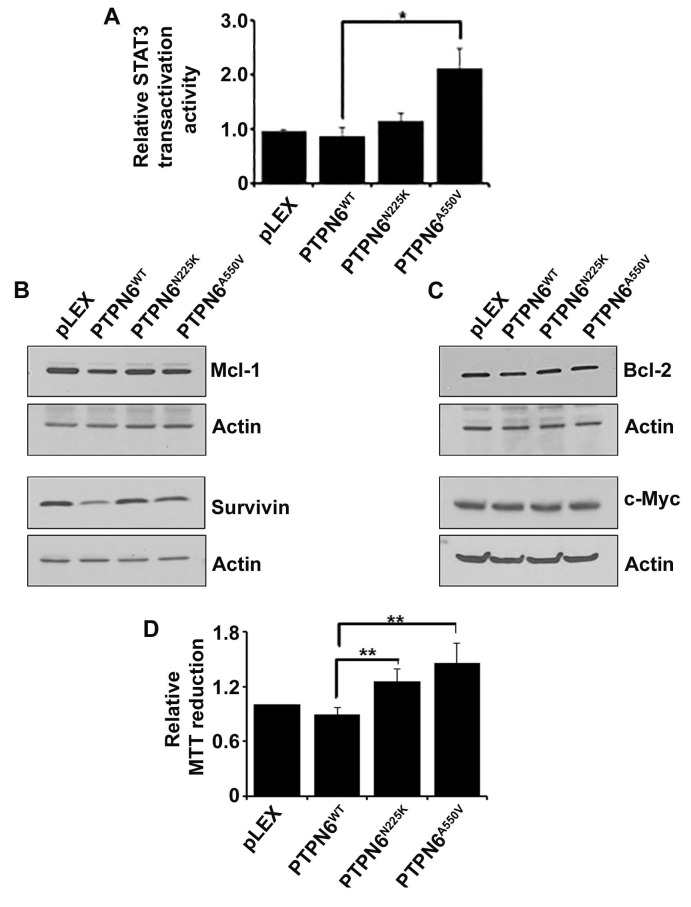
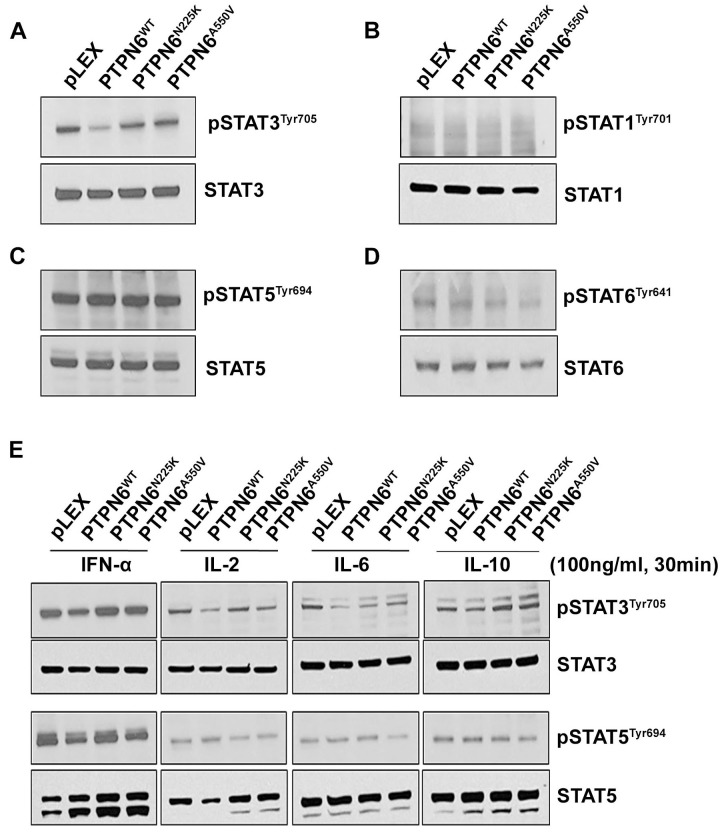
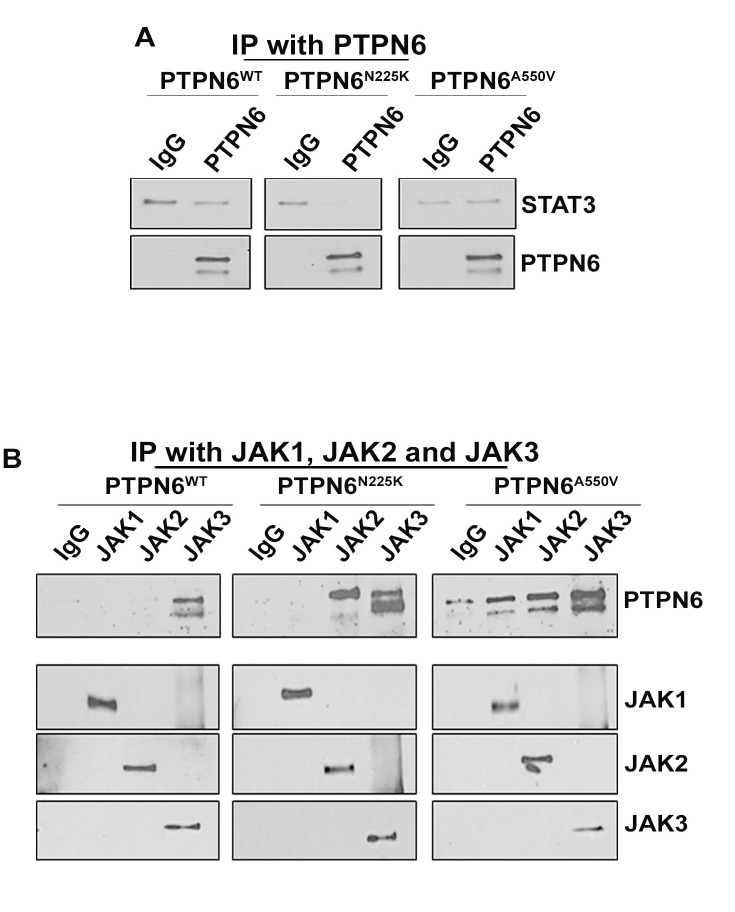
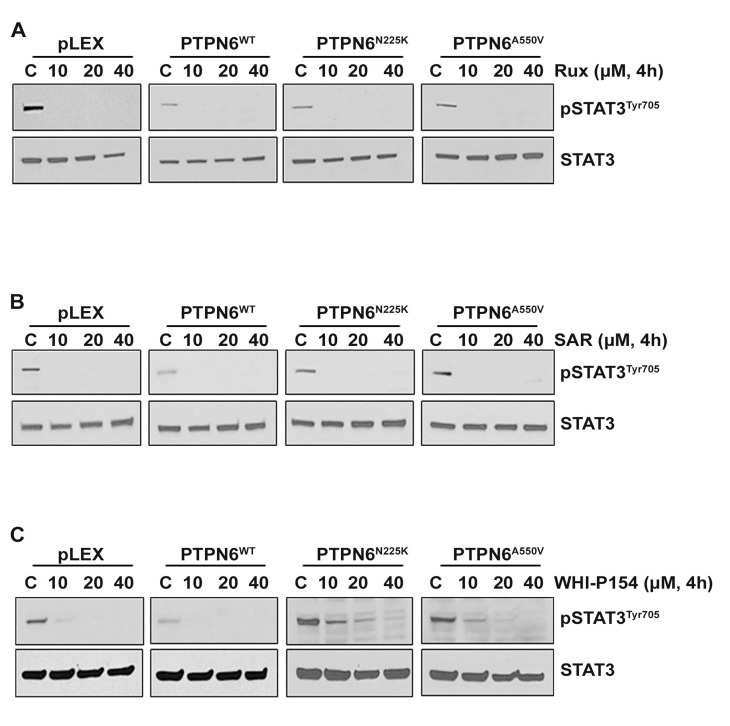
PTPN6 (SHP1) is a tyrosine phosphatase that negatively controls the activity of multiple signaling pathways including STAT signaling, however role of mutated PTPN6 is not much known. Here we investigated whether PTPN6 might also be a potential target for diffuse large B cell lymphoma (DLBCL) and performed Sanger sequencing of the PTPN6 gene. We have identified missense mutations within PTPN6 (N225K and A550V) in 5% (2/38) of DLBCL tumors. Site directed mutagenesis was performed to mutate wild type (WT) PTPN6 and stable cell lines were generated by lentiviral transduction of PTPN6(WT), PTPN6(N225K) and PTPN6(A550V) constructs, and effects of WT or mutated PTPN6 on STAT3 signaling were analyzed. WT PTPN6 dephosphorylated STAT3, but had no effect on STAT1, STAT5 or STAT6 phosphorylation. Both PTPN6 mutants were unable to inhibit constitutive, as well as cytokines induced STAT3 activation. Both PTPN6 mutants also demonstrated reduced tyrosine phosphatase activity and exhibited enhanced STAT3 transactivation activity. Intriguingly, a lack of direct binding between STAT3 and WT or mutated PTPN6 was observed. However, compared to WT PTPN6, cells expressing PTPN6 mutants exhibited increased binding between JAK3 and PTPN6 suggesting a more dynamic interaction of PTPN6 with upstream regulators of STAT3. Consistent with this notion, both the mutants demonstrated increased resistance to JAK3 inhibitor, WHIP-154 relative to WT PTPN6. Overall, this is the first study, which demonstrates that N225K and A550V PTPN6 mutations cause loss-of-function leading to JAK3 mediated deregulation of STAT3 pathway and uncovers a mechanism that tumor cells can use to control PTPN6 substrate specificity.
蛋白酪氨酸磷酸酶非受体型6(PTPN6,又称SHP1)是一种酪氨酸磷酸酶,它对包括信号转导和转录激活因子(STAT)信号通路在内的多种信号通路的活性起负调控作用,然而,突变型PTPN6的作用尚不十分清楚。在此,我们研究了PTPN6是否也可能是弥漫性大B细胞淋巴瘤(DLBCL)的潜在靶点,并对PTPN6基因进行了桑格测序。我们在5%(2/38)的DLBCL肿瘤中发现了PTPN6基因内的错义突变(N225K和A550V)。进行了定点诱变以突变野生型(WT)PTPN6,并通过慢病毒转导PTPN6(WT)、PTPN6(N225K)和PTPN6(A550V)构建体产生稳定细胞系,分析了野生型或突变型PTPN6对STAT3信号通路的影响。野生型PTPN6使STAT3去磷酸化,但对STAT1、STAT5或STAT6的磷酸化没有影响。两种PTPN6突变体均无法抑制组成型以及细胞因子诱导的STAT3激活。两种PTPN6突变体还表现出酪氨酸磷酸酶活性降低,并表现出增强的STAT3反式激活活性。有趣的是,未观察到STAT3与野生型或突变型PTPN6之间的直接结合。然而,与野生型PTPN6相比,表达PTPN6突变体的细胞在JAK3与PTPN6之间表现出增加的结合,这表明PTPN6与STAT3上游调节因子之间存在更动态的相互作用。与此观点一致,相对于野生型PTPN6,两种突变体均表现出对JAK3抑制剂WHIP-154的抗性增加。总体而言,这是第一项研究,表明N225K和A550V PTPN6突变导致功能丧失,从而导致JAK3介导的STAT3信号通路失调,并揭示了肿瘤细胞可用于控制PTPN6底物特异性的机制。