Katsifa Aggeliki, Kaffe Eleanna, Nikolaidou-Katsaridou Nefeli, Economides Aris N, Newbigging Susan, McKerlie Colin, Aidinis Vassilis
Division of Immunology, Biomedical Sciences Research Center Alexander Fleming, Athens, Greece.
Genome Engineering Technologies Group and Skeletal Diseases TFA Group, Regeneron Pharmaceuticals Inc., Tarrytown, New York, United States of America.
PLoS One. 2015 Nov 16;10(11):e0143083. doi: 10.1371/journal.pone.0143083. eCollection 2015.
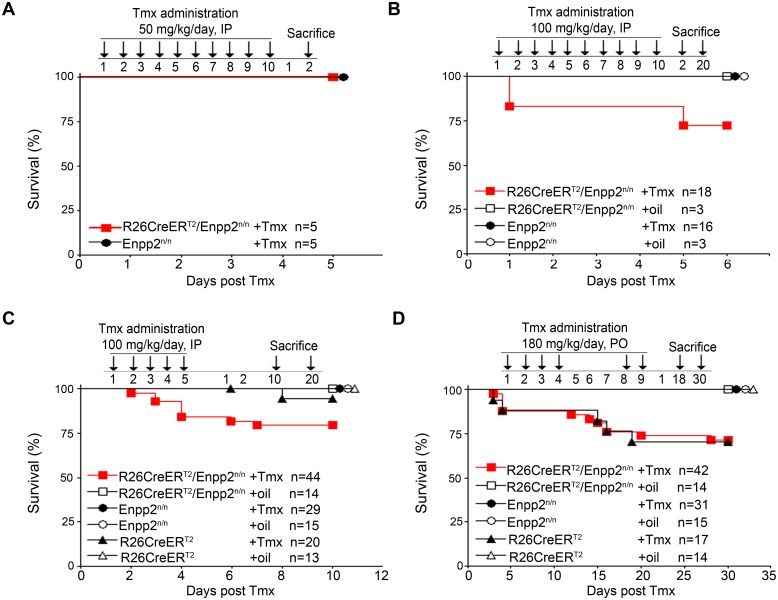
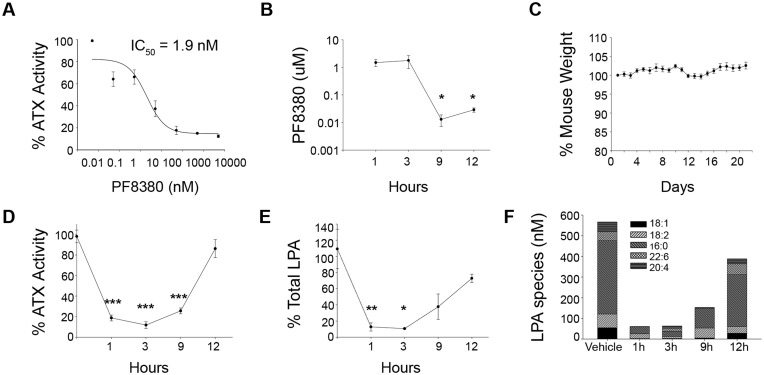
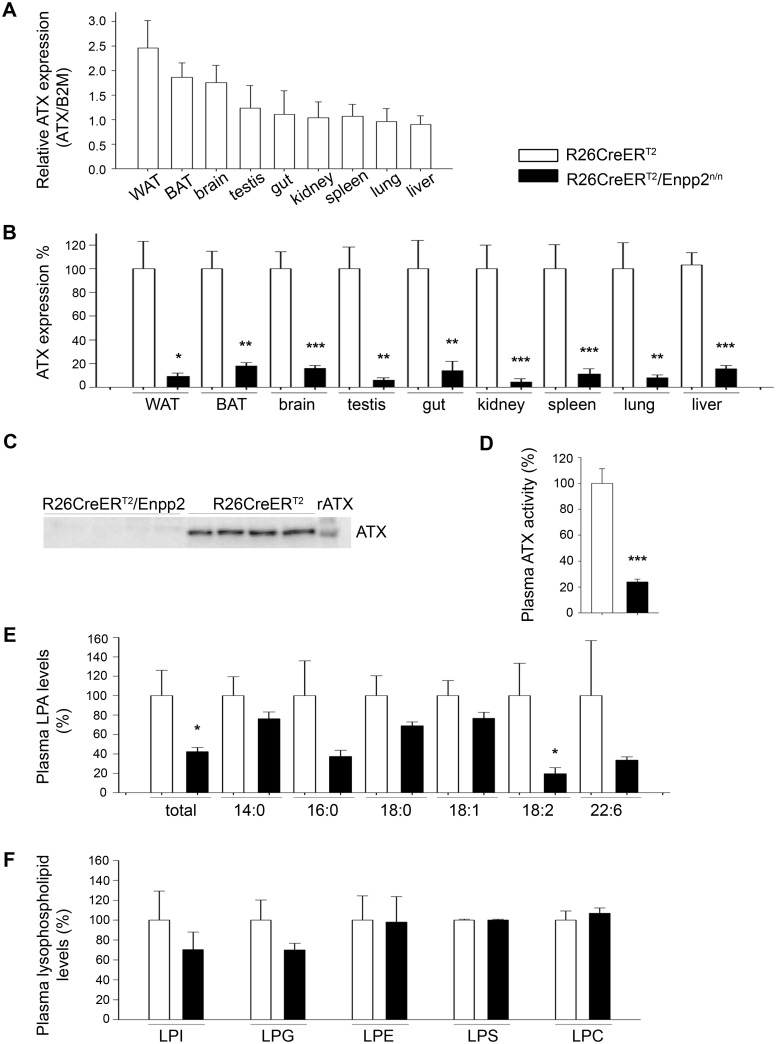
Autotaxin (ATX, Enpp2) is a secreted lysophospholipase D catalysing the production of lysophosphatidic acid, a pleiotropic growth factor-like lysophospholipid. Increased ATX expression has been detected in a number of chronic inflammatory diseases and different types of cancer, while genetic interventions have proven a role for ATX in disease pathogenesis. Therefore, ATX has emerged as a potential drug target and a large number of ATX inhibitors have been developed exhibiting promising therapeutic potential. However, the embryonic lethality of ATX null mice and the ubiquitous expression of ATX and LPA receptors in adult life question the suitability of ATX as a drug target. Here we show that inducible, ubiquitous genetic deletion of ATX in adult mice, as well as long-term potent pharmacologic inhibition, are well tolerated, alleviating potential toxicity concerns of ATX therapeutic targeting.
自分泌运动因子(ATX,Enpp2)是一种分泌型溶血磷脂酶D,可催化溶血磷脂酸的生成,溶血磷脂酸是一种具有多效性生长因子样的溶血磷脂。在多种慢性炎症性疾病和不同类型的癌症中均检测到ATX表达增加,而基因干预已证实ATX在疾病发病机制中起作用。因此,ATX已成为一个潜在的药物靶点,并且已经开发出大量显示出有前景治疗潜力的ATX抑制剂。然而,ATX基因敲除小鼠的胚胎致死性以及成年期ATX和溶血磷脂酸受体的广泛表达对ATX作为药物靶点的适用性提出了质疑。在此我们表明,成年小鼠中ATX的可诱导、全身性基因缺失以及长期强效的药理抑制均耐受性良好,减轻了ATX治疗靶向的潜在毒性担忧。