Tsai Sheng-Ta, Wang Po-Jen, Liou Nia-Jhen, Lin Pei-Shan, Chen Chung-Hsuan, Chang Wei-Chao
Institute of Biochemistry & Molecular Biology, National Yang-Ming University, Taipei, Taiwan.
Genomics Research Center, Academia Sinica, Taipei, Taiwan.
PLoS One. 2015 Nov 16;10(11):e0142834. doi: 10.1371/journal.pone.0142834. eCollection 2015.
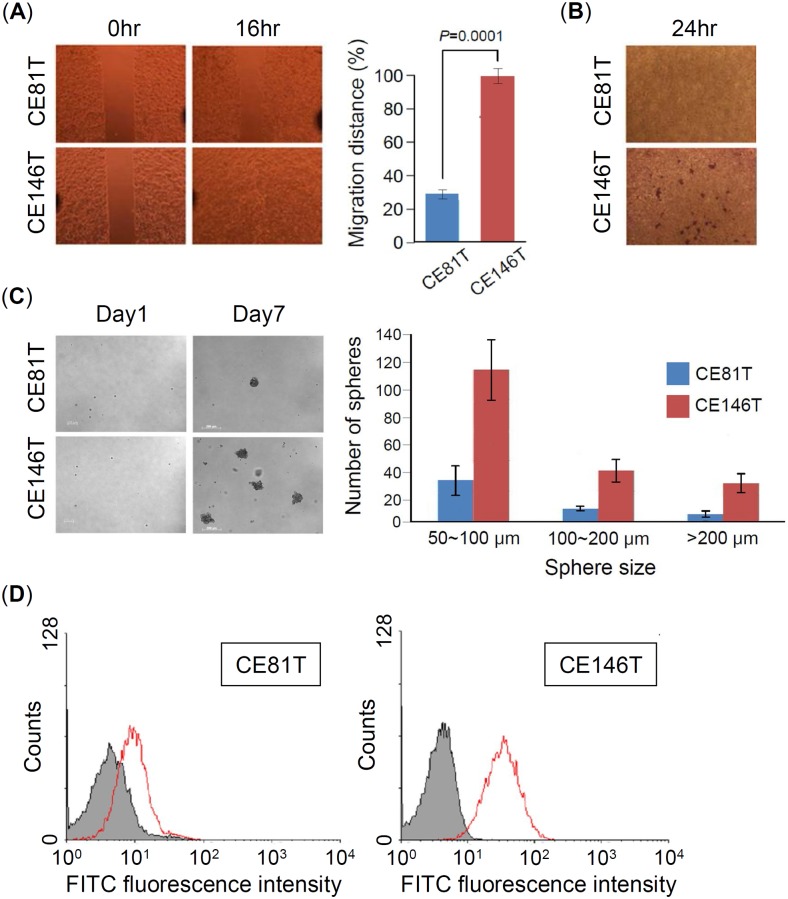
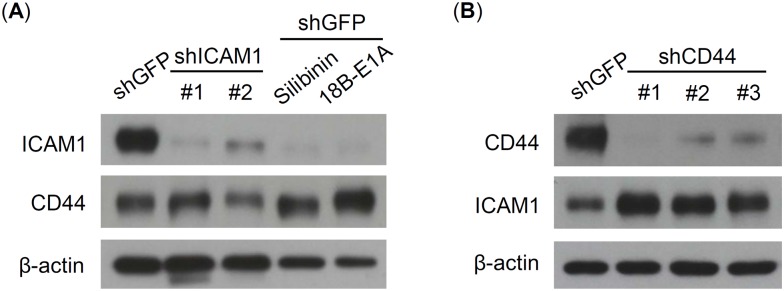
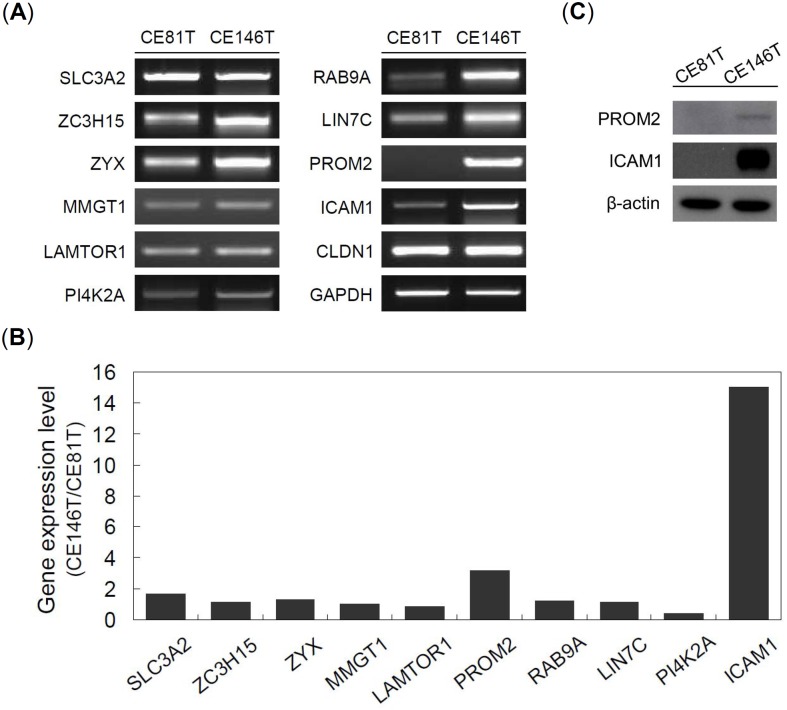
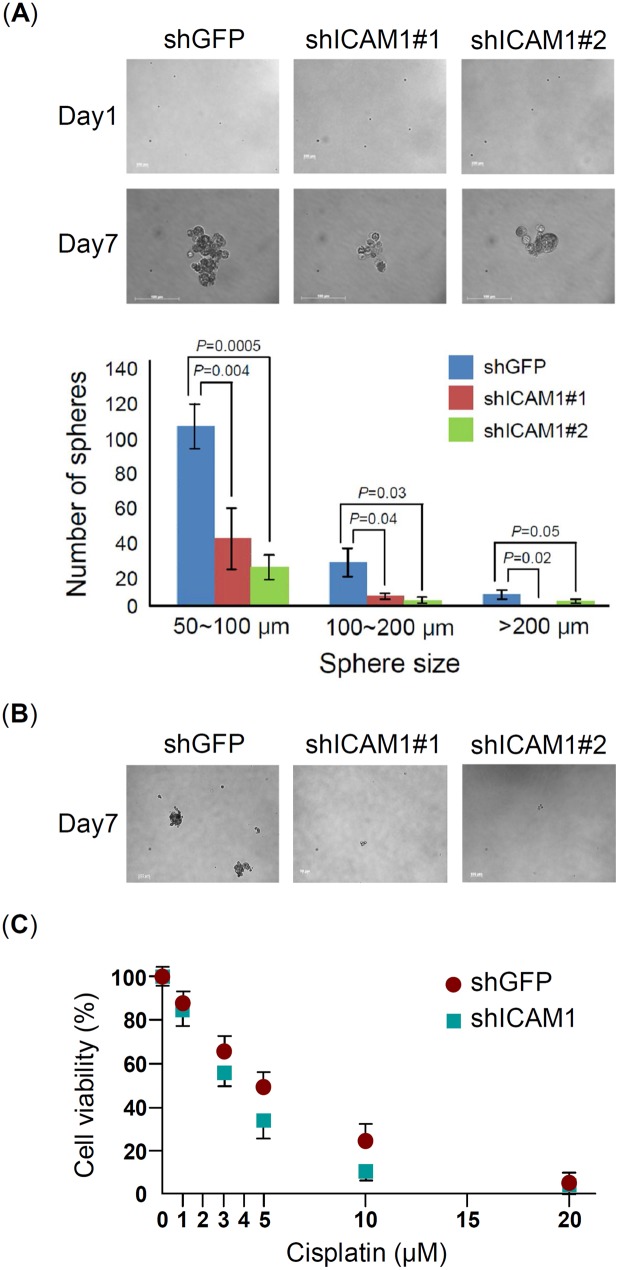
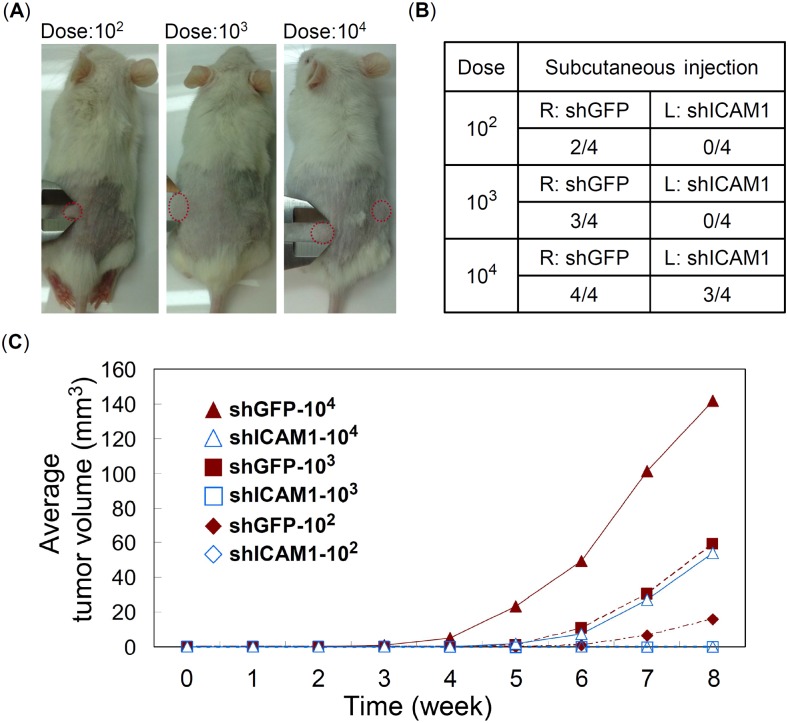
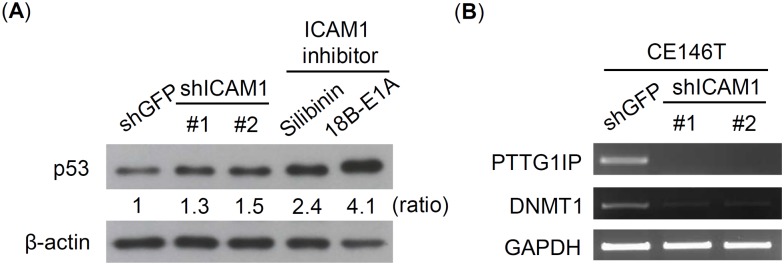
Esophageal squamous cell carcinoma (ESCC) accounts for about 90% of esophageal cancer diagnosed in Asian countries, with its incidence on the rise. Cancer stem cell (CSC; also known as tumor-initiating cells, TIC) is inherently resistant to cytotoxic chemotherapy and radiation and associates with poor prognosis and therapy failure. Targeting therapy against cancer stem cell has emerged as a potential therapeutic approach to develop effective regimens. However, the suitable CSC marker of ESCC for identification and targeting is still limited. In this study, we screened the novel CSC membrane protein markers using two distinct stemness characteristics of cancer cell lines by a comparative approach. After the validation of RT-PCR, qPCR and western blot analyses, intercellular adhesion molecule 1 (ICAM1) was identified as a potential CSC marker of ESCC. ICAM1 promotes cancer cell migration, invasion as well as increasing mesenchymal marker expression and attenuating epithelial marker expression. In addition, ICAM1 contributes to CSC properties, including sphere formation, drug resistance, and tumorigenesis in mouse xenotransplantation model. Based on the analysis of ICAM1-regulated proteins, we speculated that ICAM1 regulates CSC properties partly through an ICAM1-PTTG1IP-p53-DNMT1 pathway. Moreover, we observed that ICAM1 and CD44 could have a compensation effect on maintaining the stemness characteristics of ESCC, suggesting that the combination of multi-targeting therapies should be under serious consideration to acquire a more potent therapeutic effect on CSC of ESCC.
食管鳞状细胞癌(ESCC)约占亚洲国家诊断出的食管癌的90%,且其发病率呈上升趋势。癌症干细胞(CSC;也称为肿瘤起始细胞,TIC)对细胞毒性化疗和放疗具有内在抗性,并与预后不良和治疗失败相关。针对癌症干细胞的靶向治疗已成为开发有效治疗方案的一种潜在治疗方法。然而,用于识别和靶向ESCC的合适的CSC标志物仍然有限。在本研究中,我们通过比较方法,利用癌细胞系的两种不同干性特征筛选了新型CSC膜蛋白标志物。经过逆转录聚合酶链反应(RT-PCR)、定量聚合酶链反应(qPCR)和蛋白质免疫印迹分析验证后,细胞间黏附分子1(ICAM1)被确定为ESCC的一种潜在CSC标志物。ICAM1促进癌细胞迁移、侵袭,同时增加间充质标志物表达并减弱上皮标志物表达。此外,ICAM1有助于CSC特性,包括在小鼠异种移植模型中的成球、耐药和肿瘤发生。基于对ICAM1调节蛋白的分析,我们推测ICAM1部分通过ICAM1-PTTG1IP-p53-DNMT1途径调节CSC特性。此外,我们观察到ICAM1和CD44在维持ESCC的干性特征方面可能具有补偿作用,这表明应认真考虑多靶点联合治疗,以获得对ESCC的CSC更有效的治疗效果。