Saghatelian Alan, Couso Juan Pablo
Clayton Foundation Laboratories for Peptide Biology, Helmsley Center for Genomic Medicine, Salk Institute for Biological Studies, San Diego, California, USA.
School of Life Sciences, University of Sussex, Falmer, Brighton, UK.
Nat Chem Biol. 2015 Dec;11(12):909-16. doi: 10.1038/nchembio.1964.
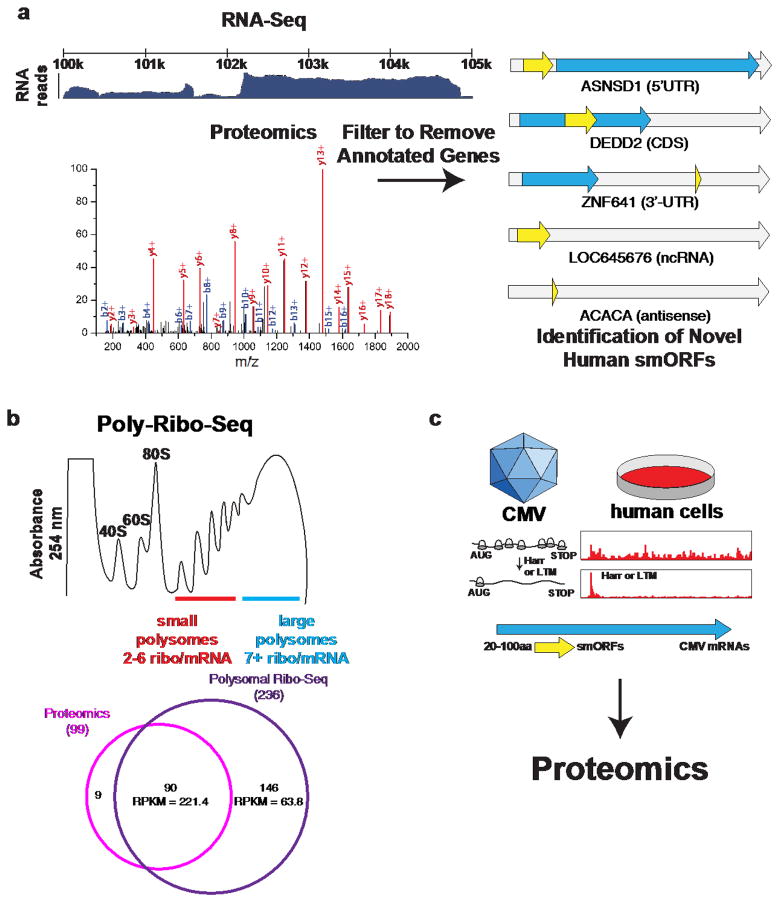
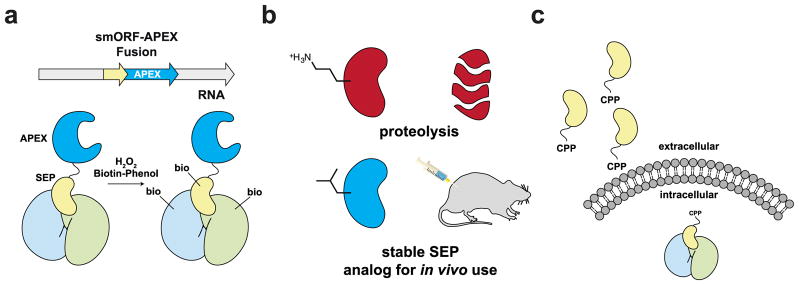
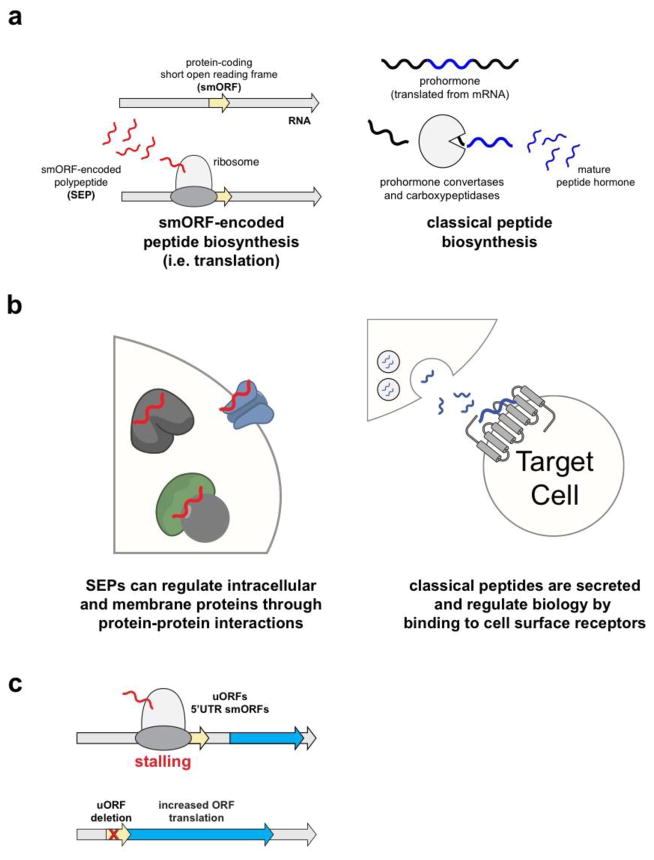
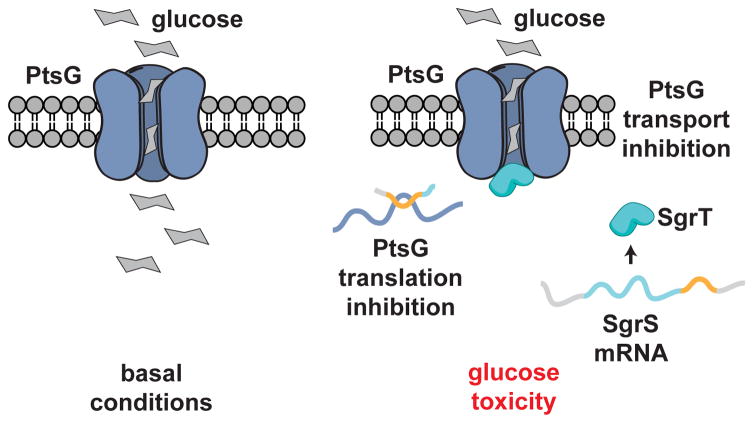
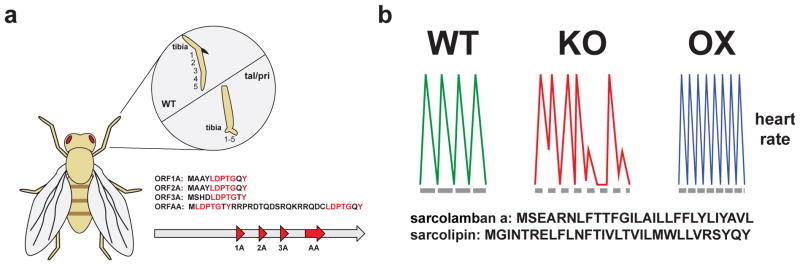
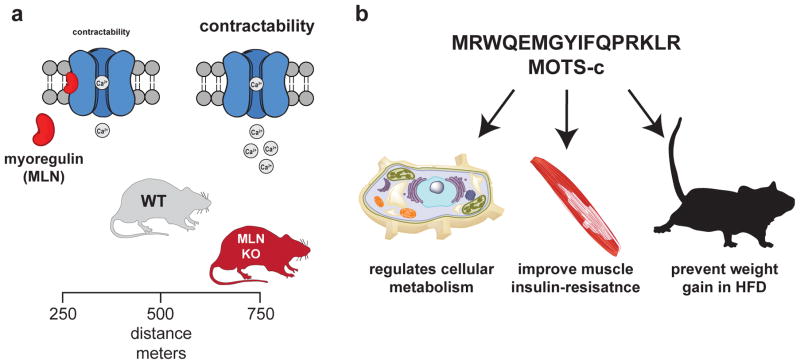
Analysis of genomes, transcriptomes and proteomes reveals the existence of hundreds to thousands of translated, yet non-annotated, short open reading frames (small ORFs or smORFs). The discovery of smORFs and their protein products, smORF-encoded polypeptides (SEPs), points to a fundamental gap in our knowledge of protein-coding genes. Various studies have identified central roles for smORFs in metabolism, apoptosis and development. The discovery of these bioactive SEPs emphasizes the functional potential of this unexplored class of biomolecules. Here, we provide an overview of this emerging field and highlight the opportunities for chemical biology to answer fundamental questions about these novel genes. Such studies will provide new insights into the protein-coding potential of genomes and identify functional genes with roles in biology and disease.
对基因组、转录组和蛋白质组的分析表明,存在数百到数千个已翻译但未注释的短开放阅读框(小开放阅读框或smORF)。小开放阅读框及其蛋白质产物——小开放阅读框编码多肽(SEP)的发现,指出了我们在蛋白质编码基因知识方面的一个基本空白。各种研究已经确定了小开放阅读框在代谢、细胞凋亡和发育中的核心作用。这些生物活性SEP的发现强调了这类未被探索的生物分子的功能潜力。在这里,我们概述了这个新兴领域,并强调化学生物学在回答有关这些新基因的基本问题方面的机会。此类研究将为基因组的蛋白质编码潜力提供新的见解,并鉴定出在生物学和疾病中起作用的功能基因。