Consoli Antonio, López Cefe
Instituto de Ciencia de Materiales, Consejo Superior de Investigaciones Científicas, Calle Sor Juana Ines de la Cruz, 3, 28049, Madrid, Spain.
Sci Rep. 2015 Nov 18;5:16848. doi: 10.1038/srep16848.
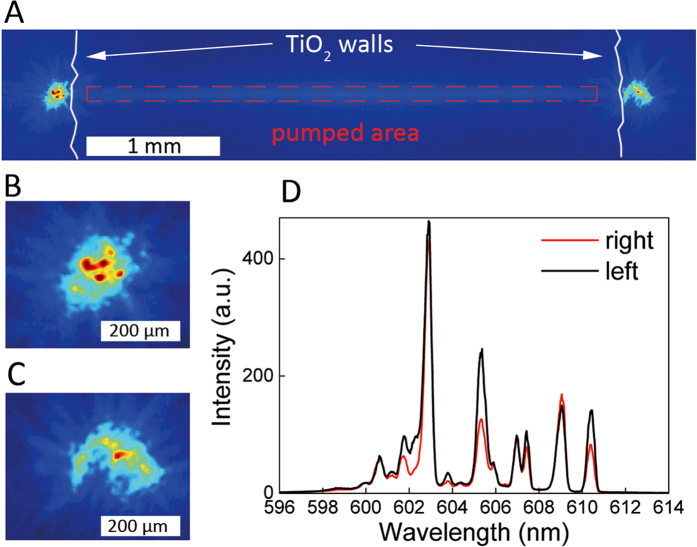
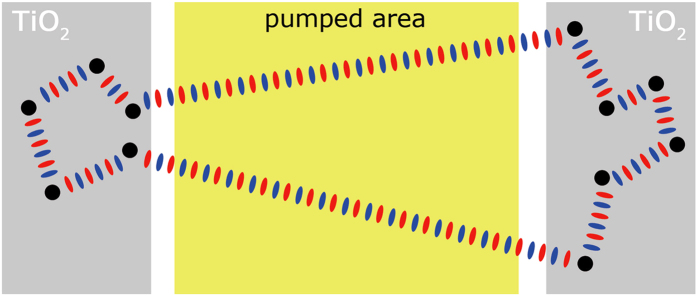
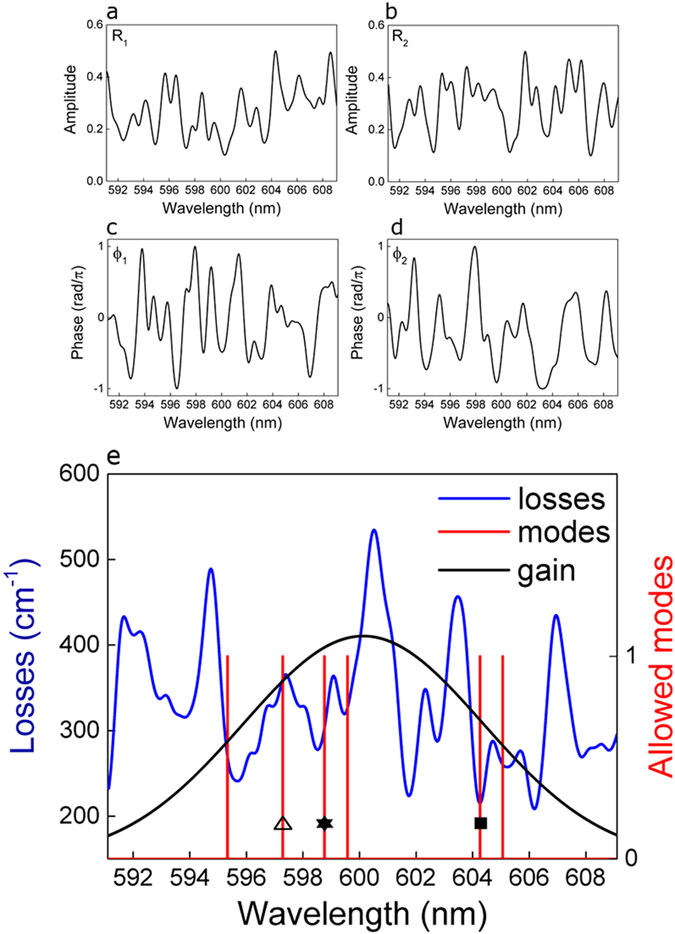
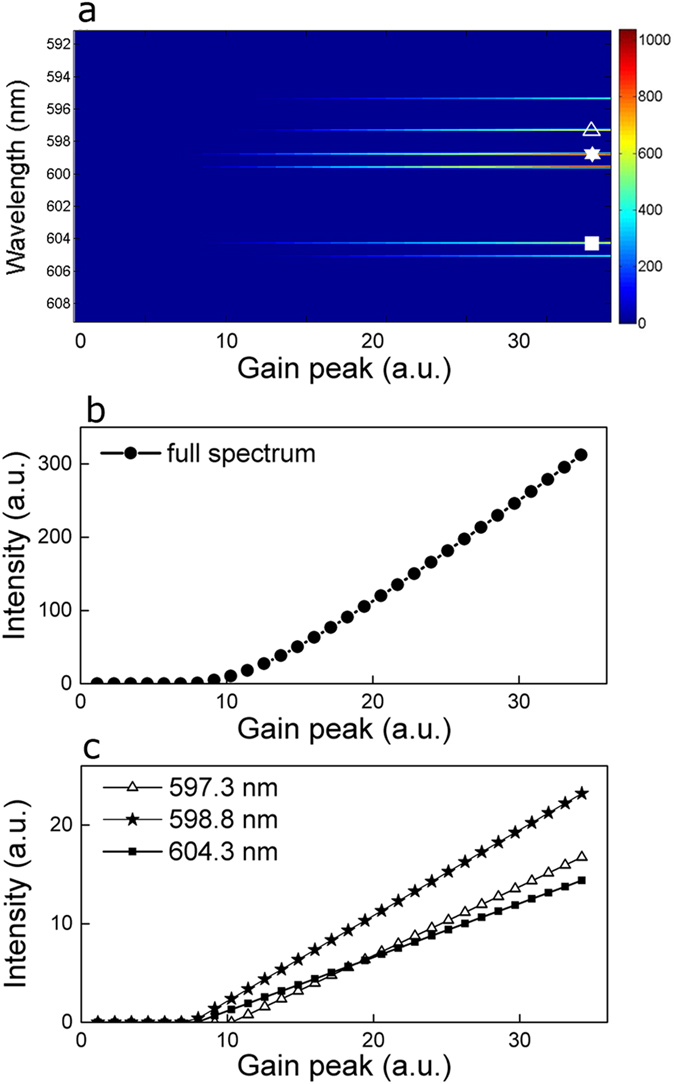
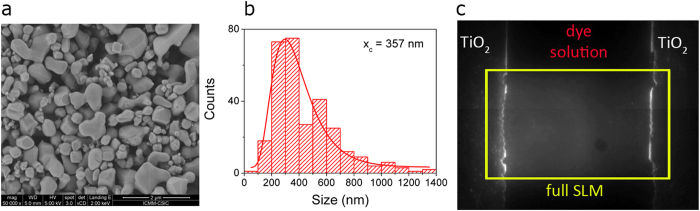
We propose and demonstrate a coherent random laser in which the randomly distributed scattering centres are placed outside the active region. This architecture is implemented by enclosing a dye solution between two agglomerations of randomly positioned titanium dioxide nanoparticles. The same spectral signature, consisting of sharp spikes with random spectral positions, is detected emerging from both ensembles of titanium dioxide nanoparticles. We interpret this newly observed behaviour as due to the optical feedback given by back-scattered light from the scattering agglomerations, which also act as output couplers. A simple model is presented to simulate the observed behaviour, considering the amplitude and phase round trip conditions that must be satisfied to sustain lasing action. Numerical simulations reproduce the experimental reports, validating our simple model. The presented results suggest a new theoretical and experimental approach for studying the complex behavior of coherent random lasers and stimulate the realization of new devices based on the proposed architecture, with different active and scattering materials.
我们提出并展示了一种相干随机激光器,其中随机分布的散射中心位于有源区之外。这种架构是通过将染料溶液封装在两团随机定位的二氧化钛纳米颗粒之间来实现的。从两组二氧化钛纳米颗粒中都检测到了相同的光谱特征,由具有随机光谱位置的尖锐尖峰组成。我们将这种新观察到的行为解释为是由于来自散射团聚体的反向散射光提供的光学反馈,这些团聚体也充当输出耦合器。提出了一个简单模型来模拟观察到的行为,考虑了维持激光作用必须满足的幅度和相位往返条件。数值模拟再现了实验结果,验证了我们的简单模型。所呈现的结果为研究相干随机激光器的复杂行为提出了一种新的理论和实验方法,并促进了基于所提出架构、采用不同有源和散射材料的新器件的实现。