Lidor O, Al-Quntar A, Pesci E C, Steinberg D
Biofilm Research Laboratory, Institute of Dental Sciences, Faculty of Dental Medicine, The Hebrew University of Jerusalem, Jerusalem, Israel.
Institute of Drug Research, School of Pharmacy, The Hebrew University of Jerusalem, Jerusalem, Israel.
Sci Rep. 2015 Nov 23;5:16569. doi: 10.1038/srep16569.
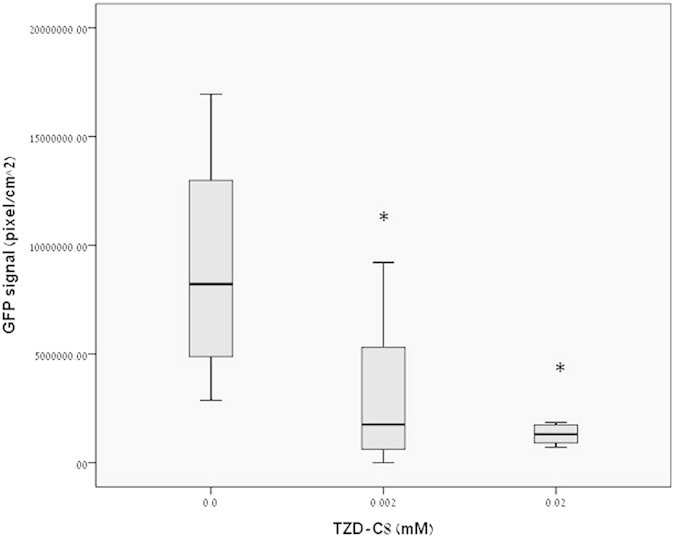
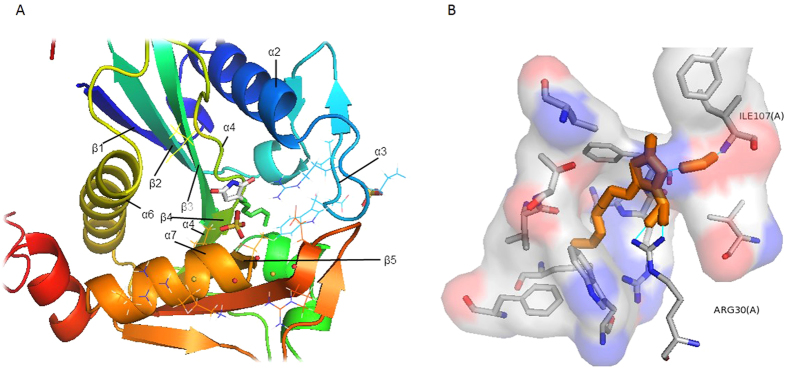
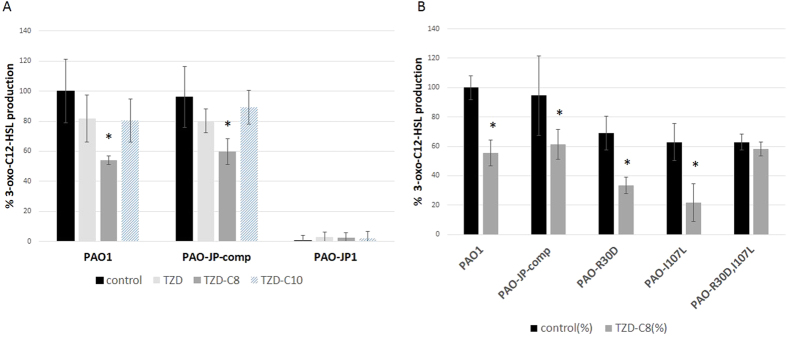
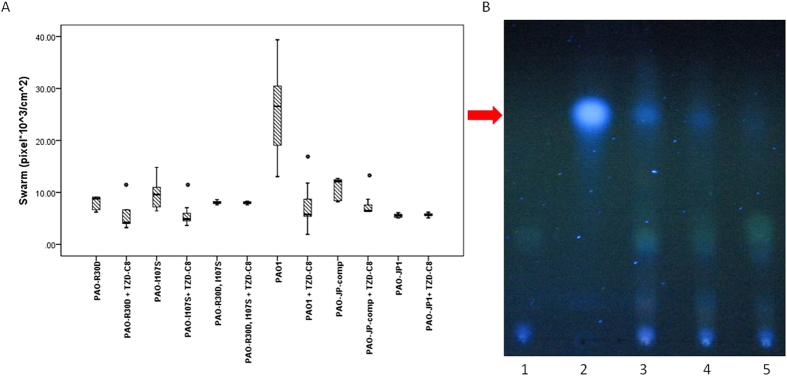
Pseudomonas aeruginosa is an opportunistic Gram-negative pathogen responsible for many human infections. LasI is an acyl-homoserine lactone synthase that produces a quorum-sensing (QS) signal that positively regulates numerous P. aeruginosa virulence determinants. The inhibition of the LasI protein is therefore an attractive drug target. In this study, a novel in silico to in vitro complementation was applied to screen thiazolidinedione-type compounds for their ability to inhibit biofilm formation at concentrations not affecting bacterial growth. The compound (z)-5-octylidenethiazolidine-2, 4-dione (TZD-C8) was a strong inhibitor of biofilm formation and chosen for further study. Structural exploration of in silico docking predicted that the compound had high affinity for the LasI activity pocket. The TZD-C8 compound was also predicted to create hydrogen bonds with residues Arg30 and Ile107. Site-directed mutagenesis (SDM) of these two sites demonstrated that TZD-C8 inhibition was abolished in the lasI double mutant PAO-R30D, I107S. In addition, in vitro swarming motility and quorum sensing signal production were affected by TZD-C 8, confirming this compound alters the cell to cell signalling circuitry. Overall, this novel inhibitor of P. aeruginosa quorum sensing shows great promise and validates our mechanistic approach to discovering inhibitors of LuxI-type acyl-homoserine lactone synthases.
铜绿假单胞菌是一种机会性革兰氏阴性病原体,可导致多种人类感染。LasI是一种酰基高丝氨酸内酯合酶,它产生一种群体感应(QS)信号,该信号正向调节众多铜绿假单胞菌的毒力决定因素。因此,抑制LasI蛋白是一个有吸引力的药物靶点。在本研究中,应用了一种新型的计算机模拟到体外互补方法,以筛选噻唑烷二酮类化合物在不影响细菌生长的浓度下抑制生物膜形成的能力。化合物(Z)-5-辛叉基噻唑烷-2,4-二酮(TZD-C8)是生物膜形成的强力抑制剂,并被选作进一步研究。计算机模拟对接的结构探索预测该化合物对LasI活性口袋具有高亲和力。TZD-C8化合物还预计会与残基Arg30和Ile107形成氢键。这两个位点的定点诱变(SDM)表明,在lasI双突变体PAO-R30D、I107S中,TZD-C8的抑制作用被消除。此外,体外群体运动性和群体感应信号产生受TZD-C8影响,证实该化合物改变了细胞间信号传导回路。总体而言,这种新型的铜绿假单胞菌群体感应抑制剂显示出巨大的前景,并验证了我们发现LuxI型酰基高丝氨酸内酯合酶抑制剂的机制方法。