Fassinou Hotegni V Nicodème, Lommen Willemien J M, Agbossou Euloge K, Struik Paul C
Centre for Crop Systems Analysis, Wageningen University, Wageningen, the Netherlands.
Faculté des Sciences Agronomiques, Université d'Abomey Calavi, Cotonou, Benin.
PLoS One. 2015 Nov 23;10(11):e0143290. doi: 10.1371/journal.pone.0143290. eCollection 2015.
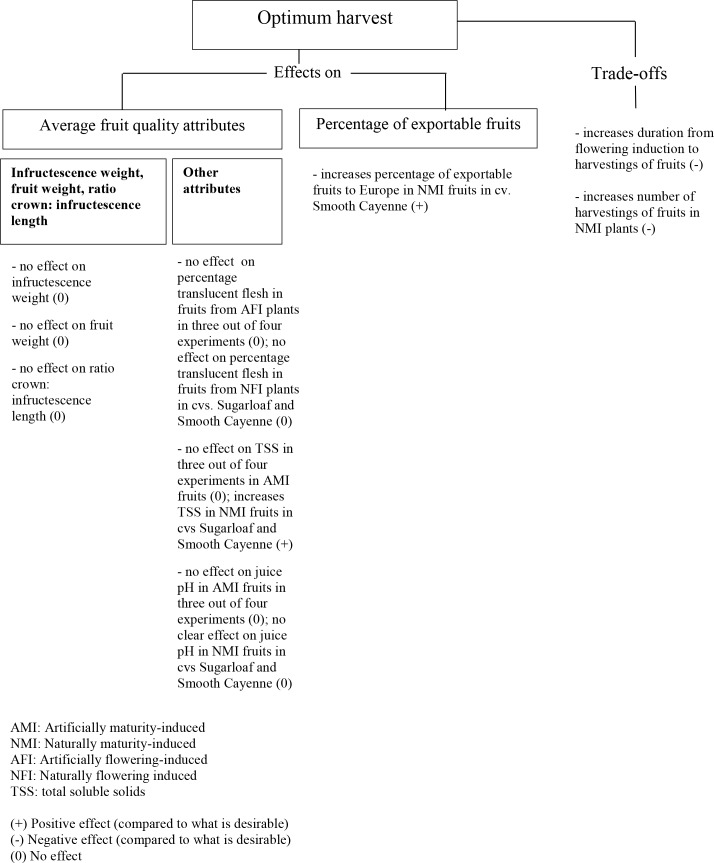
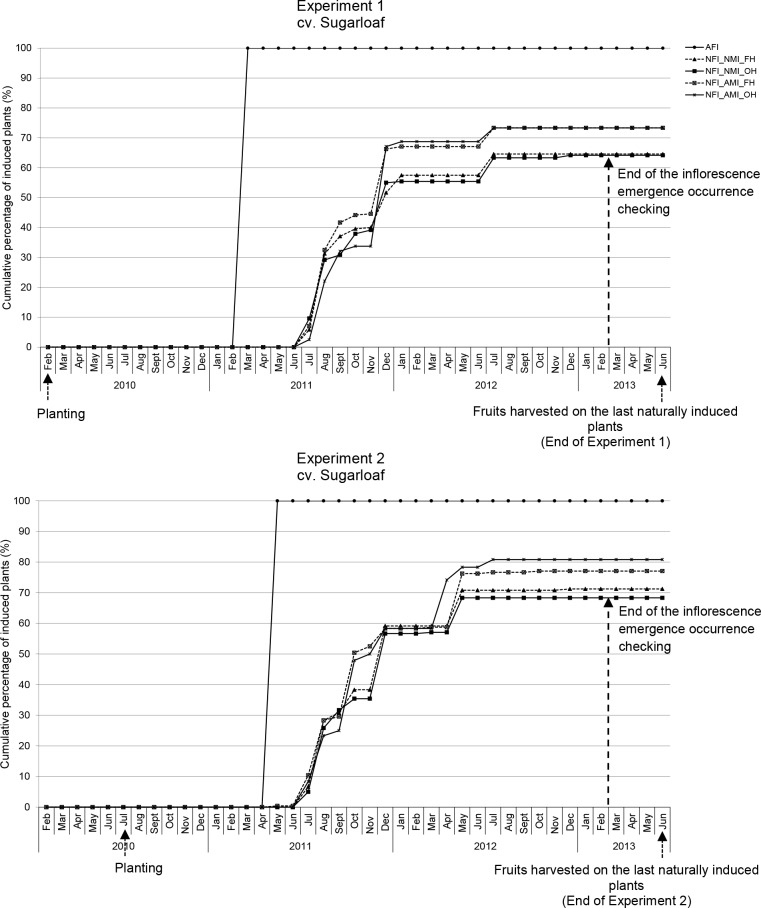
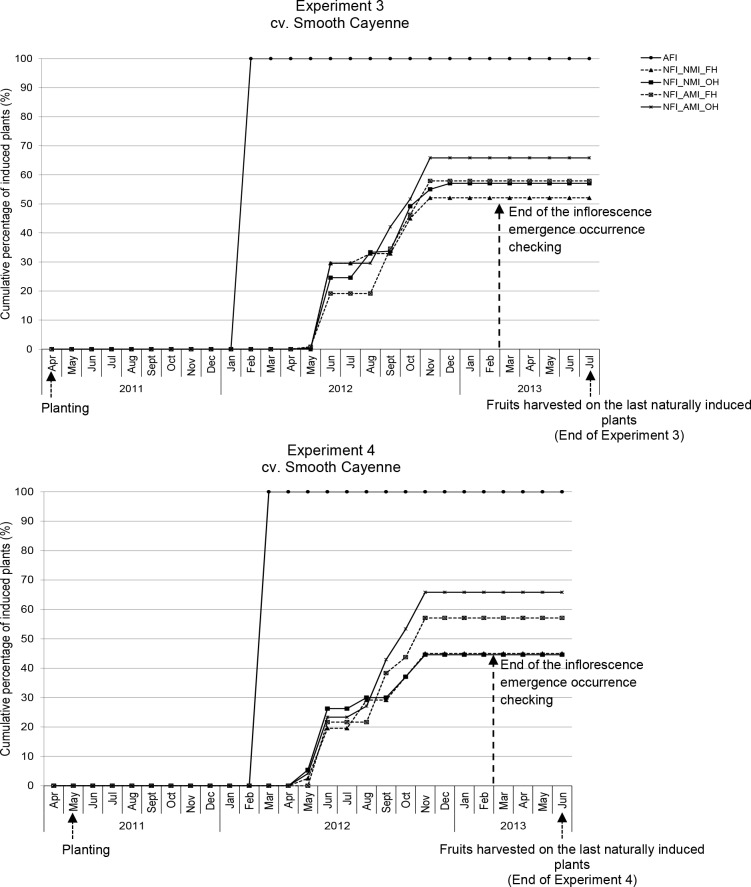
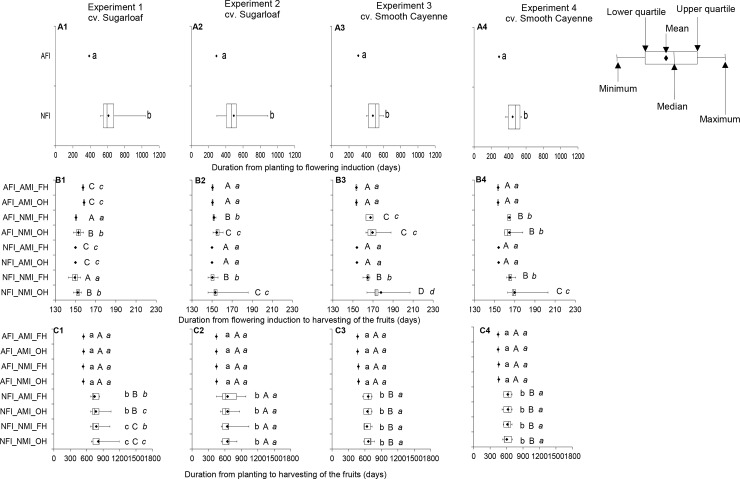
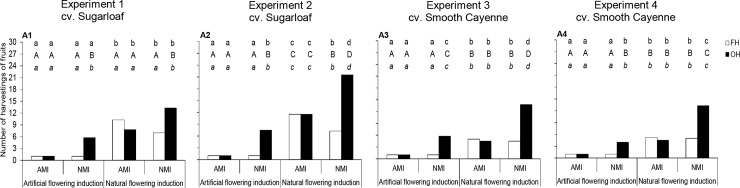
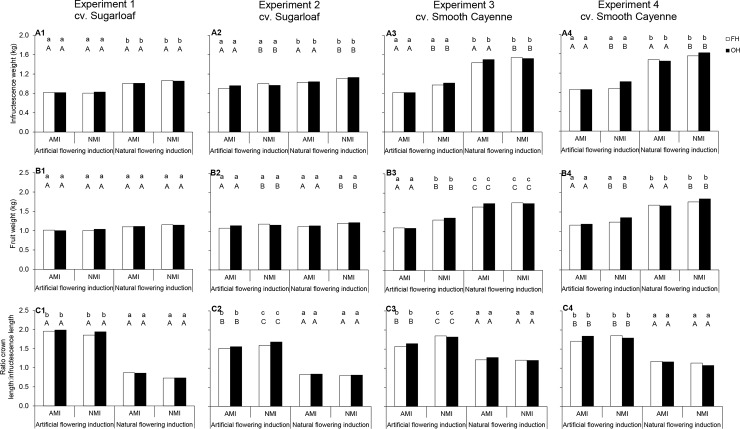
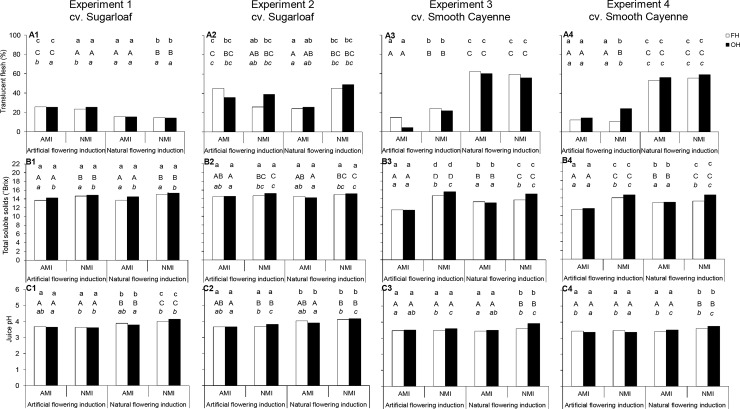
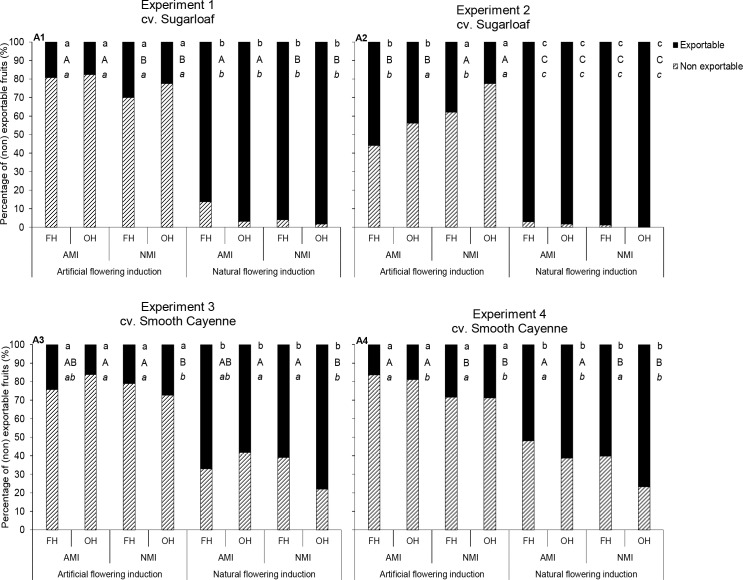
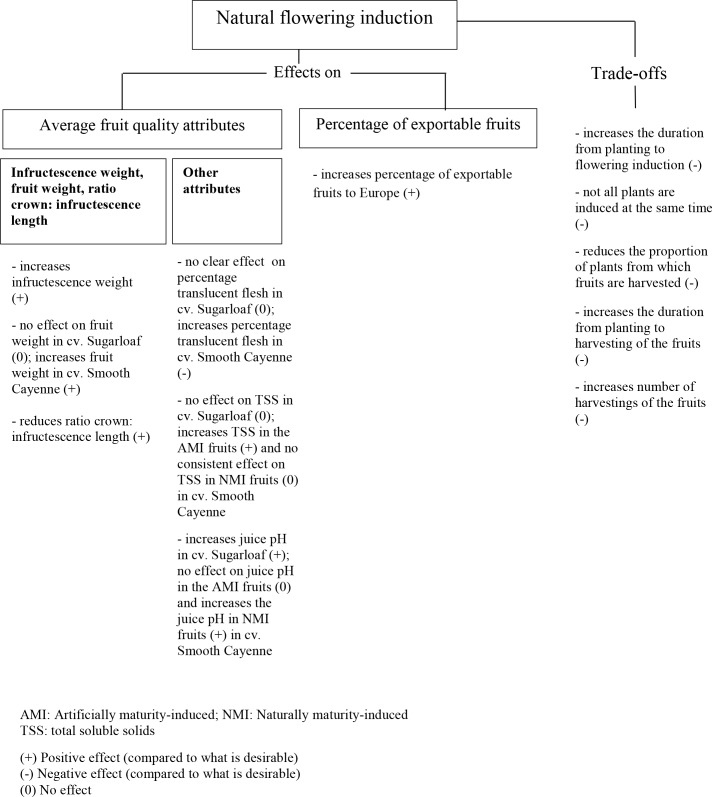
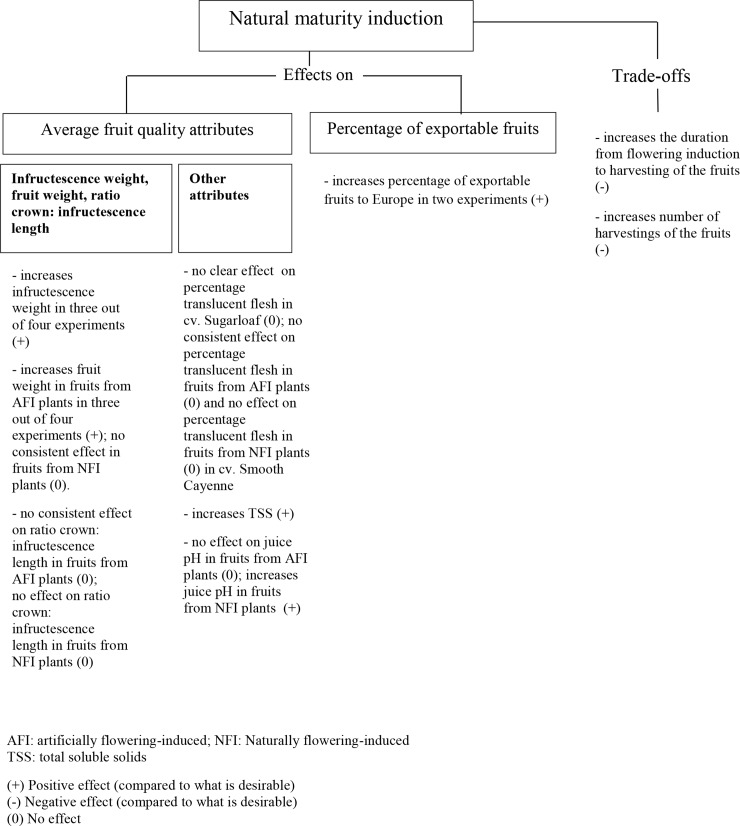
In the pineapple sector of Benin, poor fruit quality prevents pineapple producers to enter the European market. We investigated effects of common cultural practices, flowering and maturity synchronisation, (1) to quantify the trade-offs of flowering and maturity synchronisation for pineapple quality and the proportion of fruits exportable to European markets, and (2) to determine the effect of harvesting practice on quality attributes. Four on-farm experiments were conducted during three years using cultivars Sugarloaf and Smooth Cayenne. A split-split plot design was used in each experiment, with flowering induction practice as main factor (artificial or natural flowering induction), maturity induction practice as split factor (artificial or natural maturity induction) and harvesting practice as the split-split factor (farmers' harvest practice or individual fruit harvesting at optimum maturity). Artificial flowering induction gave fruits with lower infructescence weight, higher ratio crown: infructescence length, and a lower proportion of fruits exportable to European markets than natural flowering induction. The costs of the improvements by natural flowering induction were huge: the longer durations from planting to flowering induction and harvesting, the higher number of harvestings of the fruits increasing the labour cost and the lower proportion of plants producing fruits compared with crops from artificially flowering-induced plants. Artificial maturity induction decreased the total soluble solids concentration in the fruits compared with natural maturity induction thus decreasing the proportion of fruits exportable to European markets, at a benefit of only a slightly shorter time from flowering induction to harvesting. Harvesting individual fruits at optimum maturity gave fruits with higher total soluble solids in naturally maturity induced fruits compared with the farmers' harvest practice. Given the huge costs of natural flowering induction, options to use artificial flowering induction effectively for obtaining high fruit quality are discussed.
在贝宁的菠萝产业中,果实品质不佳阻碍了菠萝生产者进入欧洲市场。我们研究了常见栽培措施、开花和成熟同步化的影响,(1)以量化开花和成熟同步化对菠萝品质以及可出口到欧洲市场的果实比例的权衡,(2)以确定采收措施对品质属性的影响。在三年期间,使用“砂糖面包”和“无刺卡因”品种进行了四项田间试验。每个试验采用裂区裂分设计,以开花诱导措施作为主因素(人工或自然开花诱导),成熟诱导措施作为裂区因素(人工或自然成熟诱导),采收措施作为裂区裂分因素(农民采收措施或在最佳成熟度时单个果实采收)。与自然开花诱导相比,人工开花诱导得到的果实果序重量较低、冠部:果序长度比更高,且可出口到欧洲市场的果实比例更低。自然开花诱导的改进成本巨大:从种植到开花诱导和采收的时间更长,果实采收次数更多,增加了劳动力成本,与人工诱导开花的植株相比,结果植株的比例更低。与自然成熟诱导相比,人工成熟诱导降低了果实中的总可溶性固形物浓度,从而降低了可出口到欧洲市场的果实比例,唯一的好处是从开花诱导到采收的时间略短。与农民采收措施相比,在最佳成熟度时单个果实采收,自然成熟诱导的果实总可溶性固形物含量更高。鉴于自然开花诱导成本巨大,本文讨论了有效利用人工开花诱导获得高品质果实的方法。