Prat Yosef, Taub Mor, Yovel Yossi
Department of Zoology, Faculty of Life Sciences, Tel Aviv University, Tel Aviv 69978, Israel.
Sci Adv. 2015 Mar 27;1(2):e1500019. doi: 10.1126/sciadv.1500019. eCollection 2015 Mar.
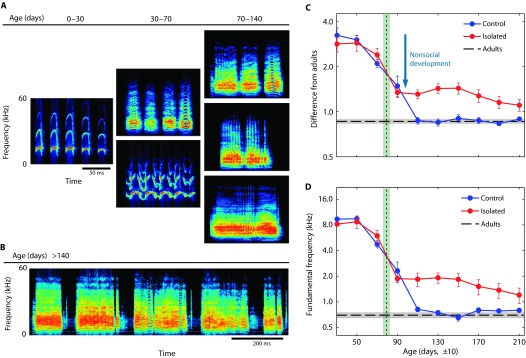
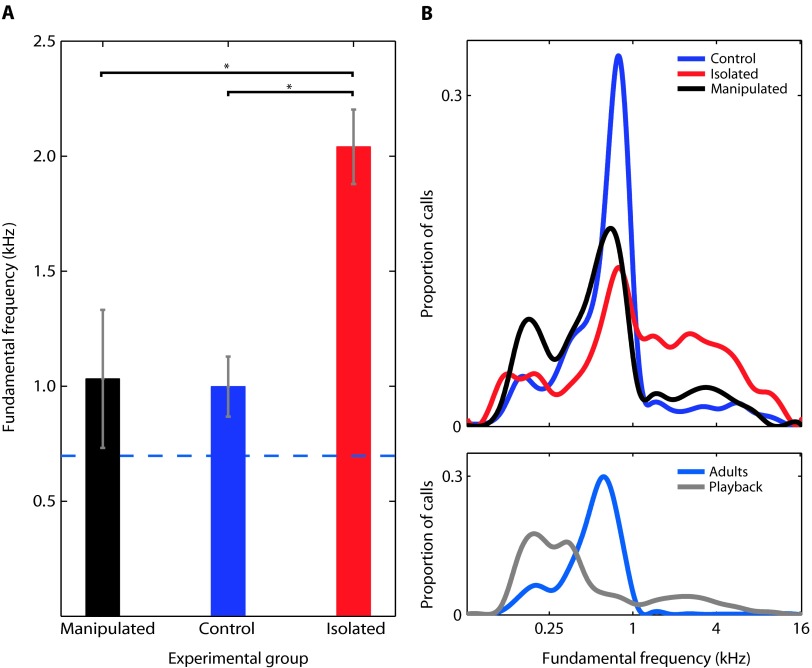
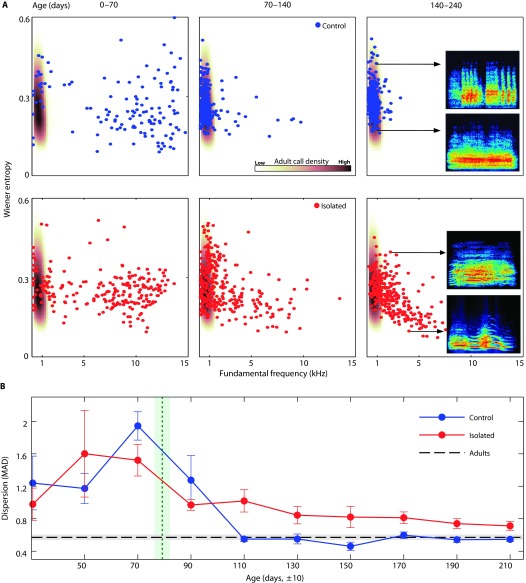
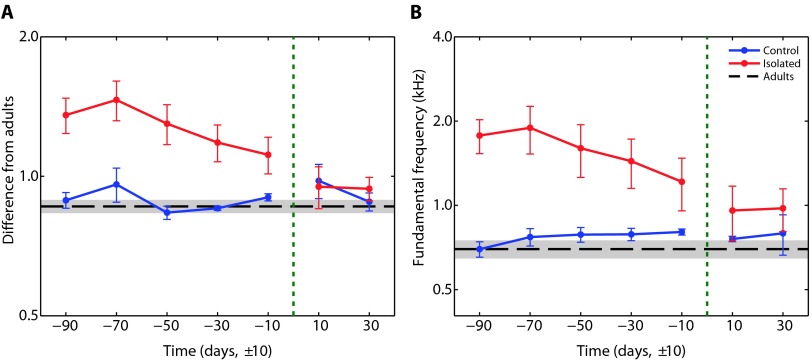
The evolution of human language is shrouded in mystery as it is unparalleled in the animal kingdom. Whereas vocal learning is crucial for the development of speech in humans, it seems rare among nonhuman animals. Songbirds often serve as a model for vocal learning, but the lack of a mammalian model hinders our quest for the origin of this capability. We report the influence of both isolation and playback experiments on the vocal development of a mammal, the Egyptian fruit bat. We continuously recorded pups from birth to adulthood and found that, when raised in a colony, pups acquired the adult repertoire, whereas when acoustically isolated, they exhibited underdeveloped vocalizations. Isolated pups that heard bat recordings exhibited a repertoire that replicated the playbacks they were exposed to. These findings demonstrate vocal learning in a social mammal, and suggest bats as a model for language acquisition.
人类语言的进化笼罩在神秘之中,因为它在动物王国中是无与伦比的。虽然发声学习对人类语言发展至关重要,但在非人类动物中似乎很少见。鸣禽常被用作发声学习的模型,但缺乏哺乳动物模型阻碍了我们对这种能力起源的探索。我们报告了隔离和回放实验对一种哺乳动物——埃及果蝠发声发育的影响。我们从出生到成年持续记录幼崽,发现当在群体中饲养时,幼崽学会了成年蝙蝠的全部发声 repertoire,而在声学隔离环境中饲养时,它们的发声表现出发育不全的情况。听到蝙蝠录音的隔离幼崽表现出的发声 repertoire 复制了它们所接触到的回放内容。这些发现证明了一种社会性哺乳动物存在发声学习,并表明蝙蝠可作为语言习得的模型。