Kubo Tomoaki, Kato Takumi, Higo Yuji, Funakoshi Ken-Ichi
Department of Earth and Planetary Sciences, Faculty of Sciences, Kyushu University, Fukuoka 812-8581, Japan.
Japan Synchrotron Radiation Research Institute, Hyogo 679-5198, Japan.
Sci Adv. 2015 May 8;1(4):e1500075. doi: 10.1126/sciadv.1500075. eCollection 2015 May.
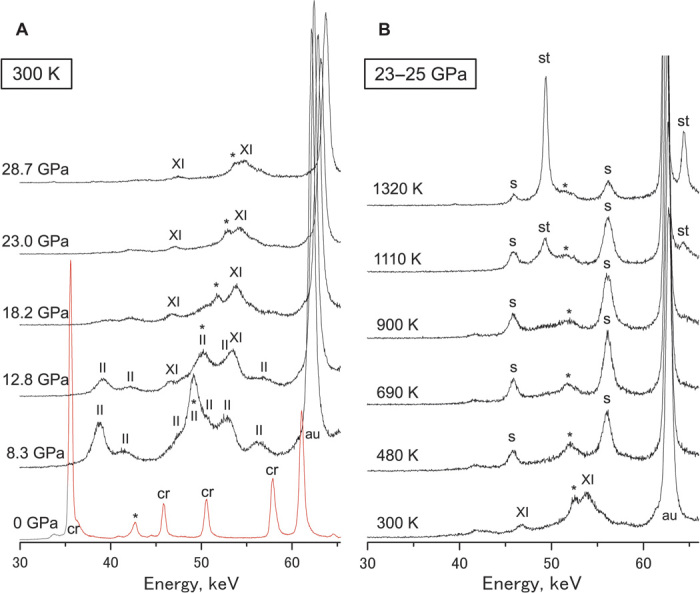
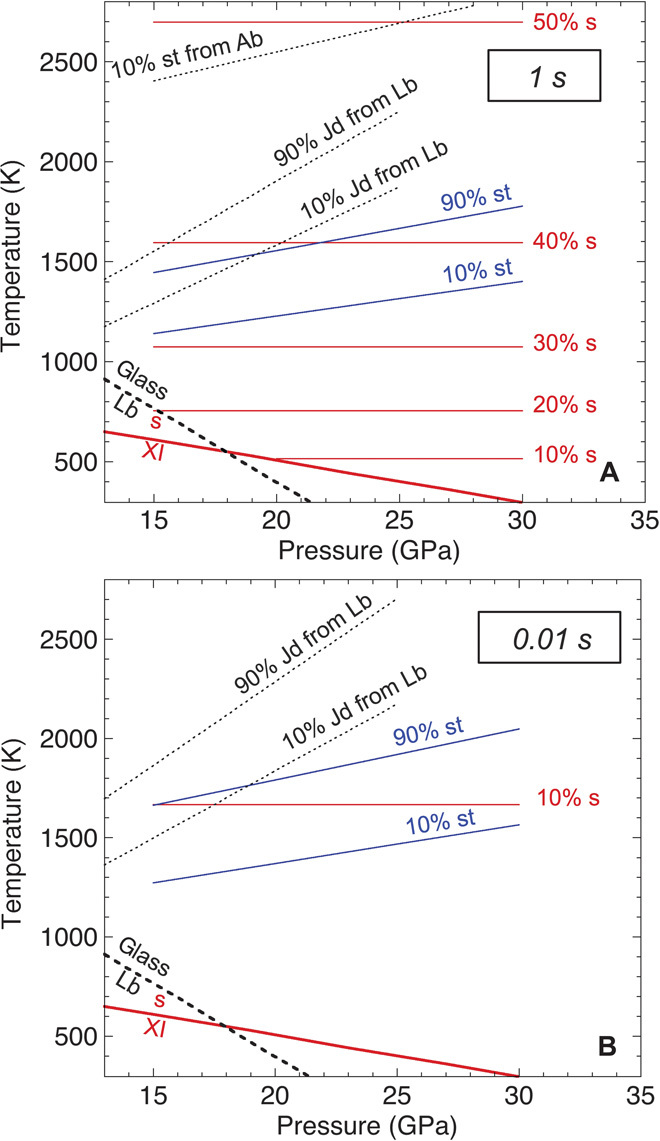
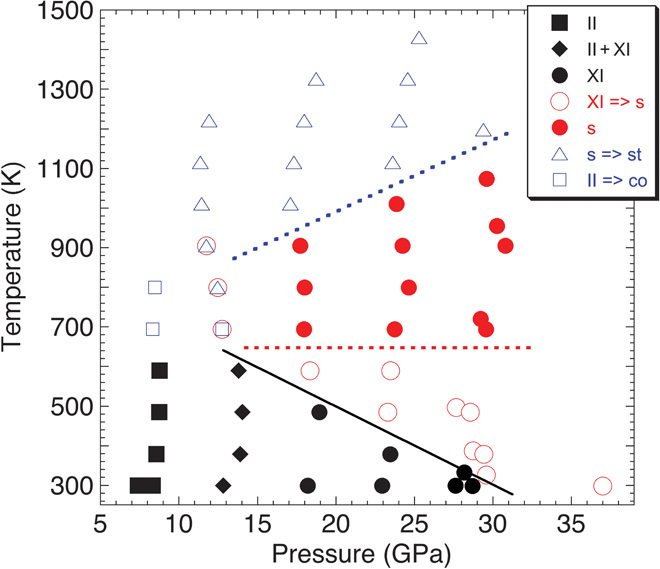
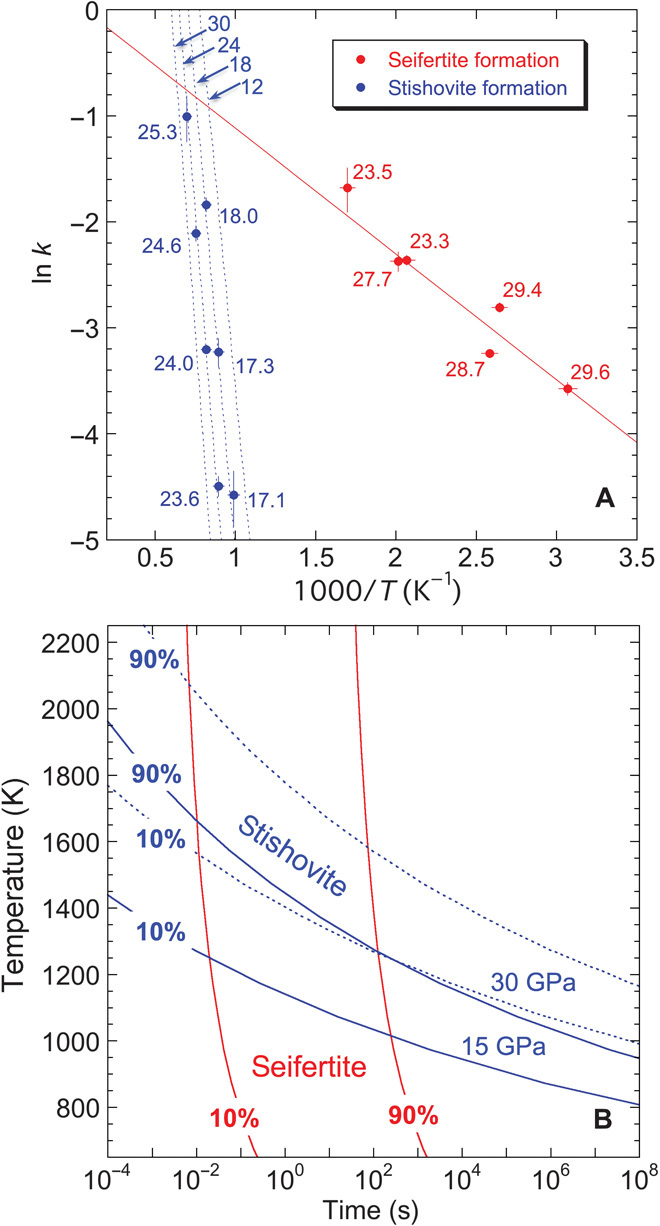
The presence of seifertite, one of the high-pressure polymorphs of silica, in achondritic shocked meteorites has been problematic because this phase is thermodynamically stable at more than ~100 GPa, unrealistically high-pressure conditions for the shock events in the early solar system. We conducted in situ x-ray diffraction measurements at high pressure and temperatures, and found that it metastably appears down to ~11 GPa owing to the clear difference in kinetics between the metastable seifertite and stable stishovite formations. The temperature-insensitive but time-sensitive kinetics for the formation of seifertite uniquely constrains that the critical shock duration and size of the impactor on differentiated parental bodies are at least ~0.01 s and ~50 to 100 m, respectively, from the presence of seifertite.
硅灰石是二氧化硅的高压多晶型物之一,它在无球粒陨石撞击体中出现的情况一直存在问题,因为该相在超过约100吉帕的压力下才具有热力学稳定性,而这对于早期太阳系中的撞击事件来说,压力条件高得不符合实际。我们在高压和高温下进行了原位X射线衍射测量,发现由于亚稳态硅灰石和稳定态斯石英形成过程中的动力学存在明显差异,硅灰石在低至约11吉帕的压力下仍会亚稳态出现。硅灰石形成过程中对温度不敏感但对时间敏感的动力学特性,根据硅灰石的存在情况,独特地限制了在分异母体上撞击体的临界冲击持续时间和大小分别至少约为0.01秒和约50至100米。