Whitlock Rebecca E, Hazen Elliott L, Walli Andreas, Farwell Charles, Bograd Steven J, Foley David G, Castleton Michael, Block Barbara A
Tuna Research and Conservation Center, Stanford University, Hopkins Marine Station, Oceanview Boulevard, Pacific Grove, CA 93950, USA. ; Sveriges Lantbruksuniversitet, Sötvattenslaboratoriet, Stångholmsvägen 2, Drottningholm 178 93, Sweden.
Environmental Research Division, Southwest Fisheries Science Center, National Oceanic and Atmospheric Administration (NOAA), 99 Pacific Street, Suite 255A, Monterey, CA 93940, USA.
Sci Adv. 2015 Sep 25;1(8):e1400270. doi: 10.1126/sciadv.1400270. eCollection 2015 Sep.
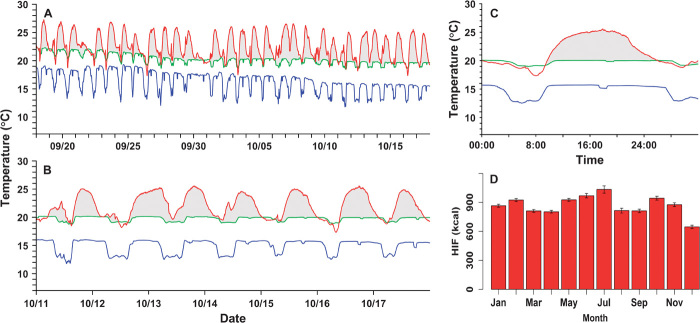
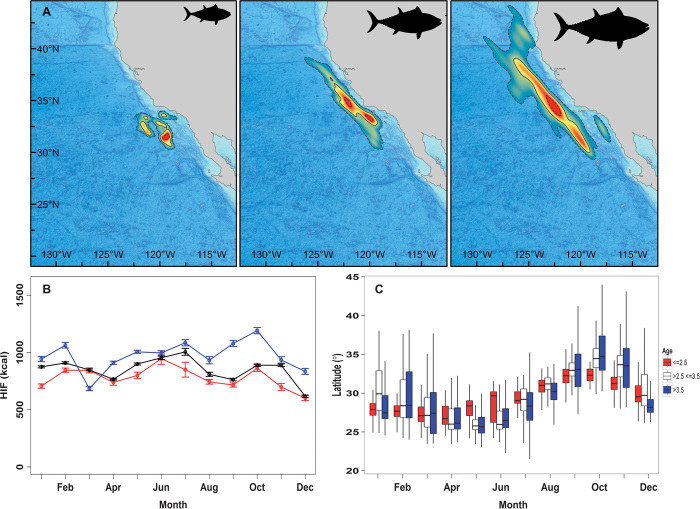
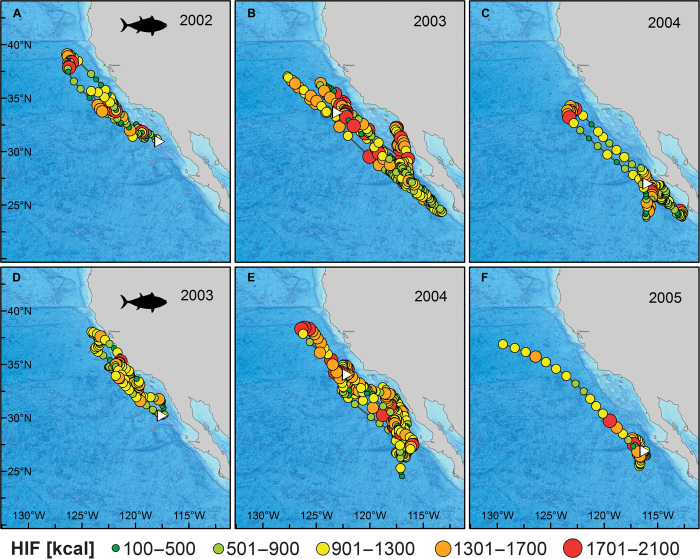
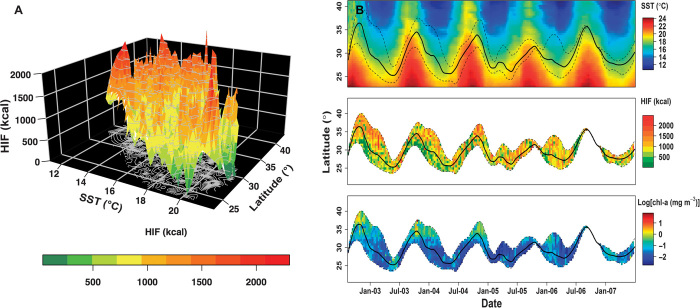
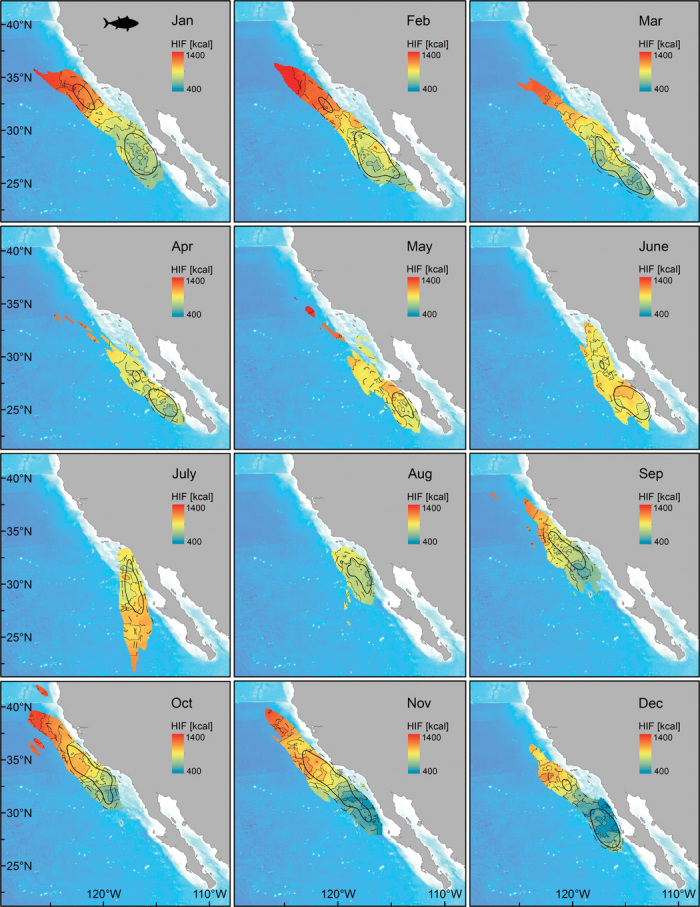
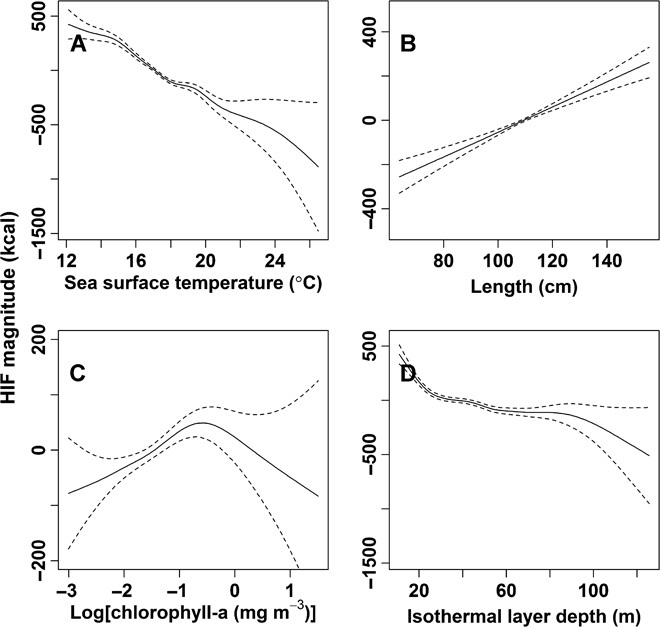
Pacific bluefin tuna (Thunnus orientalis) are highly migratory apex marine predators that inhabit a broad thermal niche. The energy needed for migration must be garnered by foraging, but measuring energy intake in the marine environment is challenging. We quantified the energy intake of Pacific bluefin tuna in the California Current using a laboratory-validated model, the first such measurement in a wild marine predator. Mean daily energy intake was highest off the coast of Baja California, Mexico in summer (mean ± SD, 1034 ± 669 kcal), followed by autumn when Pacific bluefin achieve their northernmost range in waters off northern California (944 ± 579 kcal). Movements were not always consistent with maximizing energy intake: the Pacific bluefin move out of energy rich waters both in late summer and winter, coincident with rising and falling water temperatures, respectively. We hypothesize that temperature-related physiological constraints drive migration and that Pacific bluefin tuna optimize energy intake within a range of optimal aerobic performance.
太平洋蓝鳍金枪鱼(Thunnus orientalis)是高度洄游的顶级海洋捕食者,栖息在广泛的热生态位中。洄游所需的能量必须通过觅食获取,但在海洋环境中测量能量摄入具有挑战性。我们使用经过实验室验证的模型量化了加利福尼亚洋流中太平洋蓝鳍金枪鱼的能量摄入,这是对野生海洋捕食者的首次此类测量。夏季,墨西哥下加利福尼亚海岸外的平均每日能量摄入量最高(平均值±标准差,1034±669千卡),其次是秋季,此时太平洋蓝鳍金枪鱼在加利福尼亚北部海域达到其最北分布范围(944±579千卡)。其洄游并不总是与能量摄入最大化相一致:太平洋蓝鳍金枪鱼在夏末和冬季都会离开富含能量的水域,分别与水温上升和下降同时发生。我们推测,与温度相关的生理限制驱动着洄游,并且太平洋蓝鳍金枪鱼在最佳有氧性能范围内优化能量摄入。