Sala-Rabanal Monica, Yurtsever Zeynep, Berry Kayla N, Brett Tom J
Department of Cell Biology and Physiology, Washington University School of Medicine, St. Louis, MO 63110, USA ; Center for the Investigation of Membrane Excitability Diseases, Washington University School of Medicine, St. Louis, MO 63110, USA.
Center for the Investigation of Membrane Excitability Diseases, Washington University School of Medicine, St. Louis, MO 63110, USA ; Biochemistry Program, Washington University School of Medicine, St. Louis, MO 63110, USA ; Department of Internal Medicine, Washington University School of Medicine, St. Louis, MO 63110, USA ; Drug Discovery Program in Pulmonary and Critical Care Medicine, Washington University School of Medicine, St. Louis, MO 63110, USA.
Mediators Inflamm. 2015;2015:497387. doi: 10.1155/2015/497387. Epub 2015 Nov 3.
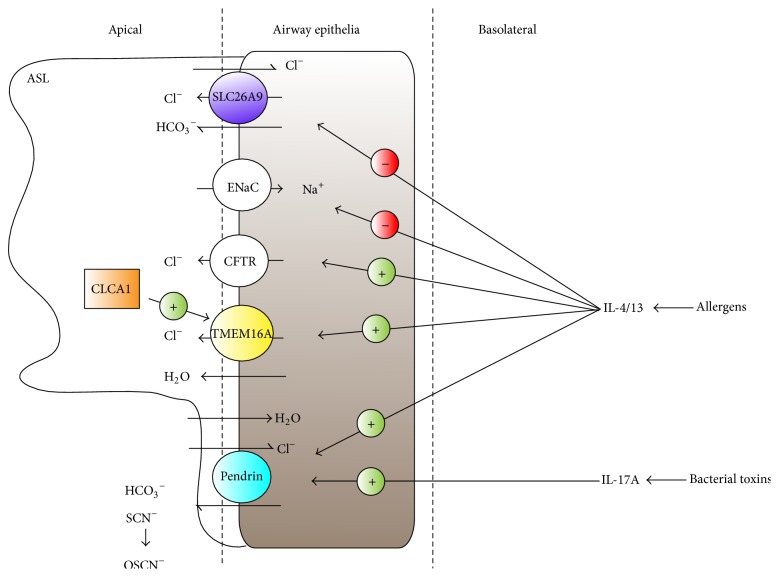
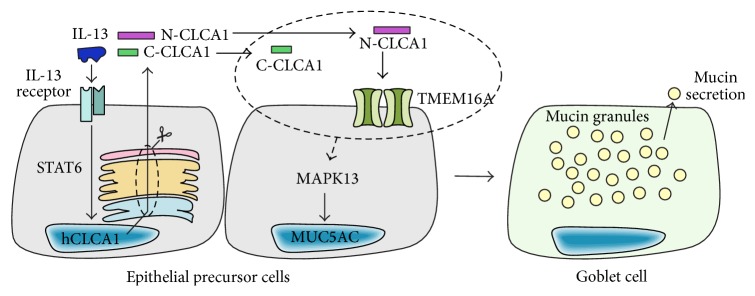
Chloride transport proteins play critical roles in inflammatory airway diseases, contributing to the detrimental aspects of mucus overproduction, mucus secretion, and airway constriction. However, they also play crucial roles in contributing to the innate immune properties of mucus and mucociliary clearance. In this review, we focus on the emerging novel roles for a chloride channel regulator (CLCA1), a calcium-activated chloride channel (TMEM16A), and two chloride exchangers (SLC26A4/pendrin and SLC26A9) in chronic inflammatory airway diseases.
氯离子转运蛋白在炎性气道疾病中发挥着关键作用,导致黏液过度产生、黏液分泌和气道收缩等有害影响。然而,它们在黏液的固有免疫特性和黏液纤毛清除中也起着至关重要的作用。在本综述中,我们聚焦于氯离子通道调节蛋白(CLCA1)、钙激活氯离子通道(TMEM16A)以及两种氯离子交换体(SLC26A4/ Pendrin和SLC26A9)在慢性炎性气道疾病中的新出现的作用。