Uyangaa Erdenebileg, Kim Jin Hyoung, Patil Ajit Mahadev, Choi Jin Young, Kim Seong Bum, Eo Seong Kug
College of Veterinary Medicine and Bio-Safety Research Institute, Chonbuk National University, Iksan, Republic of Korea.
Department of Bioactive Material Sciences, Graduate School, Chonbuk National University, Jeonju, Republic of Korea.
PLoS Pathog. 2015 Nov 30;11(11):e1005256. doi: 10.1371/journal.ppat.1005256. eCollection 2015.
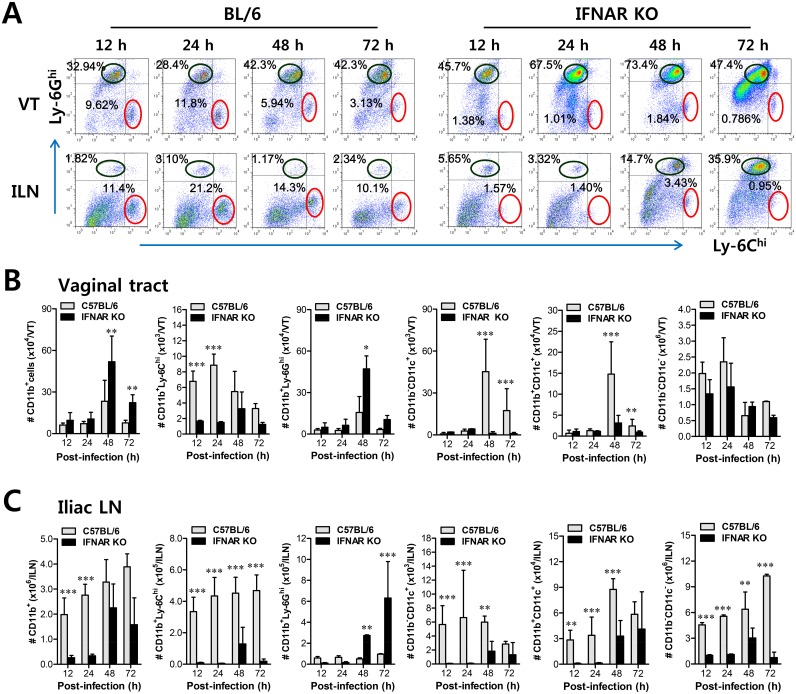
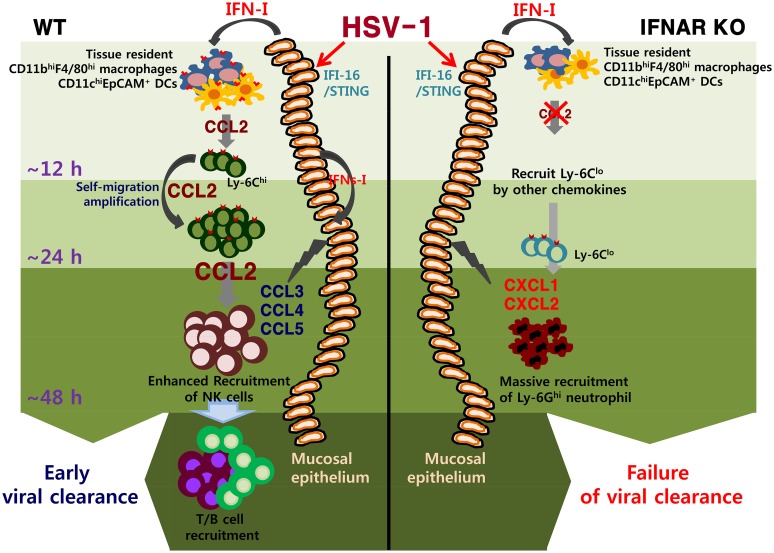
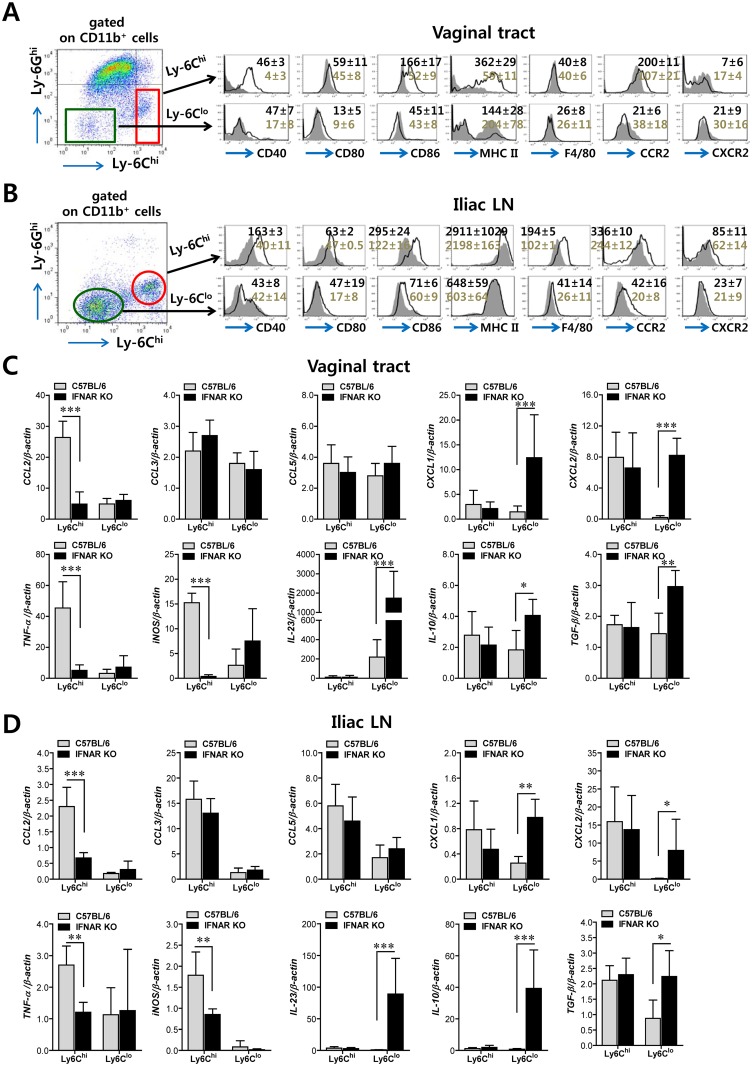
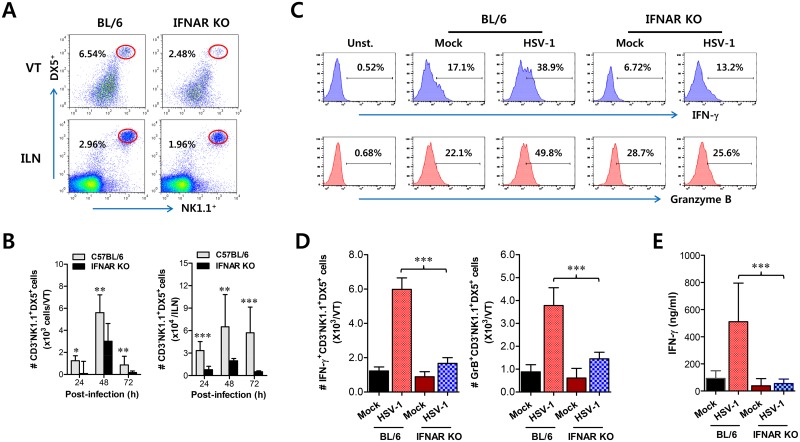
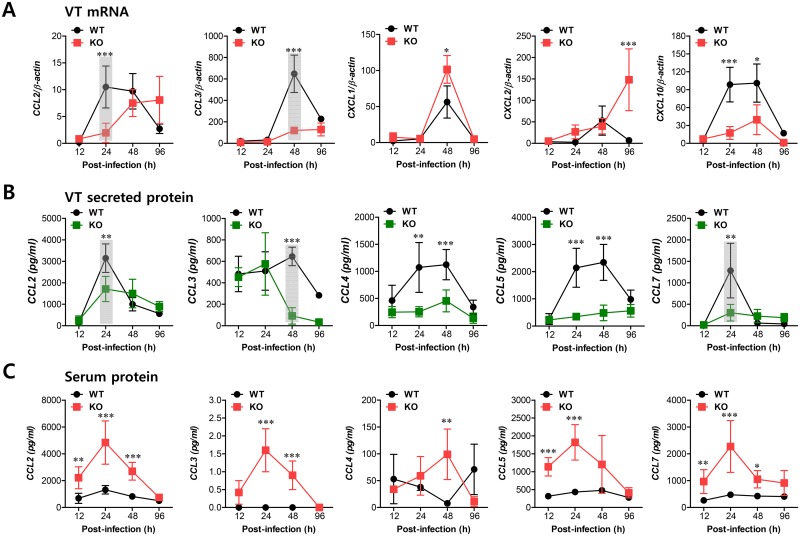
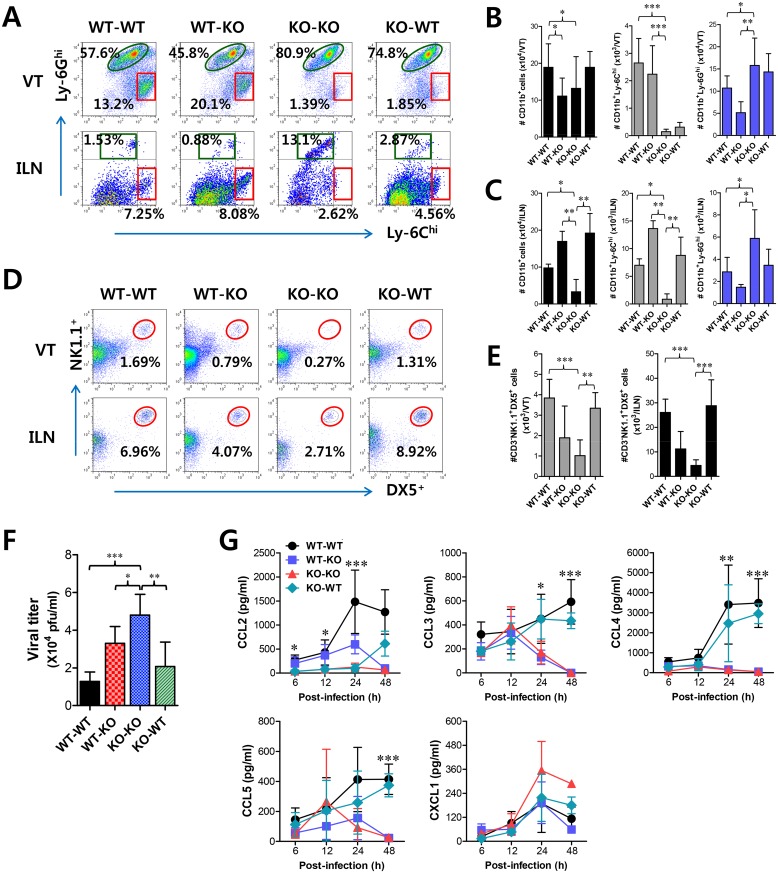
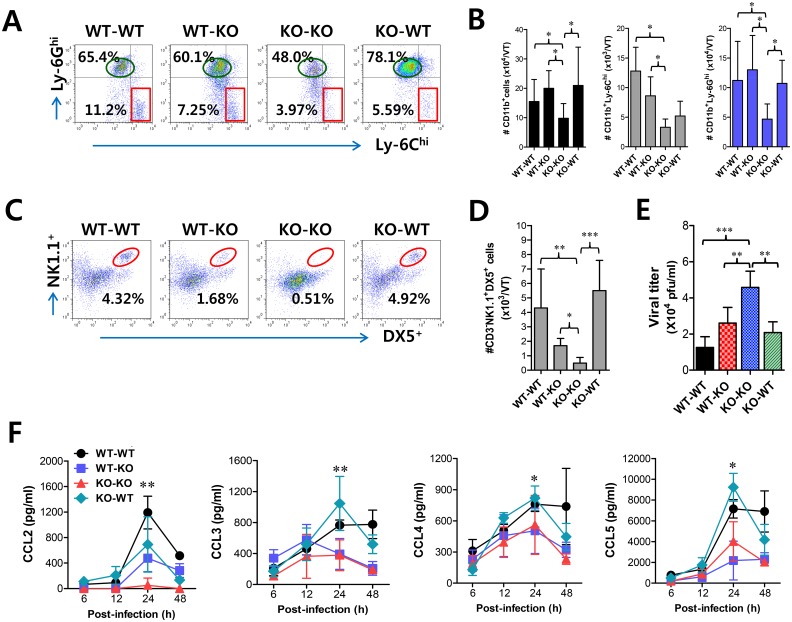
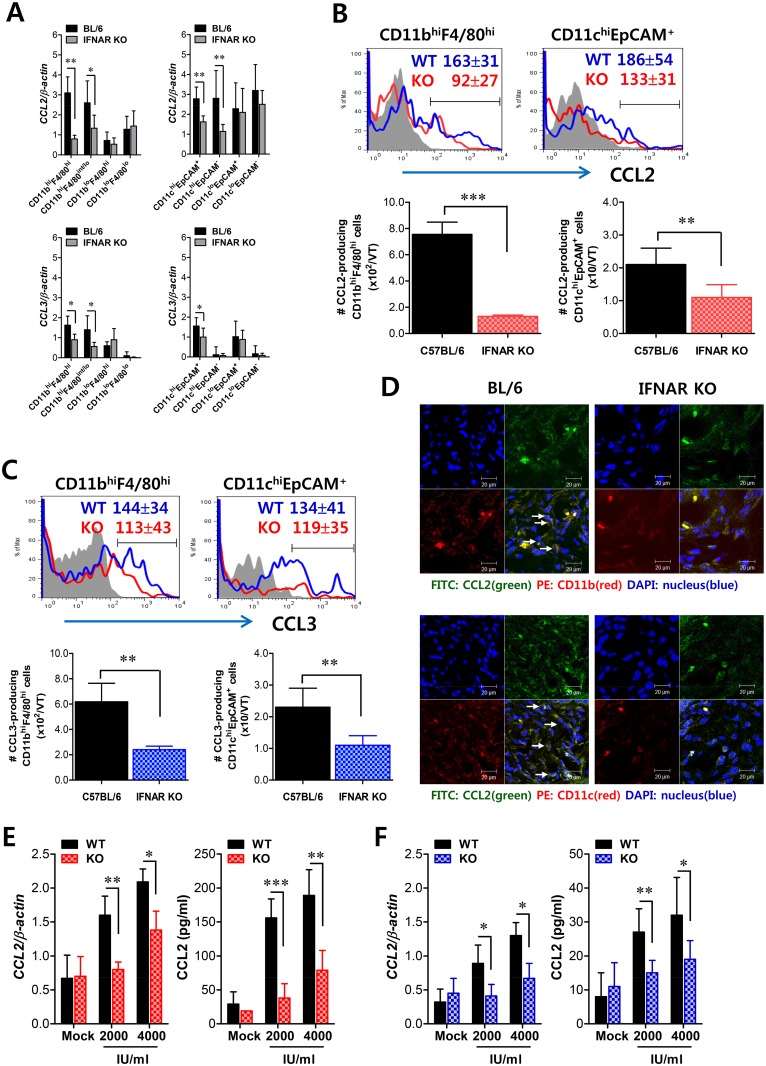
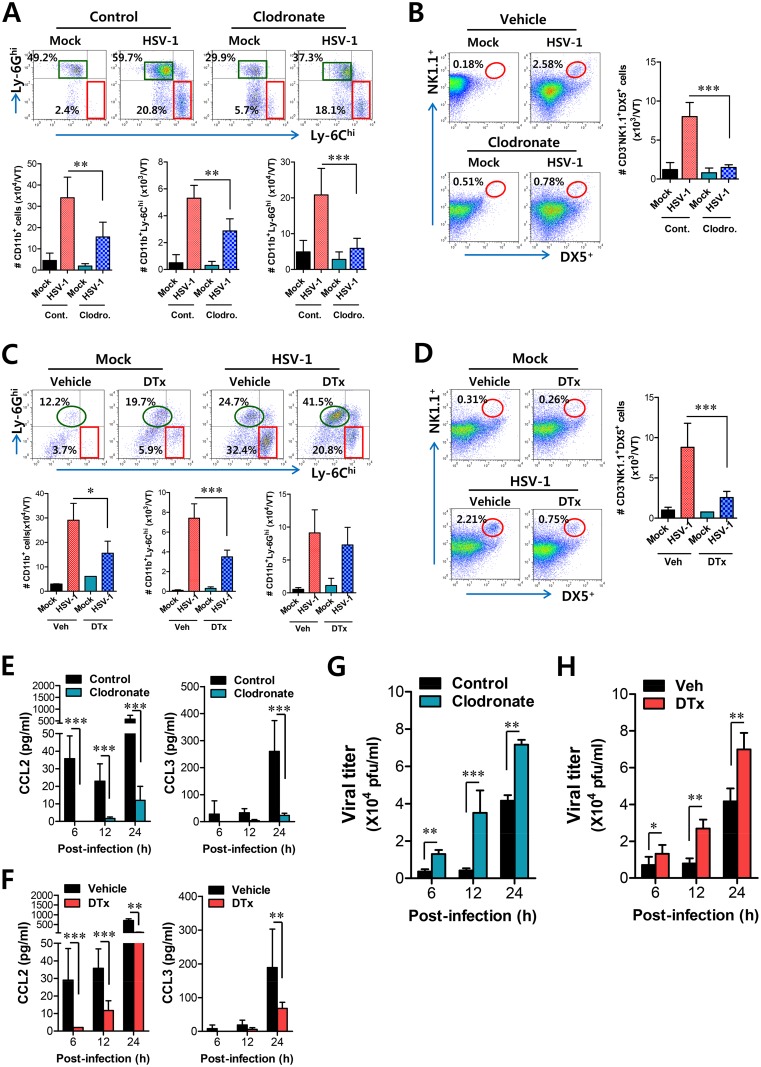
Type I interferon (IFN-I)-dependent orchestrated mobilization of innate cells in inflamed tissues is believed to play a critical role in controlling replication and CNS-invasion of herpes simplex virus (HSV). However, the crucial regulators and cell populations that are affected by IFN-I to establish the early environment of innate cells in HSV-infected mucosal tissues are largely unknown. Here, we found that IFN-I signaling promoted the differentiation of CCL2-producing Ly-6Chi monocytes and IFN-γ/granzyme B-producing NK cells, whereas deficiency of IFN-I signaling induced Ly-6Clo monocytes producing CXCL1 and CXCL2. More interestingly, recruitment of Ly-6Chi monocytes preceded that of NK cells with the levels peaked at 24 h post-infection in IFN-I-dependent manner, which was kinetically associated with the CCL2-CCL3 cascade response. Early Ly-6Chi monocyte recruitment was governed by CCL2 produced from hematopoietic stem cell (HSC)-derived leukocytes, whereas NK cell recruitment predominantly depended on CC chemokines produced by resident epithelial cells. Also, IFN-I signaling in HSC-derived leukocytes appeared to suppress Ly-6Ghi neutrophil recruitment to ameliorate immunopathology. Finally, tissue resident CD11bhiF4/80hi macrophages and CD11chiEpCAM+ dendritic cells appeared to produce initial CCL2 for migration-based self-amplification of early infiltrated Ly-6Chi monocytes upon stimulation by IFN-I produced from infected epithelial cells. Ultimately, these results decipher a detailed IFN-I-dependent pathway that establishes orchestrated mobilization of Ly-6Chi monocytes and NK cells through CCL2-CCL3 cascade response of HSC-derived leukocytes and epithelium-resident cells. Therefore, this cascade response of resident-to-hematopoietic-to-resident cells that drives cytokine-to-chemokine-to-cytokine production to recruit orchestrated innate cells is critical for attenuation of HSV replication in inflamed tissues.
I型干扰素(IFN-I)依赖性地协调炎症组织中固有细胞的动员被认为在控制单纯疱疹病毒(HSV)的复制和中枢神经系统入侵中起关键作用。然而,在HSV感染的粘膜组织中,受IFN-I影响以建立固有细胞早期环境的关键调节因子和细胞群体在很大程度上尚不清楚。在这里,我们发现IFN-I信号促进产生CCL2的Ly-6Chi单核细胞和产生IFN-γ/颗粒酶B的NK细胞的分化,而IFN-I信号缺陷诱导产生CXCL1和CXCL2的Ly-6Clo单核细胞。更有趣的是,Ly-6Chi单核细胞的募集先于NK细胞,其水平在感染后24小时以IFN-I依赖性方式达到峰值,这在动力学上与CCL2-CCL3级联反应相关。早期Ly-6Chi单核细胞的募集受造血干细胞(HSC)来源的白细胞产生的CCL2控制,而NK细胞的募集主要依赖于驻留上皮细胞产生的CC趋化因子。此外,HSC来源的白细胞中的IFN-I信号似乎抑制Ly-6Ghi中性粒细胞的募集以改善免疫病理学。最后,组织驻留的CD11bhiF4/80hi巨噬细胞和CD11chiEpCAM+树突状细胞似乎在受感染上皮细胞产生的IFN-I刺激后产生初始CCL2,用于早期浸润的Ly-6Chi单核细胞基于迁移的自我扩增。最终,这些结果揭示了一条详细的IFN-I依赖性途径,该途径通过HSC来源的白细胞和上皮驻留细胞的CCL2-CCL3级联反应建立Ly-6Chi单核细胞和NK细胞的协调动员。因此,这种从驻留细胞到造血细胞再到驻留细胞的级联反应,驱动细胞因子到趋化因子再到细胞因子的产生以募集协调的固有细胞,对于减轻炎症组织中HSV的复制至关重要。