Hansson Helle Holm, Turner Louise, Møller Line, Wang Christian William, Minja Daniel T R, Gesase Samwel, Mmbando Bruno, Bygbjerg Ib Christian, Theander Thor G, Lusingu John P A, Alifrangis Michael, Lavstsen Thomas
Centre for Medical Parasitology, Department of Immunology and Microbiology, Faculty of Health and Medical Science, University of Copenhagen, Østerfarimagsgade 5, Building 22-23, 1356, Copenhagen K, Denmark.
Department of Clinical Microbiology and Department of Infectious Diseases, Copenhagen University Hospital (Rigshospitalet), Blegdamsvej 9, 2100, Copenhagen Ø, Denmark.
Malar J. 2015 Dec 1;14:474. doi: 10.1186/s12936-015-1007-6.
Endothelial protein C receptor (EPCR) was recently identified as a key receptor for Plasmodium falciparum erythrocyte membrane protein 1 mediating sequestration of P. falciparum-infected erythrocytes in patients suffering from severe malaria. Soluble EPCR (sEPCR) inhibits binding of P. falciparum to EPCR in vitro and increased levels of sEPCR have been associated with the H3 haplotype of the EPCR encoding PROCR gene. It has been hypothesized that elevated sEPCR levels, possibly linked to the PROCR H3 genetic variant, may confer protection against severe forms of malaria. This study determined the frequencies of PROCR haplotypes H1-4 and plasma levels of sEPCR in a Tanzanian study population to investigate a possible association with severe malaria.
Study participants were children under 5 years of age admitted at the Korogwe District Hospital (N = 143), and diagnosed as having severe malaria (N = 52; including cerebral malaria N = 17), uncomplicated malaria (N = 24), or an infection other than malaria (N = 67). In addition, blood samples from 71 children living in nearby villages were included. The SNPs defining the haplotypes of PROCR gene were determined by post-PCR ligation detection reaction-fluorescent microsphere assay.
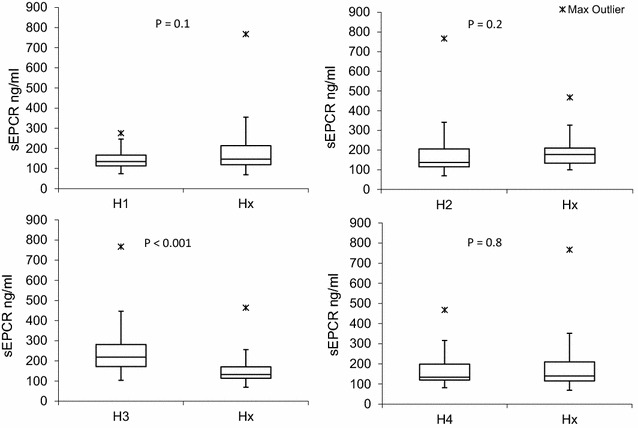
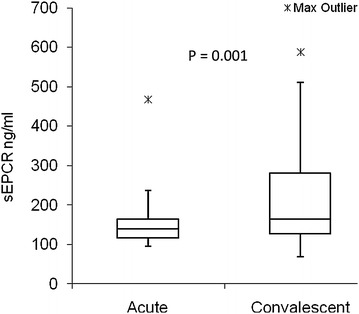
Individuals carrying at least one H3 allele had significantly higher levels of sEPCR than individuals with no H3 alleles (P < 0.001). No difference in the frequency of H3 was found between the non-malaria patients, malaria patients or the village population (P > 0.1). Plasma levels of sEPCR differed between these three groups, with higher sEPCR levels in the village population compared to the hospitalized patients (P < 0.001) and higher levels in malaria patients compared to non-malaria patients (P = 0.001). However, no differences were found in the distribution of H3 (P = 0.2) or levels of sEPCR (P = 0.8) between patients diagnosed with severe and uncomplicated malaria.
Frequencies of SNPs determining PROCR haplotypes were in concordance with other African studies. The PROCR H3 allele was associated with higher levels of sEPCR, confirming earlier findings, however, in this Tanzanian population; neither PROCR haplotype nor level of sEPCR was associated with severe malaria, however, larger studies are needed to confirm these findings.
内皮蛋白C受体(EPCR)最近被确定为恶性疟原虫红细胞膜蛋白1的关键受体,介导严重疟疾患者体内恶性疟原虫感染红细胞的滞留。可溶性EPCR(sEPCR)在体外可抑制恶性疟原虫与EPCR的结合,sEPCR水平升高与编码PROCR基因的EPCR的H3单倍型有关。据推测,sEPCR水平升高可能与PROCR H3基因变异有关,可能对严重形式的疟疾具有保护作用。本研究确定了坦桑尼亚研究人群中PROCR单倍型H1 - 4的频率和sEPCR的血浆水平,以调查其与严重疟疾的可能关联。
研究参与者为在科罗格韦区医院就诊的5岁以下儿童(N = 143),诊断为患有严重疟疾(N = 52;包括脑型疟疾N = 17)、非复杂性疟疾(N = 24)或非疟疾感染(N = 67)。此外,还纳入了来自附近村庄的71名儿童的血样。通过PCR后连接检测反应 - 荧光微球法确定定义PROCR基因单倍型的单核苷酸多态性。
携带至少一个H3等位基因的个体的sEPCR水平显著高于无H3等位基因的个体(P < 0.001)。非疟疾患者、疟疾患者或村庄人群之间H3频率无差异(P > 0.1)。这三组之间sEPCR的血浆水平不同,村庄人群的sEPCR水平高于住院患者(P < 0.001),疟疾患者的水平高于非疟疾患者(P = 0.001)。然而,在诊断为严重疟疾和非复杂性疟疾的患者之间,H3的分布(P = 0.2)或sEPCR水平(P = 0.