Seo Kyung-Won, Kwon Soon-Yong, Kim Kyung A, Park Ki-Ho, Kim Seong-Hun, Ahn Hyo-Won, Nelson Gerald
Department of Orthodontics, School of Dentistry, Kyung Hee University, Seoul, Korea.
Division of Orthodontics, Department of Orofacial Science, University of California San Francisco, San Francisco, CA, USA.
Korean J Orthod. 2015 Nov;45(6):289-98. doi: 10.4041/kjod.2015.45.6.289. Epub 2015 Nov 20.
To evaluate and compare the effects of two appliances on the en masse retraction of the anterior teeth anchored by temporary skeletal anchorage devices (TSADs).
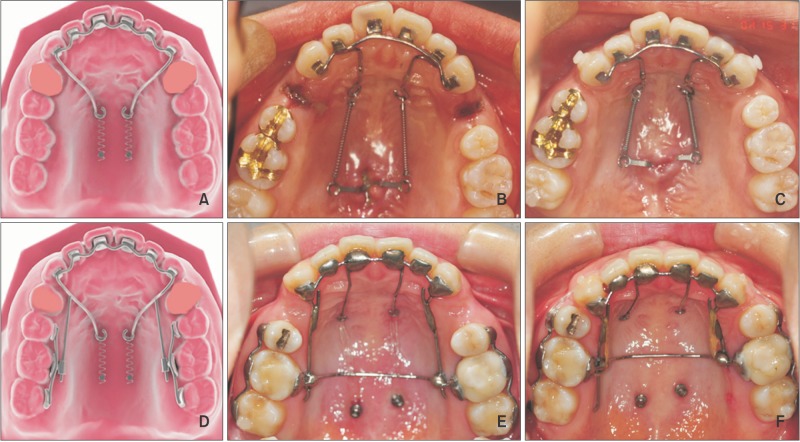
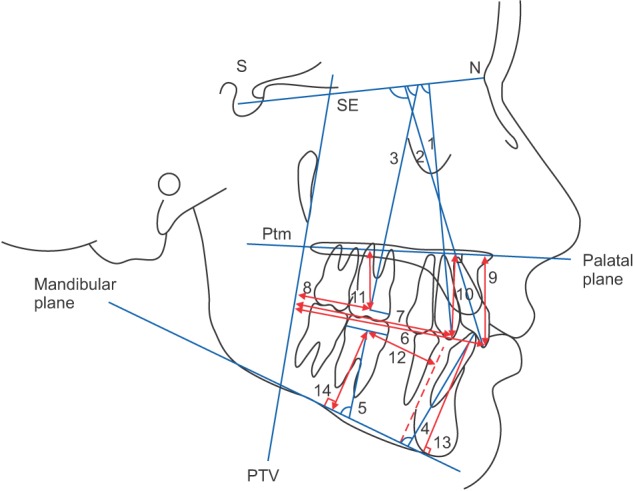
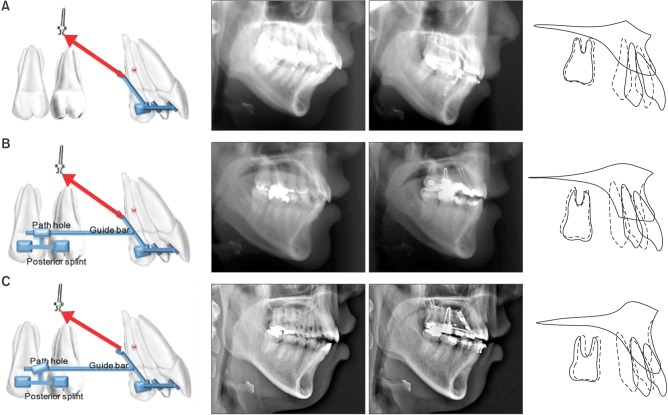
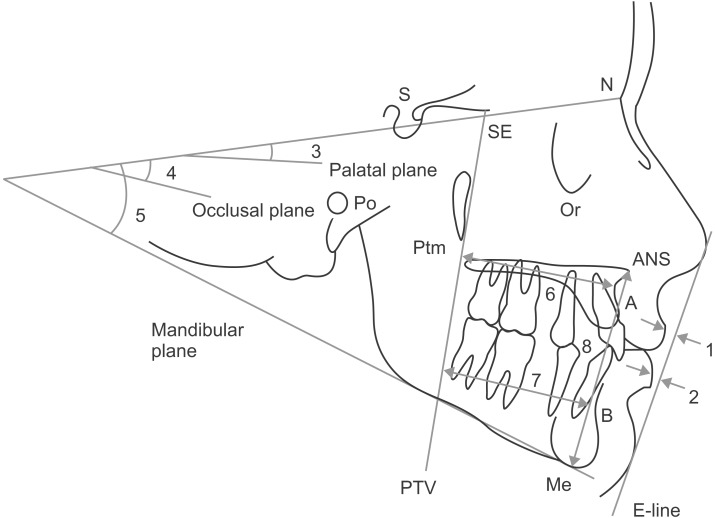
The sample comprised 46 nongrowing hyperdivergent adult patients who planned to undergo upper first premolar extraction using lingual retractors. They were divided into three groups, based on the lingual appliance used: the C-lingual retractor (CLR) group (group 1, n = 16) and two antero-posterior lingual retractor (APLR) groups (n = 30, groups 2 and 3). The APLR group was divided by the posterior tube angulation; posterior tube parallel to the occlusal plane (group 2, n = 15) and distally tipped tube (group 3, n = 15). A retrospective clinical investigation of the skeletal, dental, and soft tissue relationships was performed using lateral cephalometric radiographs obtained pretreatment and post en masse retraction of the anterior teeth.
All groups achieved significant incisor and canine retraction. The upper posterior teeth did not drift significantly during the retraction period. The APLR group had less angulation change in the anterior dentition, compared to the CLR group. By changing the tube angulation in the APLR, the intrusive force significantly increased in the distally tipped tube of group 3 patients and remarkably reduced the occlusal plane angle.
Compared to the CLR, the APLR provides better anterior torque control and canine tipping while achieving bodily translation. Furthermore, changing the tube angulation will affect the amount of incisor intrusion, even in patients with similar palatal vault depth, without the need for additional TSADs.
评估和比较两种矫治器对临时骨支抗装置(TSADs)锚固的前牙整体后移的效果。
样本包括46例非生长型高角成年患者,他们计划使用舌侧矫治器拔除上颌第一前磨牙。根据使用的舌侧矫治器,将他们分为三组:C型舌侧矫治器(CLR)组(第1组,n = 16)和两个前后向舌侧矫治器(APLR)组(n = 30,第2组和第3组)。APLR组根据后牙管角度进行划分;后牙管与咬合平面平行(第2组,n = 15)和远中倾斜管(第3组,n = 15)。使用在治疗前和前牙整体后移后获得的头颅侧位片对骨骼、牙齿和软组织关系进行回顾性临床研究。
所有组均实现了显著的切牙和尖牙后移。在牙齿后移期间,上颌后牙没有明显漂移。与CLR组相比,APLR组在前牙列中的角度变化较小。通过改变APLR中的管角度,第3组患者远中倾斜管中的侵入力显著增加,并显著降低了咬合平面角。
与CLR相比,APLR在实现整体移动的同时,能提供更好的前牙转矩控制和尖牙倾斜控制。此外,即使在腭穹窿深度相似的患者中,改变管角度也会影响切牙的侵入量,而无需额外的TSADs。