Lei Yan, Yang Fan, Tang Lina, Chen Keli, Zhang Guo-Jun
School of Laboratory Medicine, Hubei University of Chinese Medicine, 1 Huangjia Lake West Road, Wuhan 430065, China.
School of Pharmacy, Hubei University of Chinese Medicine, 1 Huangjia Lake West Road, Wuhan 430065, China.
Sensors (Basel). 2015 Nov 30;15(12):29882-92. doi: 10.3390/s151229773.
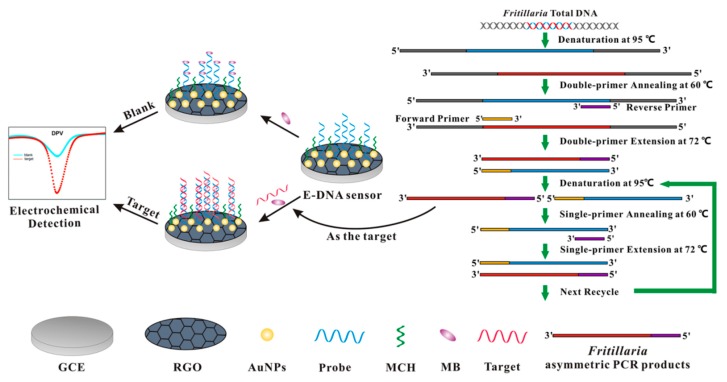
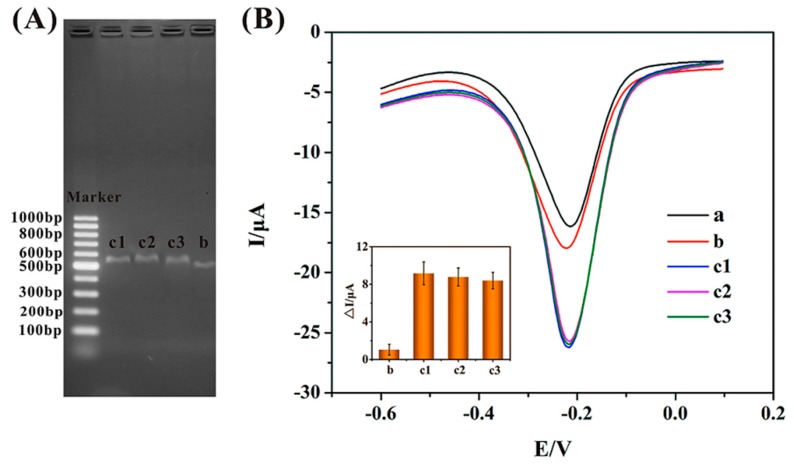
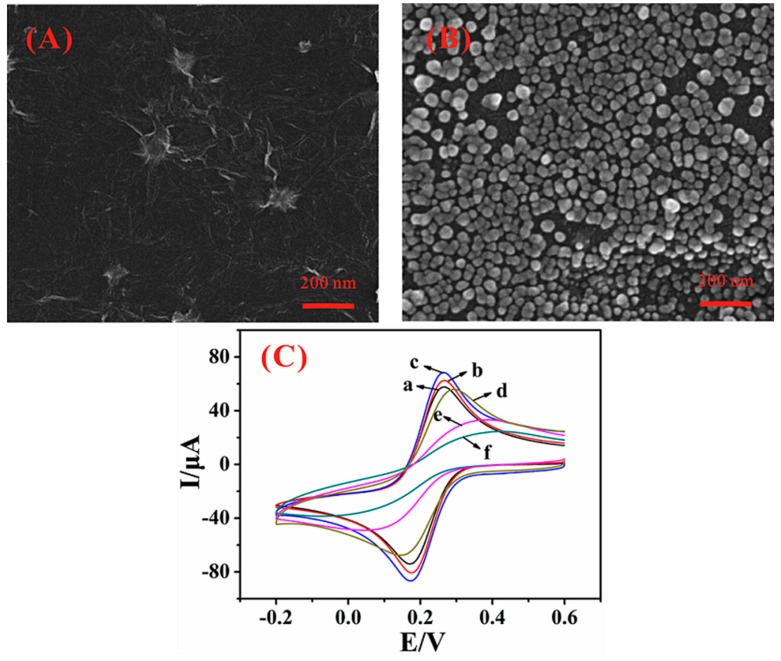
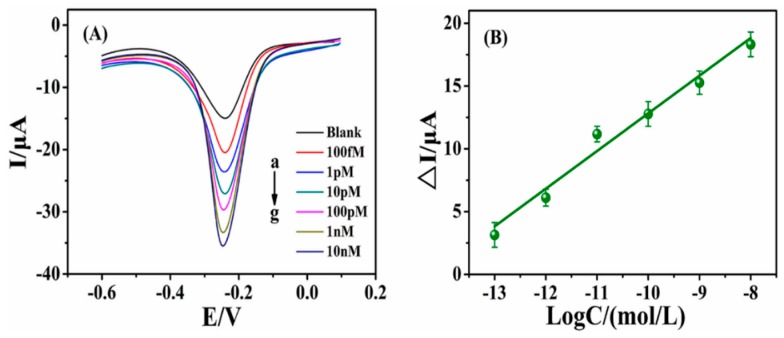
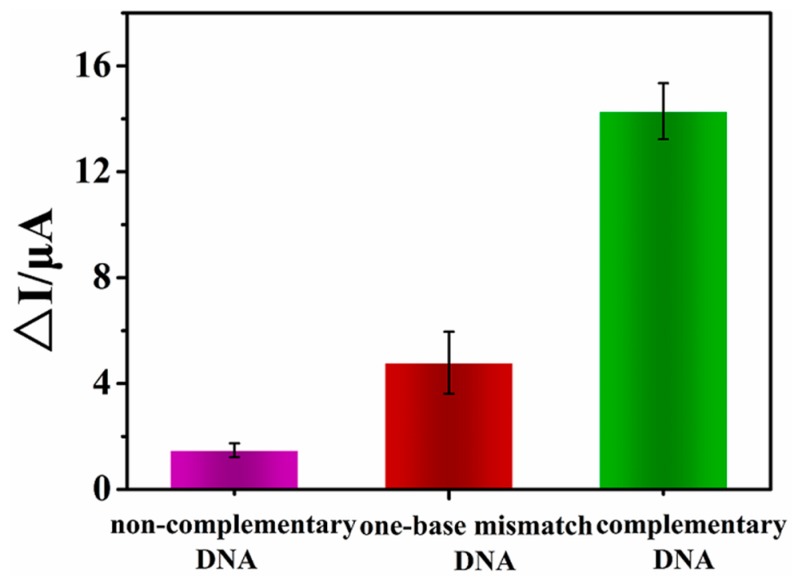
Due to the nearly identical phenotypes and chemical constituents, it is often very challenging to accurately differentiate diverse species of a Chinese herbal genus. Although technologies including DNA barcoding have been introduced to help address this problem, they are generally time-consuming and require expensive sequencing. Herein, we present a simple sequencing-free electrochemical biosensor, which enables easy differentiation between two closely related Fritillaria species. To improve its differentiation capability using trace amounts of DNA sample available from herbal extracts, a stepwise electrochemical deposition of reduced graphene oxide (RGO) and gold nanoparticles (AuNPs) was adopted to engineer a synergistic nanostructured sensing interface. By using such a nanofeatured electrochemical DNA (E-DNA) biosensor, two Chinese herbal species of Fritillaria (F. thunbergii and F. cirrhosa) were successfully discriminated at the DNA level, because a fragment of 16-mer sequence at the spacer region of the 5S-rRNA only exists in F. thunbergii. This E-DNA sensor was capable of identifying the target sequence in the range from 100 fM to 10 nM, and a detection limit as low as 11.7 fM (S/N = 3) was obtained. Importantly, this sensor was applied to detect the unique fragment of the PCR products amplified from F. thunbergii and F. cirrhosa, respectively. We anticipate that such a direct, sequencing-free sensing mode will ultimately pave the way towards a new generation of herb-identification strategies.
由于表型和化学成分几乎相同,准确区分中药属的不同物种往往极具挑战性。尽管已引入包括DNA条形码在内的技术来帮助解决这一问题,但这些技术通常耗时且需要昂贵的测序。在此,我们展示了一种简单的无测序电化学生物传感器,它能够轻松区分两种近缘的贝母属物种。为了利用从草药提取物中获得的痕量DNA样本提高其区分能力,采用氧化石墨烯(RGO)和金纳米颗粒(AuNPs)的逐步电化学沉积来构建协同纳米结构传感界面。通过使用这种具有纳米特征的电化学DNA(E-DNA)生物传感器,在DNA水平上成功区分了两种贝母属中药(浙贝母和川贝母),因为5S-rRNA间隔区的一个16聚体序列片段仅存在于浙贝母中。这种E-DNA传感器能够在100 fM至10 nM范围内识别目标序列,检测限低至11.7 fM(S/N = 3)。重要的是,该传感器应用于分别检测从浙贝母和川贝母扩增的PCR产物的独特片段。我们预计,这种直接的、无测序的传感模式最终将为新一代草药鉴定策略铺平道路。