Snow Wanda M, Pahlavan Payam S, Djordjevic Jelena, McAllister Danielle, Platt Eric E, Alashmali Shoug, Bernstein Michael J, Suh Miyoung, Albensi Benedict C
Division of Neurodegenerative Disorders, St. Boniface Hospital Research Winnipeg, MB, Canada ; Faculty of Health Sciences, Department of Pharmacology and Therapeutics, College of Medicine, University of Manitoba Winnipeg, MB, Canada.
Division of Neurodegenerative Disorders, St. Boniface Hospital Research Winnipeg, MB, Canada.
Front Mol Neurosci. 2015 Nov 18;8:70. doi: 10.3389/fnmol.2015.00070. eCollection 2015.
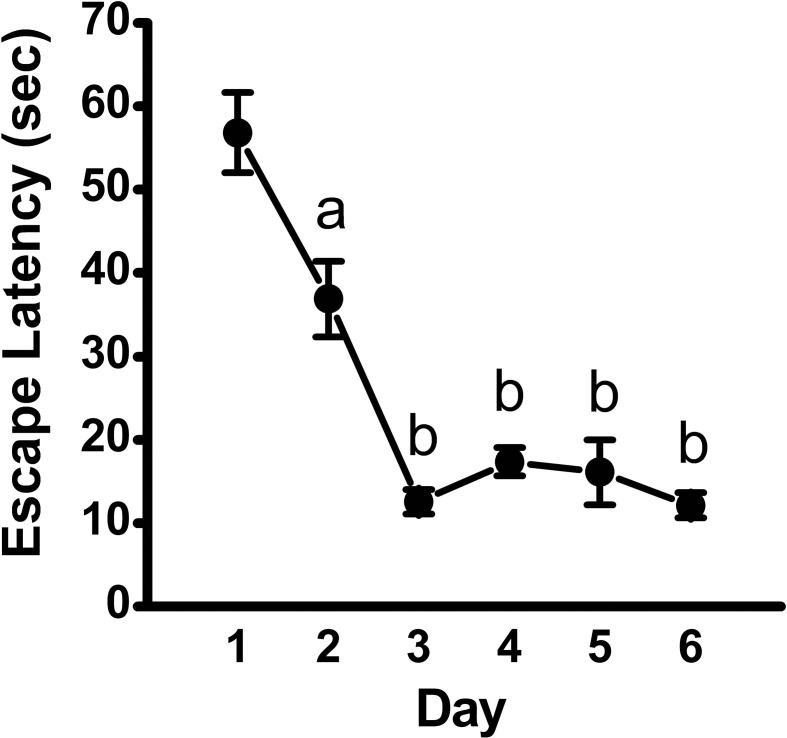
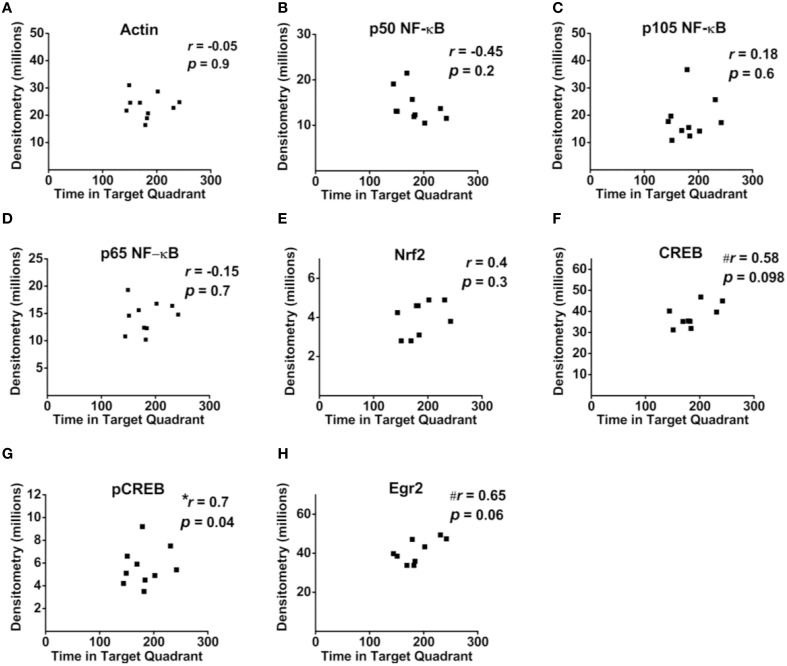
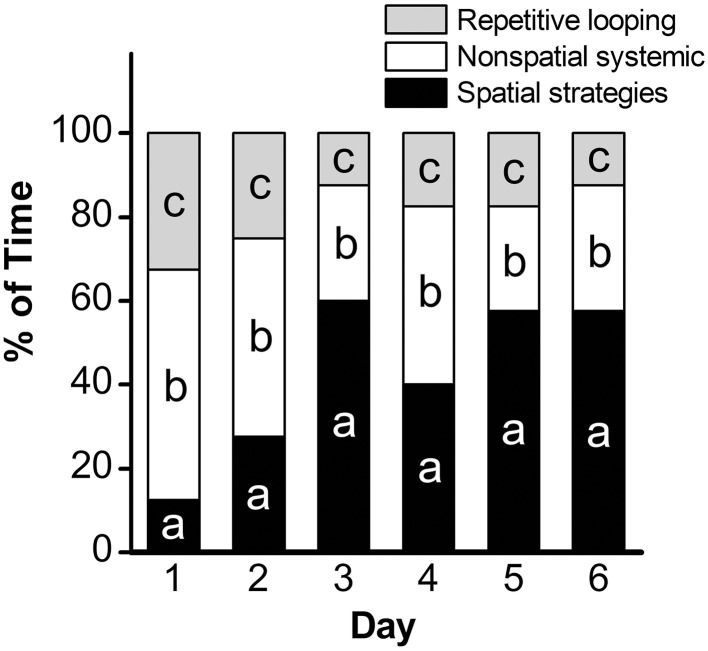
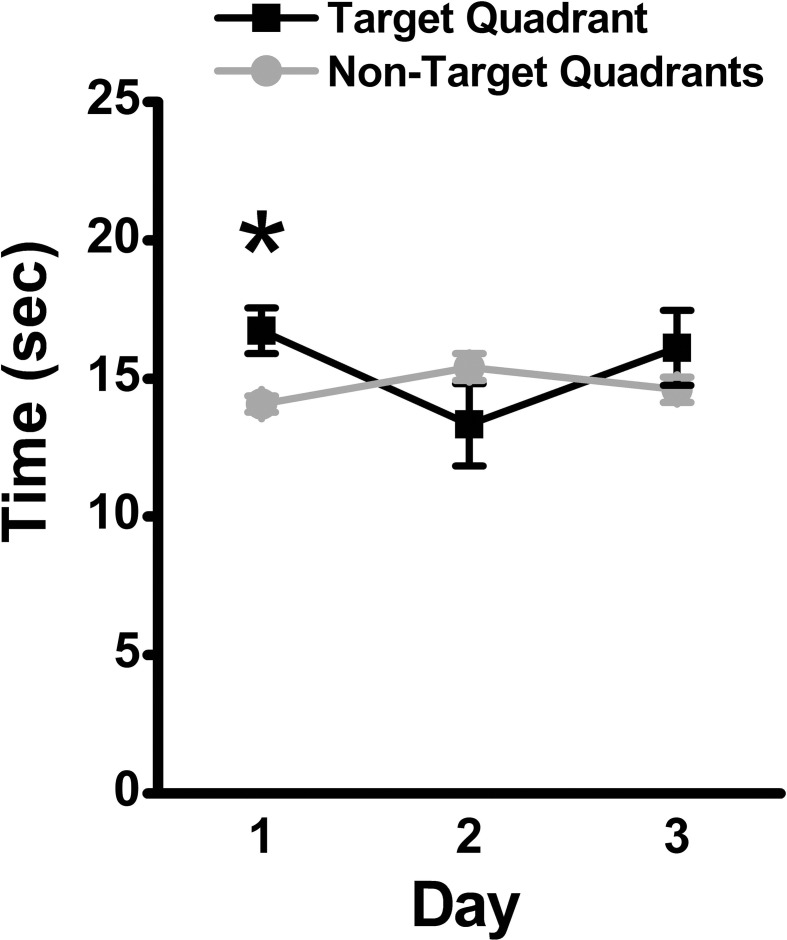
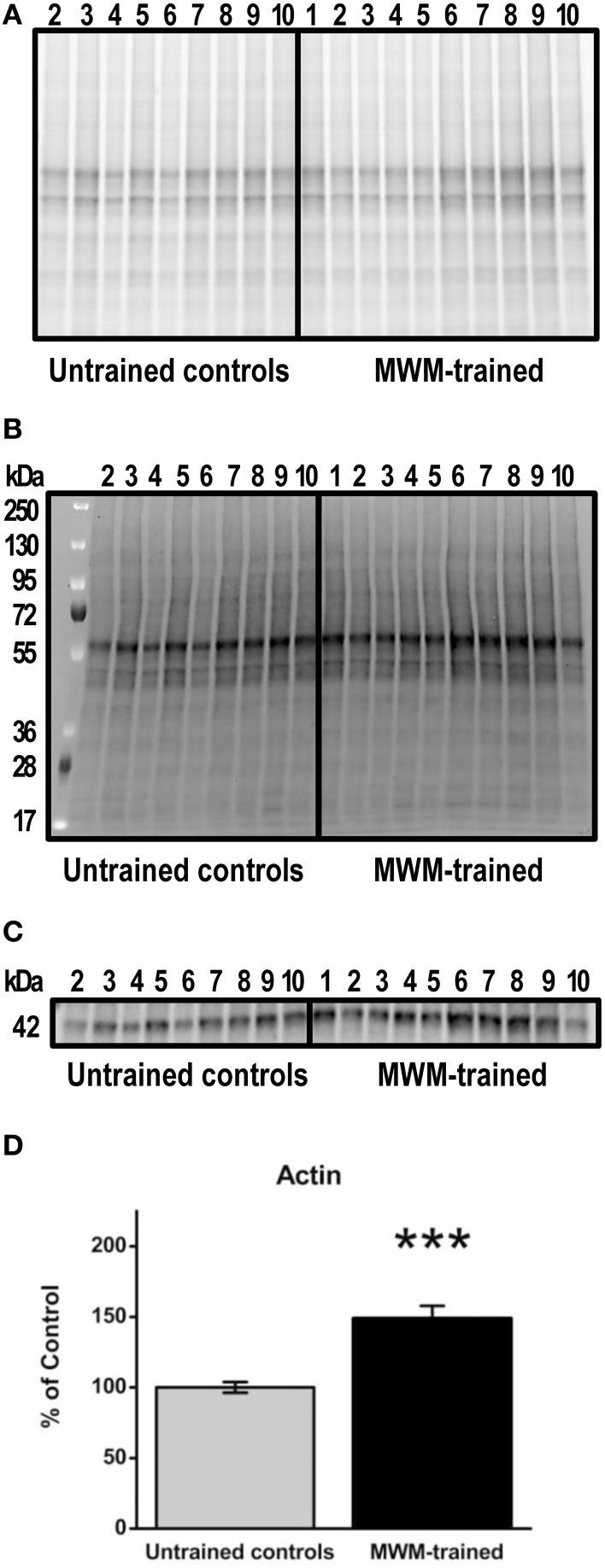
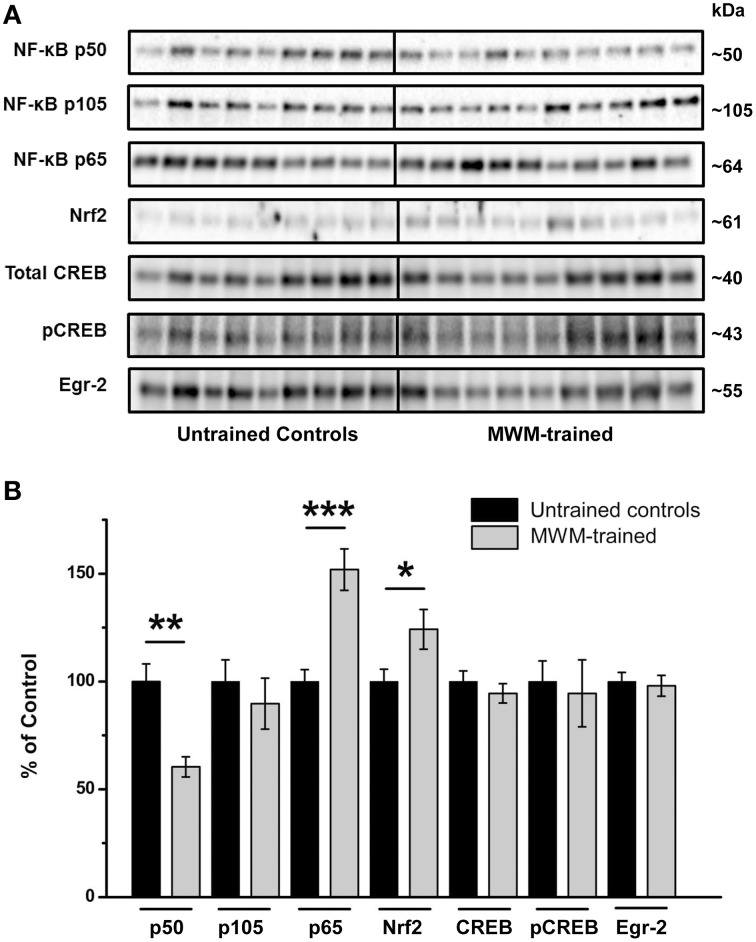
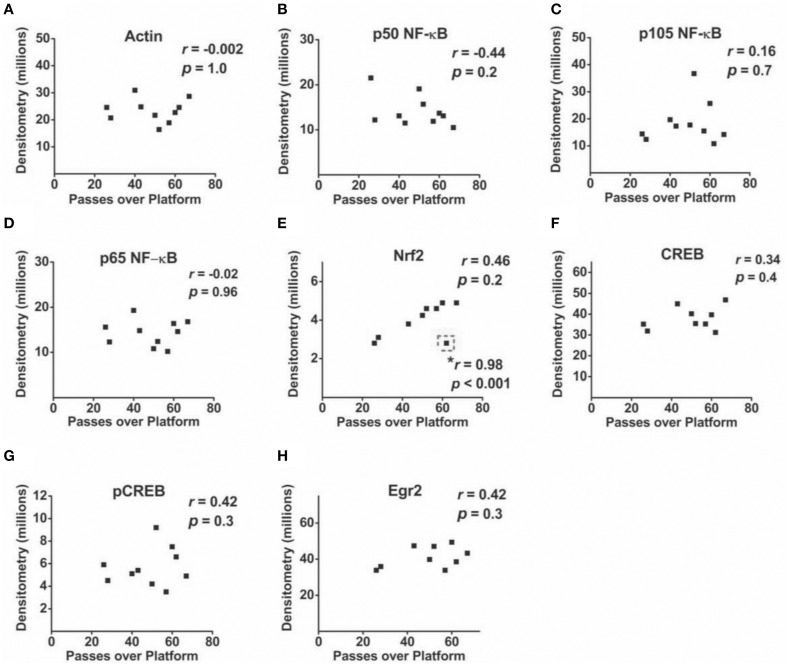
Research has identified several transcription factors that regulate activity-dependent plasticity and memory, with cAMP-response element binding protein (CREB) being the most well-studied. In neurons, CREB activation is influenced by the transcription factor nuclear factor kappa B (NF-κB), considered central to immunity but more recently implicated in memory. The transcription factor early growth response-2 (Egr-2), an NF-κB gene target, is also associated with learning and memory. Nuclear factor (erythroid-derived 2)-like 2 (Nrf2), an antioxidant transcription factor linked to NF-κB in pathological conditions, has not been studied in normal memory. Given that numerous transcription factors implicated in activity-dependent plasticity demonstrate connections to NF-κB, this study simultaneously evaluated protein levels of NF-κB, CREB, Egr-2, Nrf2, and actin in hippocampi from young (1 month-old) weanling CD1 mice after training in the Morris water maze, a hippocampal-dependent spatial memory task. After a 6-day acquisition period, time to locate the hidden platform decreased in the Morris water maze. Mice spent more time in the target vs. non-target quadrants of the maze, suggestive of recall of the platform location. Western blot data revealed a decrease in NF-κB p50 protein after training relative to controls, whereas NF-κB p65, Nrf2 and actin increased. Nrf2 levels were correlated with platform crosses in nearly all tested animals. These data demonstrate that training in a spatial memory task results in alterations in and associations with particular transcription factors in the hippocampus, including upregulation of NF-κB p65 and Nrf2. Training-induced increases in actin protein levels caution against its use as a loading control in immunoblot studies examining activity-dependent plasticity, learning, and memory.
研究已确定了几种调节活动依赖性可塑性和记忆的转录因子,其中环磷酸腺苷反应元件结合蛋白(CREB)是研究最为深入的。在神经元中,CREB的激活受转录因子核因子κB(NF-κB)影响,NF-κB被认为是免疫的核心,但最近也与记忆有关。转录因子早期生长反应-2(Egr-2)是NF-κB的基因靶点,也与学习和记忆相关。核因子(红系衍生2)样2(Nrf2)是一种在病理条件下与NF-κB相关的抗氧化转录因子,尚未在正常记忆中进行研究。鉴于许多与活动依赖性可塑性相关的转录因子都显示与NF-κB存在联系,本研究同时评估了在莫里斯水迷宫(一种依赖海马体的空间记忆任务)中训练后的幼年(1月龄)断奶CD1小鼠海马体中NF-κB、CREB、Egr-2、Nrf2和肌动蛋白的蛋白水平。在为期6天的训练期后,在莫里斯水迷宫中找到隐藏平台的时间减少。小鼠在迷宫的目标象限与非目标象限中停留的时间更长,这表明它们回忆起了平台的位置。蛋白质印迹数据显示,与对照组相比,训练后NF-κB p50蛋白减少,而NF-κB p65、Nrf2和肌动蛋白增加。几乎在所有测试动物中,Nrf2水平与穿越平台的次数相关。这些数据表明,空间记忆任务训练会导致海马体中特定转录因子的变化及其关联,包括NF-κB p65和Nrf2的上调。训练诱导的肌动蛋白蛋白水平增加提醒人们,在研究活动依赖性可塑性、学习和记忆的免疫印迹研究中,不要将其用作上样对照。