Ashkani Sadegh, Rafii Mohd Y, Shabanimofrad Mahmoodreza, Miah Gous, Sahebi Mahbod, Azizi Parisa, Tanweer Fatah A, Akhtar Mohd Sayeed, Nasehi Abbas
Laboratory of Food Crops, Institute of Tropical Agriculture, Universiti Putra Malaysia Serdang, Malaysia ; Department of Agronomy and Plant Breeding, Yadegar -e- Imam Khomeini RAH Shahre-Rey Branch, Islamic Azad University Tehran, Iran.
Laboratory of Food Crops, Institute of Tropical Agriculture, Universiti Putra Malaysia Serdang, Malaysia.
Front Plant Sci. 2015 Nov 16;6:886. doi: 10.3389/fpls.2015.00886. eCollection 2015.
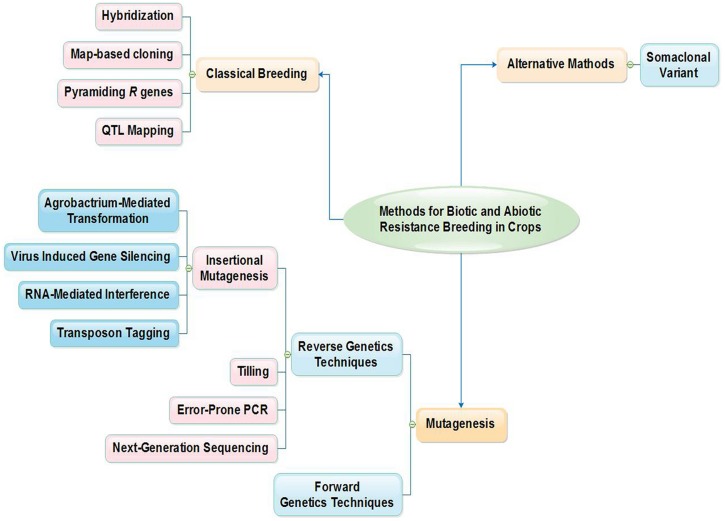
Rice is a staple and most important security food crop consumed by almost half of the world's population. More rice production is needed due to the rapid population growth in the world. Rice blast caused by the fungus, Magnaporthe oryzae is one of the most destructive diseases of this crop in different part of the world. Breakdown of blast resistance is the major cause of yield instability in several rice growing areas. There is a need to develop strategies providing long-lasting disease resistance against a broad spectrum of pathogens, giving protection for a long time over a broad geographic area, promising for sustainable rice production in the future. So far, molecular breeding approaches involving DNA markers, such as QTL mapping, marker-aided selection, gene pyramiding, allele mining and genetic transformation have been used to develop new resistant rice cultivars. Such techniques now are used as a low-cost, high-throughput alternative to conventional methods allowing rapid introgression of disease resistance genes into susceptible varieties as well as the incorporation of multiple genes into individual lines for more durable blast resistance. The paper briefly reviewed the progress of studies on this aspect to provide the interest information for rice disease resistance breeding. This review includes examples of how advanced molecular method have been used in breeding programs for improving blast resistance. New information and knowledge gained from previous research on the recent strategy and challenges towards improvement of blast disease such as pyramiding disease resistance gene for creating new rice varieties with high resistance against multiple diseases will undoubtedly provide new insights into the rice disease control.
水稻是一种主食,也是世界上近一半人口食用的最重要的粮食安全作物。由于世界人口的快速增长,需要增加水稻产量。由稻瘟病菌引起的稻瘟病是世界不同地区这种作物最具破坏性的病害之一。抗瘟性的丧失是几个水稻种植区产量不稳定的主要原因。有必要制定策略,提供对广泛病原体的持久抗病性,在广阔的地理区域内长期提供保护,有望在未来实现水稻的可持续生产。到目前为止,涉及DNA标记的分子育种方法,如QTL定位、标记辅助选择、基因聚合、等位基因挖掘和遗传转化,已被用于培育新的抗病水稻品种。这些技术现在被用作传统方法的低成本、高通量替代方法,允许将抗病基因快速导入易感品种,并将多个基因整合到单个品系中,以获得更持久的抗瘟性。本文简要回顾了这方面的研究进展,为水稻抗病育种提供感兴趣的信息。这篇综述包括先进分子方法如何用于育种计划以提高抗瘟性的例子。从以前关于改进稻瘟病的最新策略和挑战的研究中获得的新信息和知识,如聚合抗病基因以培育对多种病害具有高抗性的新水稻品种,无疑将为水稻病害防治提供新的见解。