Gomez-Peralta Fernando, Abreu Cristina, Castro Jose Carlos, Alcarria Elvira, Cruz-Bravo Margarita, Garcia-Llorente Maria Jesús, Albornos Cristina, Moreno Concepción, Cepeda María, Almodóvar Francisca
Unidad de Endocrinología y Nutrición, Hospital General de Segovia, C/ Miguel Servet s/n, 40002, Segovia, Spain.
Servicio de Medicina Interna, Hospital General de Segovia, Segovia, Spain.
BMC Endocr Disord. 2015 Dec 4;15:78. doi: 10.1186/s12902-015-0074-6.
The main purpose of the present study is to evaluate whether treatment with long-acting human glucagon-like peptide-1 liraglutide was associated with an improvement of excessive daytime sleepiness (EDS) in obese subjects with type-2 diabetes.
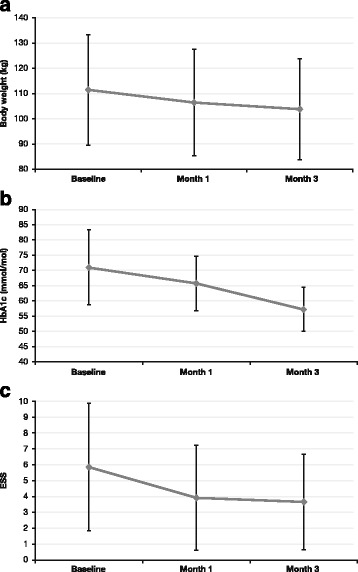
This single-centre retrospective study included 158 obese (body mass index [BMI] ≥ 30 kg/m(2)) adult subjects with type-2 diabetes who were initiated with liraglutide treatment at least 3 months before study inclusion. Data of the Epworth Sleepiness Scale (ESS), anthropometric parameters, glucose-control and metabolic parameters were collected at liraglutide initiation (baseline) and at months 1 and 3 after liraglutide initiation.
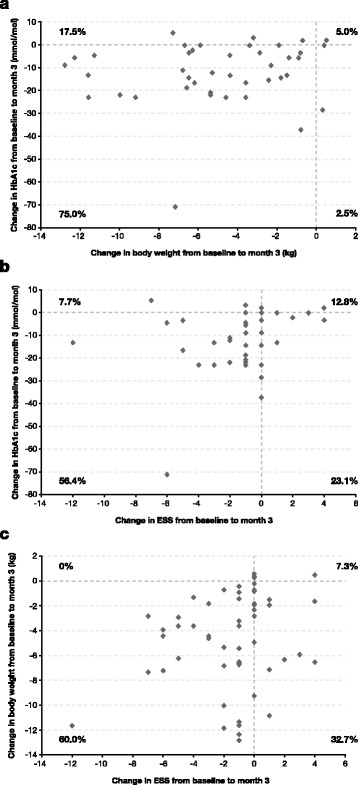
Significant reductions in ESS score were achieved at months 1 (-1.3 ± 2.8, p < 0.001) and 3 (-1.5 ± 3.0, p < 0.001) after liraglutide introduction. After 3 months of treatment with liraglutide, significant changes in body weight (p < 0.001), BMI (p < 0.001), waist (p < 0.001) and neck circumferences (p < 0.005), HbA1c (p < 0.001), mean blood glucose (p < 0.001), fasting plasma glucose (p < 0.001), triglycerides (p < 0.01) and total cholesterol (p < 0.001) were achieved.
After 3 months of treatment with liraglutide a significant reduction in EDS was observed in obese subjects with type-2 diabetes. Besides this, significant changes in body weight and metabolic parameters of diabetes control were also accomplished. Further investigation is required to determine whether liraglutide could improve other abnormal sleep patterns and obstructive sleep apnoea.
本研究的主要目的是评估长效人胰高血糖素样肽-1利拉鲁肽治疗是否与2型糖尿病肥胖患者日间过度嗜睡(EDS)的改善相关。
这项单中心回顾性研究纳入了158例肥胖(体重指数[BMI]≥30kg/m²)的2型糖尿病成年患者,这些患者在纳入研究前至少3个月开始接受利拉鲁肽治疗。在开始使用利拉鲁肽时(基线)以及开始使用利拉鲁肽后的第1个月和第3个月收集爱泼沃斯嗜睡量表(ESS)数据、人体测量参数、血糖控制和代谢参数。
引入利拉鲁肽后第1个月(-1.3±2.8,p<0.001)和第3个月(-1.5±3.0,p<0.001)时,ESS评分显著降低。使用利拉鲁肽治疗3个月后,体重(p<0.001)、BMI(p<0.001)、腰围(p<0.001)和颈围(p<0.005)、糖化血红蛋白(HbA1c,p<0.001)、平均血糖(p<0.001)、空腹血糖(p<0.001)、甘油三酯(p<0.01)和总胆固醇(p<0.001)均有显著变化。
在2型糖尿病肥胖患者中,使用利拉鲁肽治疗3个月后,EDS显著降低。除此之外,体重和糖尿病控制的代谢参数也有显著变化。需要进一步研究以确定利拉鲁肽是否能改善其他异常睡眠模式和阻塞性睡眠呼吸暂停。