Fortunato John E, Tegeler Catherine L, Gerdes Lee, Lee Sung W, Pajewski Nicholas M, Franco Meghan E, Cook Jared F, Shaltout Hossam A, Tegeler Charles H
Virginia Commonwealth University, Richmond, VA, USA.
Hypertension and Vascular Research Center, Wake Forest School of Medicine, Winston-Salem, NC, USA.
Exp Brain Res. 2016 Mar;234(3):791-8. doi: 10.1007/s00221-015-4499-y. Epub 2015 Dec 8.
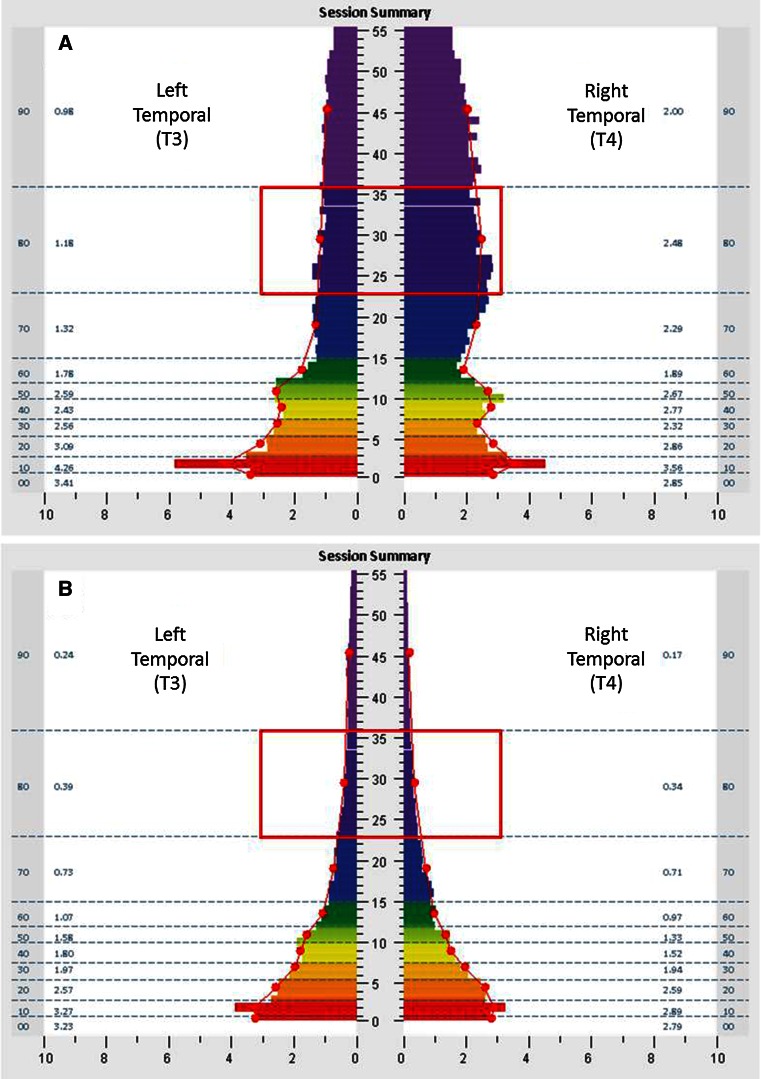
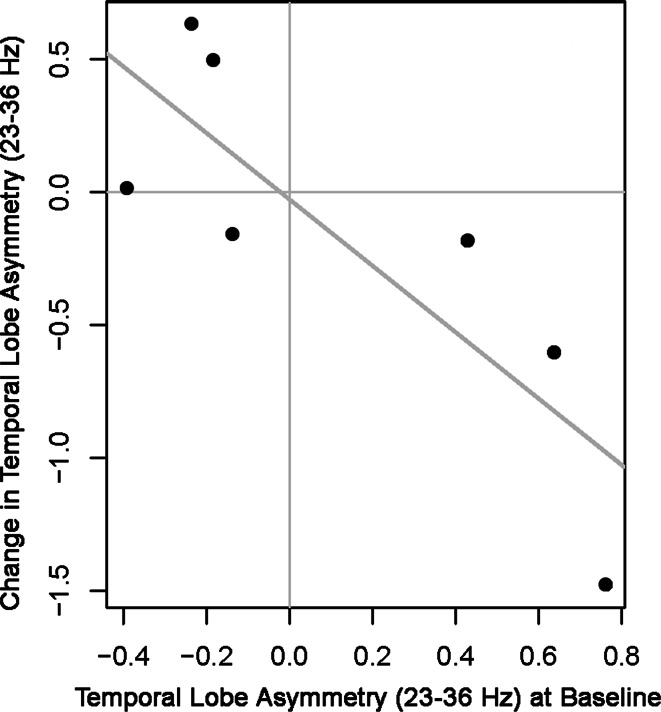
Autonomic dysregulation and heterogeneous symptoms characterize postural orthostatic tachycardia syndrome (POTS). This study evaluated the effect of high-resolution, relational, resonance-based, electroencephalic mirroring (HIRREM(®)), a noninvasive, allostatic neurotechnology for relaxation and auto-calibration of neural oscillations, on heart rate variability, brain asymmetry, and autonomic symptoms, in adolescents with POTS. Seven subjects with POTS (three males, ages 15-18) underwent a median of 14 (10-16) HIRREM sessions over 13 (8-17) days. Autonomic function was assessed from 10-min continuous heart rate and blood pressure recordings, pre- and post-HIRREM. One-minute epochs of temporal high-frequency (23-36 Hz) brain electrical activity data (T3 and T4, eyes closed) were analyzed from baseline HIRREM assessment and subsequent sessions. Subjects rated autonomic symptoms before and after HIRREM. Four of seven were on fludrocortisone, which was stopped before or during their sessions. Heart rate variability in the time domain (standard deviation of the beat-to-beat interval) increased post-HIRREM (mean increase 51%, range 10-143, p = 0.03), as did baroreflex sensitivity (mean increase in high-frequency alpha 65%, range -6 to 180, p = 0.05). Baseline temporal electrical asymmetry negatively correlated with change in asymmetry from assessment to the final HIRREM session (p = 0.01). Summed high-frequency amplitudes at left and right temporal lobes decreased a median of 3.8 μV (p = 0.02). There was a trend for improvements in self-reported symptoms related to the autonomic nervous system. Use of HIRREM was associated with reduced sympathetic bias in autonomic cardiovascular regulation, greater symmetry and reduced amplitudes in temporal lobe high-frequency electrical activity, and a trend for reduced autonomic symptoms. Data suggest the potential for allostatic neurotechnology to facilitate increased flexibility in autonomic cardiovascular regulation, possibly through more balanced activity at regions of the neocortex responsible for autonomic management. Clinical trial registry "Tilt Table with Suspected postural orthostatic tachycardia syndrome (POTS) Subjects," Protocol Record: WFUBAHA01.
自主神经调节异常和异质性症状是体位性直立性心动过速综合征(POTS)的特征。本研究评估了基于高分辨率、关联性、共振的脑电图镜像技术(HIRREM(®)),一种用于神经振荡放松和自动校准的非侵入性稳态神经技术,对POTS青少年的心率变异性、脑不对称性和自主神经症状的影响。7名POTS患者(3名男性,年龄15 - 18岁)在13(8 - 17)天内平均接受了14(10 - 16)次HIRREM治疗。在HIRREM治疗前后,通过连续10分钟的心率和血压记录评估自主神经功能。从基线HIRREM评估及后续治疗中分析闭眼状态下颞部高频(23 - 36 Hz)脑电活动数据(T3和T4)的1分钟时段。患者在HIRREM治疗前后对自主神经症状进行评分。7名患者中有4名正在服用氟氢可的松,在治疗前或治疗期间停药。HIRREM治疗后,时域心率变异性(逐搏间期标准差)增加(平均增加51%,范围10 - 143,p = 0.03),压力反射敏感性也增加(高频α平均增加65%,范围 - 6至180,p = 0.05)。基线颞部电不对称性与从评估到最后一次HIRREM治疗时不对称性的变化呈负相关(p = 0.01)。左右颞叶高频振幅总和中位数下降3.8 μV(p = 0.02)。与自主神经系统相关的自我报告症状有改善趋势。使用HIRREM与自主心血管调节中交感神经偏向的降低、颞叶高频电活动中更大的对称性和更低的振幅以及自主神经症状的减少趋势相关。数据表明,稳态神经技术有可能促进自主心血管调节的灵活性增加,可能是通过在负责自主神经管理的新皮质区域实现更平衡的活动。临床试验注册“疑似体位性直立性心动过速综合征(POTS)受试者的倾斜试验”,方案记录:WFUBAHA01。