Noferesti Sina Seifi, Sohel Md Mahmodul Hasan, Hoelker Michael, Salilew-Wondim Dessie, Tholen Ernst, Looft Christian, Rings Franca, Neuhoff Christiane, Schellander Karl, Tesfaye Dawit
Animal Breeding and Husbandry Group, Institute of Animal Science, University of Bonn, Bonn, 53115, Germany.
Department of Animal Science, Faculty of Agriculture, Erciyes University, Kayseri, 38039, Turkey.
J Ovarian Res. 2015 Dec 9;8:81. doi: 10.1186/s13048-015-0208-5.
Despite its role in increasing the number of offspring during the lifetime of an individual animal, controlled ovarian hyperstimulation (COH) may have detrimental effects on oocyte development, embryo quality and endometrial receptivity. Circulating miRNAs in bio-fluids have been shown to be associated with various pathological conditions including cancers. Here we aimed to investigate the effect of COH on the level of extracellular miRNAs in bovine follicular fluid and blood plasma and elucidate their mode of circulation and potential molecular mechanisms to be affected in the reproductive tract.
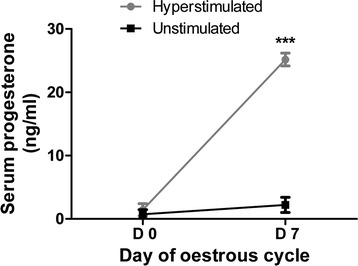
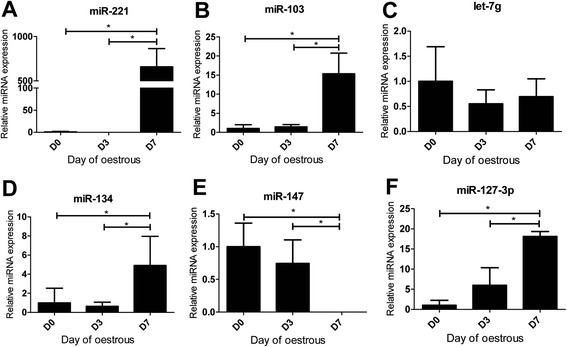
Twelve simmental heifers were estrous synchronized and six of them were hyperstimulated using FSH. Follicular fluid samples from experimental animals were collected using ovum pick up technique at day 0 of the estrous cycle and blood samples were collected at day 0, 3 and 7 of post ovulation. The expression profile of circulatory miRNAs in follicular fluid and blood plasma were performed using the human miRCURY LNA™ Universal RT miRNA PCR array system. A comparative threshold cycle method was used to determine the relative abundance of the miRNAs.
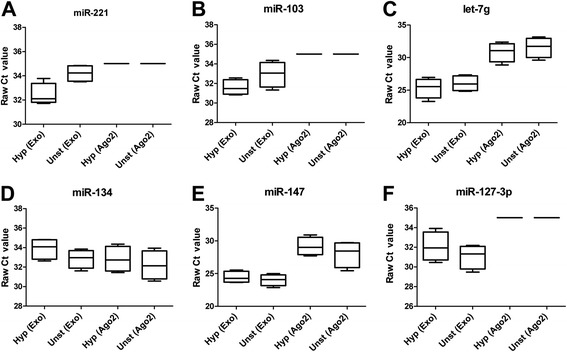
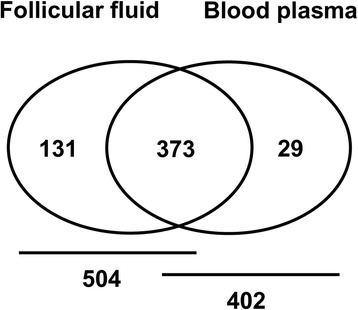
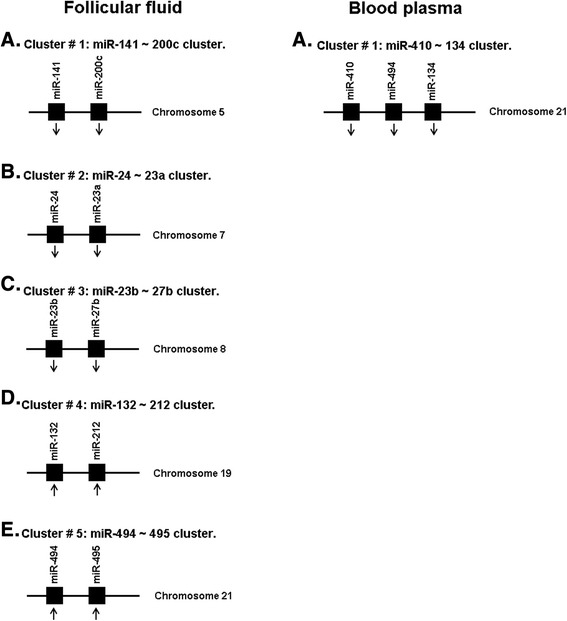
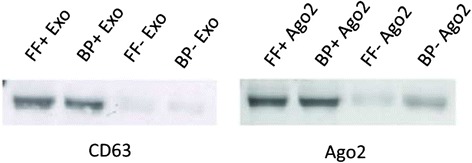
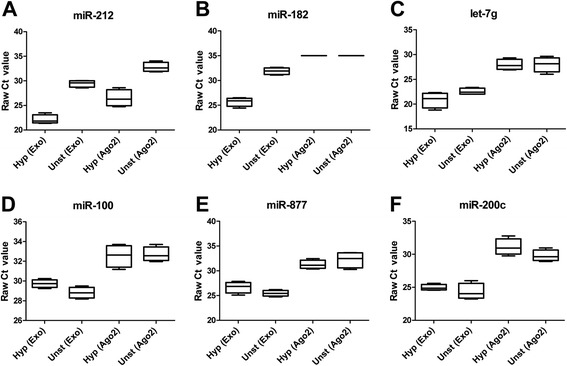
A total of 504 and 402 miRNAs were detected in both bovine follicular fluid and blood plasma, respectively. Of these 57 and 21 miRNAs were found to be differentially expressed in follicular fluid and blood plasma, respectively derived from hyperstimulated versus unstimulated heifers. Bioinformatics analysis of those circulating miRNAs indicated that their potential target genes are involved in several pathways including TGF-beta signaling pathway, MAPK signaling pathway, pathways in cancer and Oocyte meiosis. Moreover, detail analysis of the mode of circulation of some candidates showed that most of the miRNA were found to be detected in both exosomal and Ago2 protein complex fraction of both follicular fluid and blood plasma.
Our data provide the consequence of hyperstimulation induced changes of extracellular miRNAs in bovine follicular fluid and blood plasma, which may have a potential role in regulating genes associated not only with bovine ovarian function but also involved in altering various physiological in bovine oocytes, embryos and modulating reproductive tract environment.
尽管控制性卵巢过度刺激(COH)在增加个体动物一生中的后代数量方面发挥着作用,但它可能对卵母细胞发育、胚胎质量和子宫内膜容受性产生不利影响。生物流体中的循环miRNA已被证明与包括癌症在内的各种病理状况有关。在这里,我们旨在研究COH对牛卵泡液和血浆中细胞外miRNA水平的影响,并阐明它们的循环模式以及在生殖道中可能受到影响的潜在分子机制。
对12头西门塔尔小母牛进行发情同步处理,其中6头使用促卵泡素(FSH)进行过度刺激。在发情周期的第0天,采用采卵技术收集实验动物的卵泡液样本,并在排卵后的第0、3和7天采集血液样本。使用人类miRCURY LNA™通用RT miRNA PCR阵列系统检测卵泡液和血浆中循环miRNA的表达谱。采用比较阈值循环法确定miRNA的相对丰度。
在牛卵泡液和血浆中分别共检测到504个和402个miRNA。其中,分别在来自过度刺激与未刺激小母牛的卵泡液和血浆中发现57个和21个miRNA差异表达。对这些循环miRNA的生物信息学分析表明,它们的潜在靶基因参与了包括转化生长因子-β信号通路、丝裂原活化蛋白激酶(MAPK)信号通路、癌症相关通路和卵母细胞减数分裂在内的多个途径。此外,对一些候选miRNA循环模式的详细分析表明,大多数miRNA在卵泡液和血浆的外泌体和AGO2蛋白复合体部分中均被检测到。
我们的数据提供了过度刺激诱导牛卵泡液和血浆中细胞外miRNA变化的结果,这可能在调节不仅与牛卵巢功能相关的基因,而且在改变牛卵母细胞、胚胎中的各种生理过程以及调节生殖道环境方面具有潜在作用。