Clinical Division of Haematology and Haemostaseology, Department of Medicine I, Medical University of Vienna , Vienna , Austria.
Front Cardiovasc Med. 2015 Jul 14;2:30. doi: 10.3389/fcvm.2015.00030. eCollection 2015.
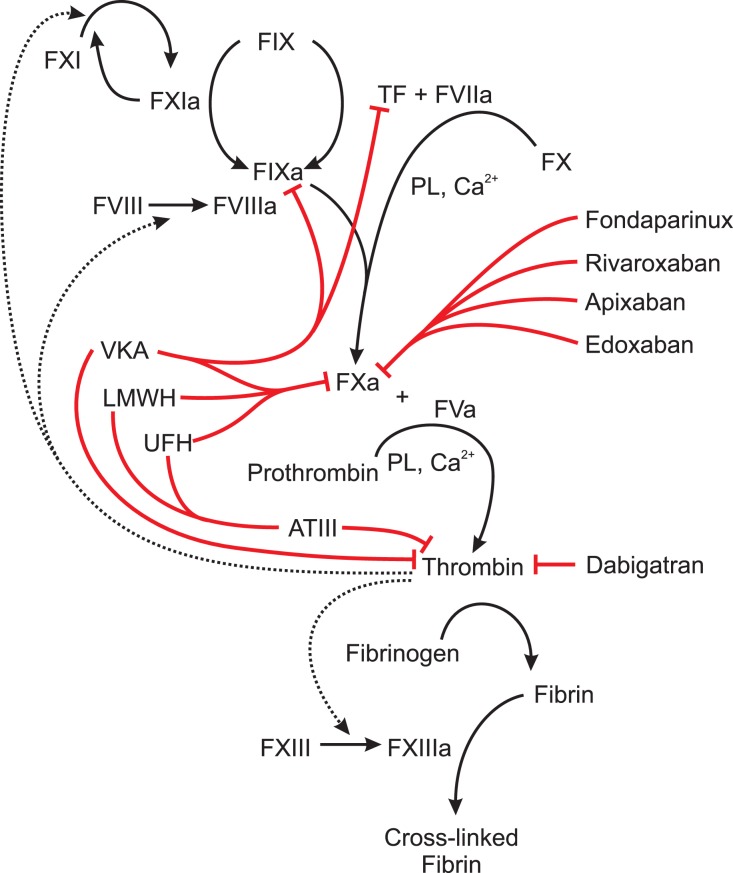
Venous thromboembolism (VTE), a disease entity comprising deep vein thrombosis (DVT) and pulmonary embolism (PE), is a frequent and potentially life-threatening event. To date different agents are available for the effective treatment of acute VTE and the prevention of recurrence. For several years, the standard of care was the subcutaneous application of a low molecular weight heparin (LMWH) or fondaparinux, followed by a vitamin K antagonist (VKA). The so-called direct oral anticoagulants (DOAC) were introduced rather recently in clinical practice for the treatment of VTE. DOAC seem to have a favorable risk-benefit profile compared to VKA. Moreover, DOAC significantly simplify VTE treatment because they are administered in fixed doses and no routine monitoring is needed. Patients with objectively diagnosed DVT or PE should receive therapeutic anticoagulation for a minimum of 3 months. Whether a patient ought to receive extended treatment needs to be evaluated on an individual basis, depending mainly on risk factors determined by characteristics of the thrombotic event and patient-related factors. In specific patient groups (e.g., pregnant women, cancer patients, and elderly patients), treatment of VTE is more challenging than that in the general population and additional issues need to be considered in those patients. The aim of this review is to give an overview of the currently available treatment modalities of acute VTE and secondary prophylaxis. In particular, specific aspects regarding the initiation of VTE treatment, duration of anticoagulation, and specific patient groups will be discussed.
静脉血栓栓塞症(VTE)是一种包括深静脉血栓形成(DVT)和肺栓塞(PE)的疾病实体,是一种常见且潜在危及生命的事件。迄今为止,有多种药物可有效治疗急性 VTE 并预防复发。多年来,标准的治疗方法是皮下应用低分子肝素(LMWH)或磺达肝癸钠,然后使用维生素 K 拮抗剂(VKA)。所谓的直接口服抗凝剂(DOAC)在最近几年才在临床实践中用于治疗 VTE。与 VKA 相比,DOAC 似乎具有更好的风险效益比。此外,DOAC 显著简化了 VTE 的治疗,因为它们以固定剂量给药,无需常规监测。经客观诊断患有 DVT 或 PE 的患者应接受至少 3 个月的治疗性抗凝治疗。是否需要延长治疗需要根据患者的具体情况进行评估,主要取决于血栓形成事件的特征和患者相关因素确定的危险因素。在特定患者群体(例如孕妇、癌症患者和老年患者)中,VTE 的治疗比普通人群更具挑战性,需要考虑这些患者的其他问题。本文的目的是概述急性 VTE 和二级预防的当前可用治疗方法。特别是,将讨论 VTE 治疗开始、抗凝时间和特定患者群体的具体方面。