Jiang Xiu Xiu, Fei Xiang Wei, Zhao Li, Ye Xiao Lei, Xin Liao Bin, Qu Yang, Xu Kai Hong, Wu Rui Jin, Lin Jun
Department of Gynecology, Women's Hospital, School of Medicine, Zhejiang University, Hangzhou City, Zhejiang Province, China, 310006.
Department of Laboratory, Women's Hospital, School of Medicine, Zhejiang University, Hangzhou City, Zhejiang Province, China, 310006.
PLoS One. 2015 Dec 17;10(12):e0145290. doi: 10.1371/journal.pone.0145290. eCollection 2015.
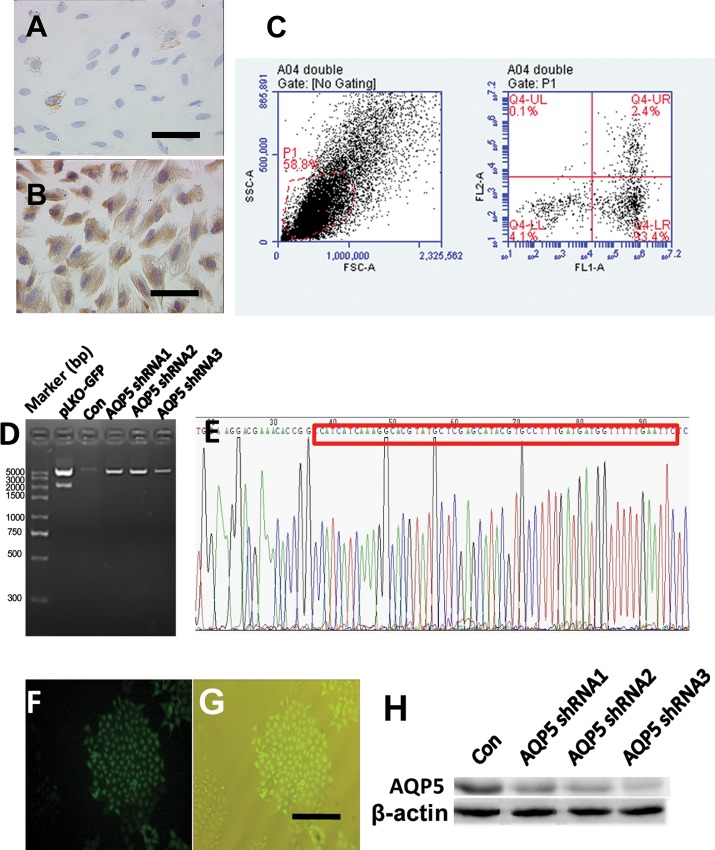
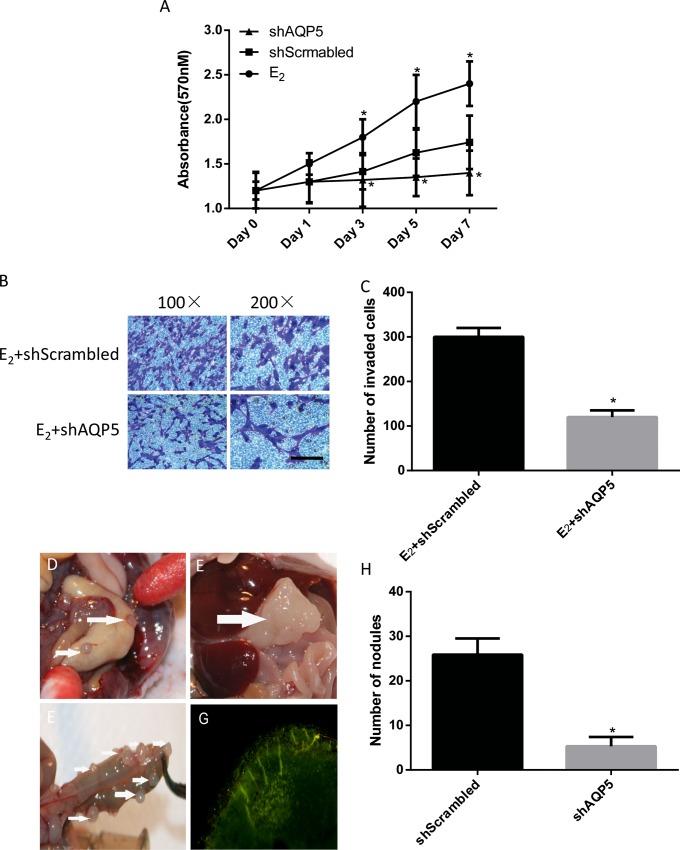
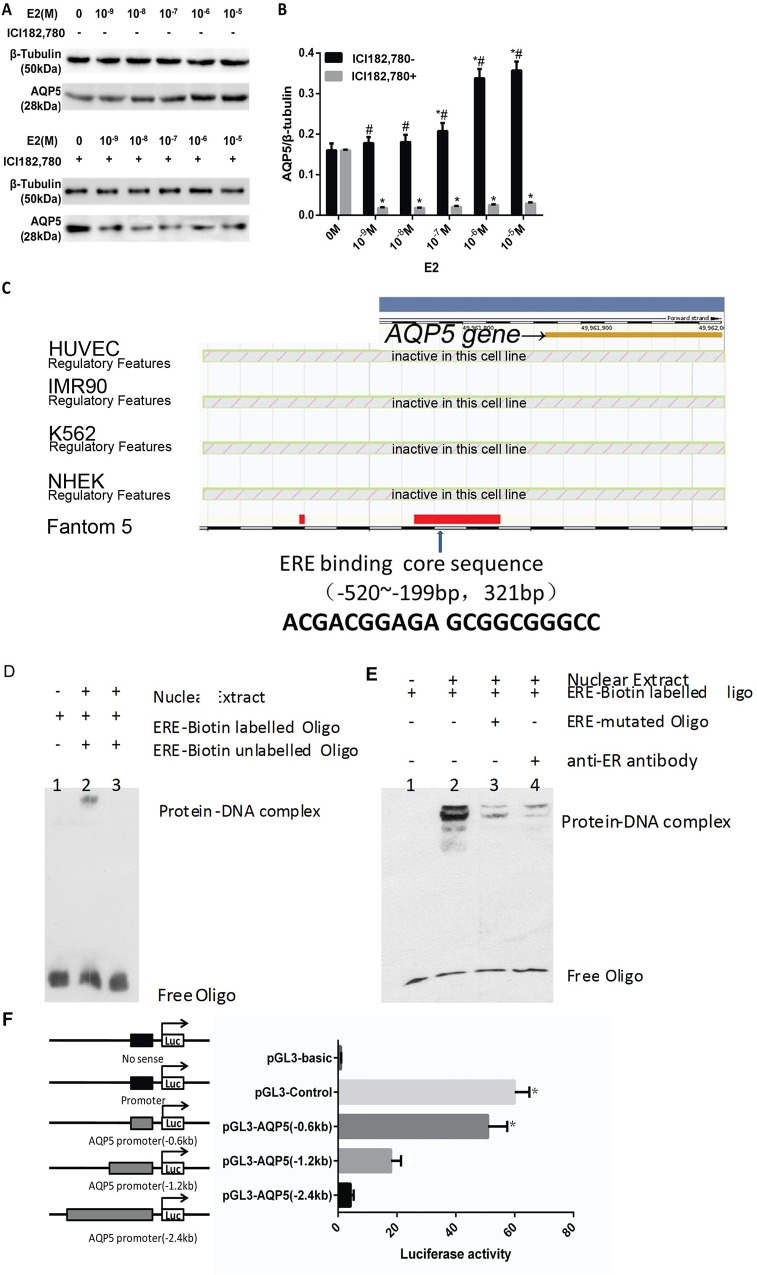
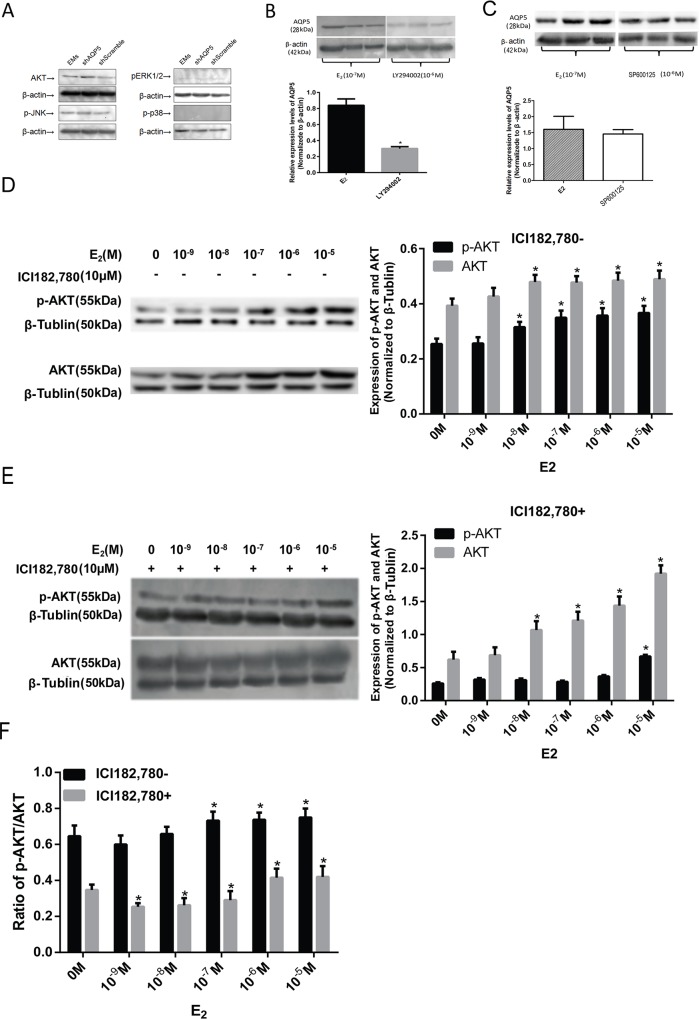
Aquaporin 5 (AQP5) participates in the migration of endometrial cells. Elucidation of the molecular mechanisms associated with AQP5-mediated, migration of endometrial cells may contribute to a better understanding of endometriosis. Our objectives included identifying the estrogen-response element (ERE) in the promoter region of the AQP5 gene, and, investigating the effects of AQP5 on ectopic implantation of endometrial cells. Luciferase reporter assays and electrophoretic mobility shift assay (EMSA) identified the ERE-like motif in the promoter region of the AQP5 gene. After blocking and up-regulating estradiol (E2) levels, we analysed the expression of AQP5 in endometrial stromal (ES) cells. After blocking E2 /or phosphatidylinositol 3 kinase(PI3K), we analysed the role of AQP5 in signaling pathways. We constructed an AQP5, shRNA, lentiviral vector to knock out the AQP5 gene in ES cells. After knock-out of the AQP5 gene, we studied the role of AQP5 in cell invasion, proliferation, and the formation of ectopic endometrial implants in female mice. We identified an estrogen-response element in the promoter region of the AQP5 gene. Estradiol (E2) increased AQP5 expression in a dose-dependent fashion, that was blocked by ICI182,780(an estrogen receptor inhibitor). E2 activated PI3K /protein kinase B(AKT) pathway (PI3K/AKT), that, in turn, increased AQP5 expression. LY294002(PI3K inhibitor) attenuated estrogen-enhanced, AQP5 expression. Knock-out of the AQP5 gene with AQP5 shRNA lentiviral vector significantly inhibited E2-enhanced invasion, proliferation of ES cells and formation of ectopic implants. Estrogen induces AQP5 expression by activating ERE in the promoter region of the AQP5gene, activates the PI3K/AKT pathway, and, promotes endometrial cell invasion and proliferation. These results provide new insights into some of the mechanisms that may underpin the development of deposits of ectopic endometrium.
水通道蛋白5(AQP5)参与子宫内膜细胞的迁移。阐明与AQP5介导的子宫内膜细胞迁移相关的分子机制可能有助于更好地理解子宫内膜异位症。我们的目标包括鉴定AQP5基因启动子区域的雌激素反应元件(ERE),并研究AQP5对子宫内膜细胞异位着床的影响。荧光素酶报告基因检测和电泳迁移率变动分析(EMSA)确定了AQP5基因启动子区域中的ERE样基序。在阻断和上调雌二醇(E2)水平后,我们分析了AQP5在子宫内膜基质(ES)细胞中的表达。在阻断E2和/或磷脂酰肌醇3激酶(PI3K)后,我们分析了AQP5在信号通路中的作用。我们构建了一个AQP5短发夹RNA(shRNA)慢病毒载体,以敲除ES细胞中的AQP5基因。在敲除AQP5基因后,我们研究了AQP5在雌性小鼠细胞侵袭、增殖和异位子宫内膜植入形成中的作用。我们在AQP5基因的启动子区域鉴定出一个雌激素反应元件。雌二醇(E2)以剂量依赖的方式增加AQP5表达,这被ICI182,780(一种雌激素受体抑制剂)阻断。E2激活PI3K/蛋白激酶B(AKT)通路(PI3K/AKT),进而增加AQP5表达。LY294002(PI3K抑制剂)减弱雌激素增强的AQP5表达。用AQP5 shRNA慢病毒载体敲除AQP5基因显著抑制E2增强的ES细胞侵袭、增殖和异位植入的形成。雌激素通过激活AQP5基因启动子区域的ERE诱导AQP5表达,激活PI3K/AKT通路,并促进子宫内膜细胞侵袭和增殖。这些结果为异位子宫内膜沉积物形成的一些潜在机制提供了新的见解。