Willing Stephanie E, Richards Emma J, Sempere Lluis, Dale Aaron G, Cutting Simon M, Fairweather Neil F
Department of Life Sciences, Centre for Molecular Bacteriology and Infection, Imperial College London, London, SW7 2AZ, UK.
School of Biological Sciences, Royal Holloway University of London, Egham, Surrey, TW20 0EX, UK.
BMC Microbiol. 2015 Dec 18;15:280. doi: 10.1186/s12866-015-0611-5.
The symptoms of Clostridium difficile infection are mediated primarily by two toxins, TcdA and TcdB, the expression of which is governed by a multitude of factors including nutrient availability, growth phase and cell stress. Several global regulators have been implicated in the regulation of toxin expression, such as CcpA and CodY.
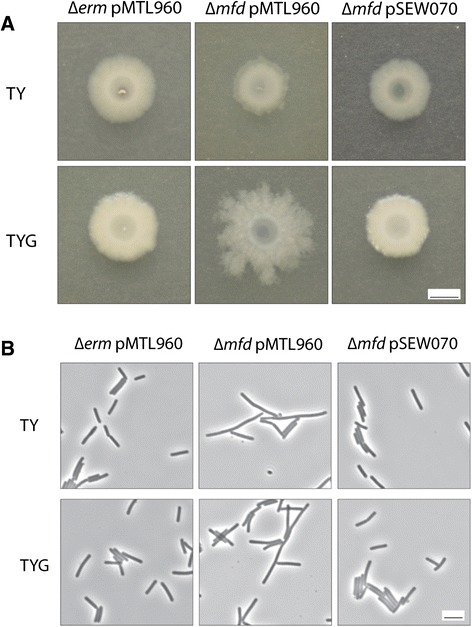
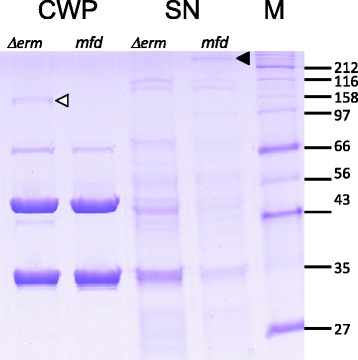
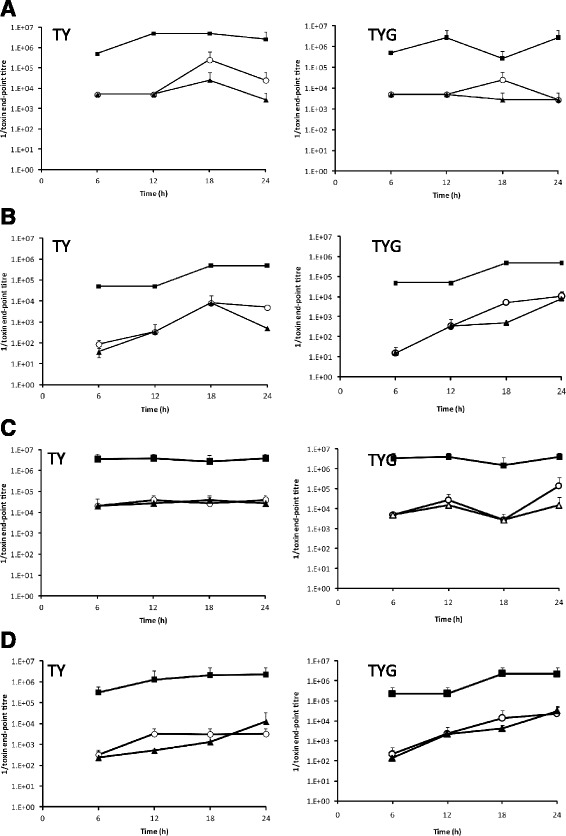
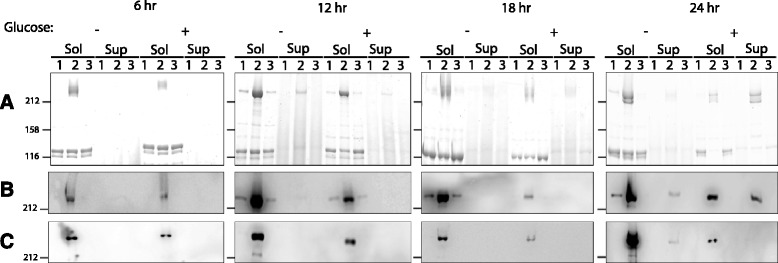
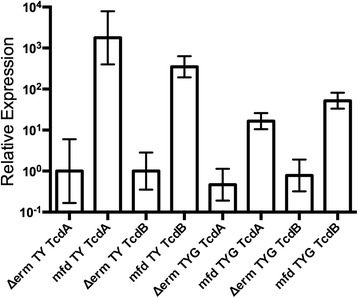
During attempts to insertionally inactivate a putative secondary cell wall polysaccharide synthesis gene, we obtained several mutants containing off-target insertions. One mutant displayed an unusual branched colony morphology and was investigated further. Marker recovery revealed an insertion in mfd, a gene encoding a transcription-coupled repair factor. The mfd mutant exhibited pleiotropic effects, in particular increased expression of both toxin A and B (TcdA and TcdB) compared to the parental strain. Western blotting and cellular cytotoxicity assays revealed increased expression across all time points over a 24 h period, with inactivation of mfd resulting in at least a 10 fold increase in cell cytotoxicity. qRT-PCR demonstrated the upregulation of both toxins occurred on a transcriptional level. All effects of the mfd mutation were complemented by a plasmid-encoded copy of mfd, showing the effects are not due to polar effects of the intron insertion or to second site mutations.
This study adds Mfd to the repertoire of factors involved in regulation of toxin expression in Clostridium difficile. Mfd is known to remove RNA polymerase molecules from transcriptional sites where it has stalled due to repressor action, preventing transcriptional read through. The consistently high levels of toxin in the C. difficile mfd mutant indicate this process is inefficient leading to transcriptional de-repression.
艰难梭菌感染的症状主要由两种毒素介导,即TcdA和TcdB,其表达受多种因素调控,包括营养物质可用性、生长阶段和细胞应激。几种全局调节因子参与了毒素表达的调控,如CcpA和CodY。
在试图通过插入失活一个假定的次生细胞壁多糖合成基因的过程中,我们获得了几个含有脱靶插入的突变体。其中一个突变体表现出异常的分支菌落形态,并进行了进一步研究。标记物回收显示在mfd基因中存在插入,mfd是一个编码转录偶联修复因子的基因。与亲本菌株相比,mfd突变体表现出多效性效应,特别是毒素A和B(TcdA和TcdB)的表达增加。蛋白质免疫印迹和细胞毒性试验显示,在24小时内所有时间点的表达均增加,mfd失活导致细胞毒性至少增加10倍。定量逆转录聚合酶链反应表明两种毒素的上调发生在转录水平。mfd突变的所有效应都被质粒编码的mfd拷贝所互补,表明这些效应不是由于内含子插入的极性效应或第二位点突变所致。
本研究将Mfd添加到参与艰难梭菌毒素表达调控的因子库中。已知Mfd可从因阻遏作用而停滞的转录位点去除RNA聚合酶分子,防止转录通读。艰难梭菌mfd突变体中持续高水平的毒素表明这一过程效率低下,导致转录去抑制。