Abou Diane S, Ulmert David, Doucet Michele, Hobbs Robert F, Riddle Ryan C, Thorek Daniel L J
Division of Nuclear Medicine and Molecular Imaging, Department of Radiology and Radiological Science (DSA, DLJT), Department of Orthopaedic Surgery (MD, RCR), Department of Radiation Oncology (RFH), and Cancer Molecular and Functional Imaging Program, Department of Oncology (RFH, DLJT), Sidney Kimmel Comprehensive Cancer Center, The Johns Hopkins University (JHU) School of Medicine, Baltimore, MD; Program in Molecular Pharmacology and Chemistry, Memorial Sloan Kettering Cancer Center, New York, NY (DU); Department of Clinical Sciences (Urology), Lund University, Skåne University Hospital, Malmö, Sweden (DU).
J Natl Cancer Inst. 2015 Dec 18;108(5). doi: 10.1093/jnci/djv380. Print 2016 May.
Bone-metastatic, castration-resistant prostate cancer (bmCRPC) represents a lethal stage of the most common noncutaneous cancer in men. The recent introduction of Radium-223 dichloride, a bone-seeking alpha particle (α)-emitting radiopharmaceutical, demonstrates statistically significant survival benefit and palliative effect for bmCRPC patients. Clinical results have established safety and efficacy, yet questions remain regarding pharmacodynamics and dosing for optimized patient benefit.
We elucidated the biodistribution of (223)Ra as well as interaction with the bone and tumor compartments in skeletally mature mice (C57Bl/6 and CD-1, n = 3-6) and metastasis models (LNCaP and PC3, n = 4). Differences in uptake were evaluated by µCT and histological investigation. Novel techniques were leveraged on whole-mount undecalcified cryosections to determine microdistribution of Radium-223. All statistical tests were two-sided.
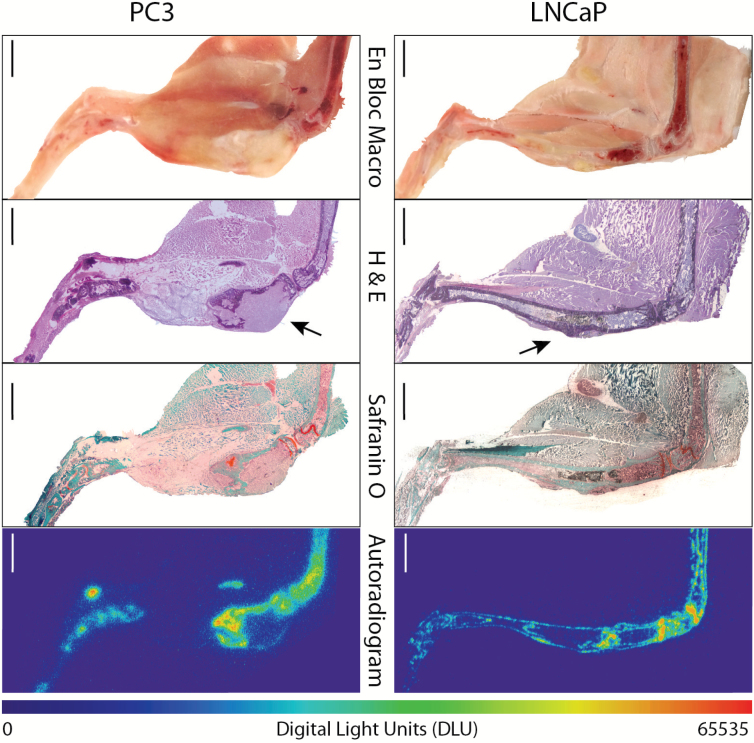
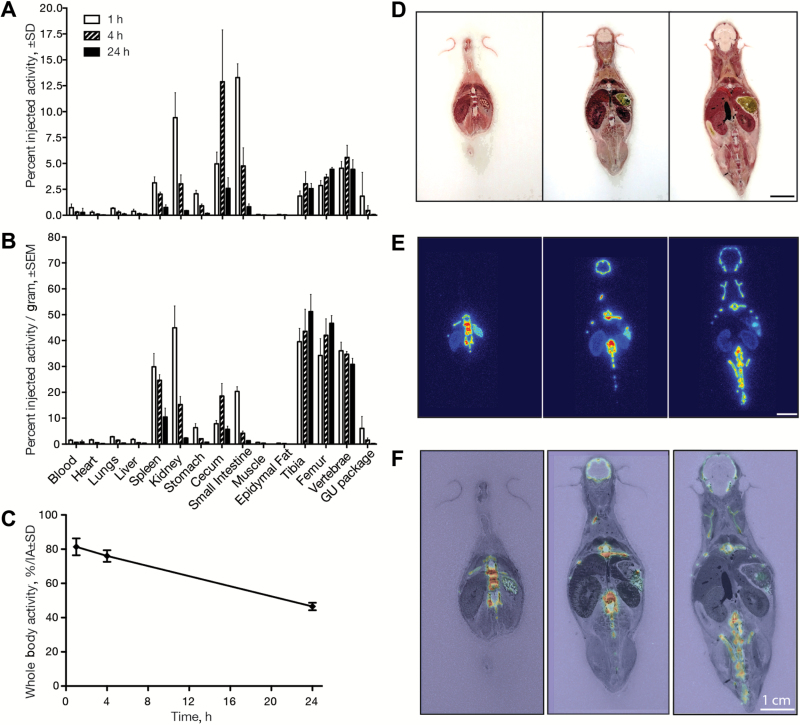
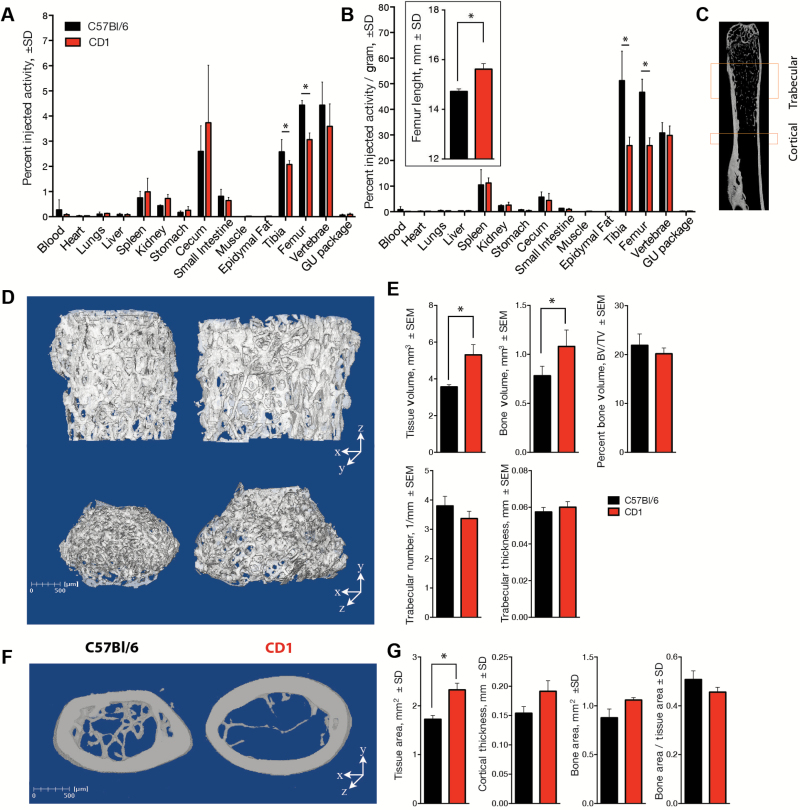
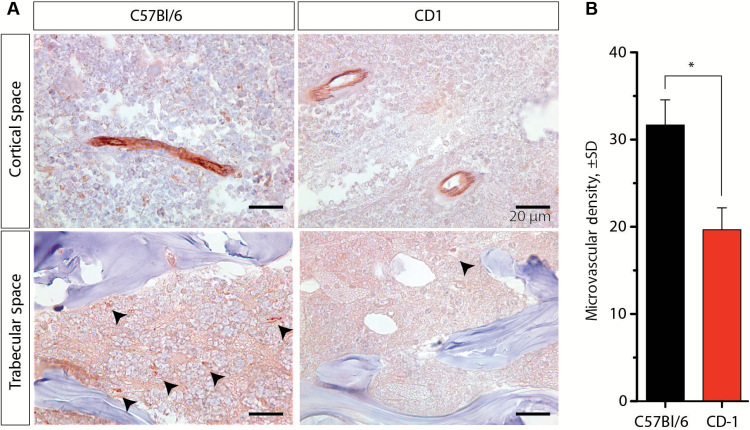
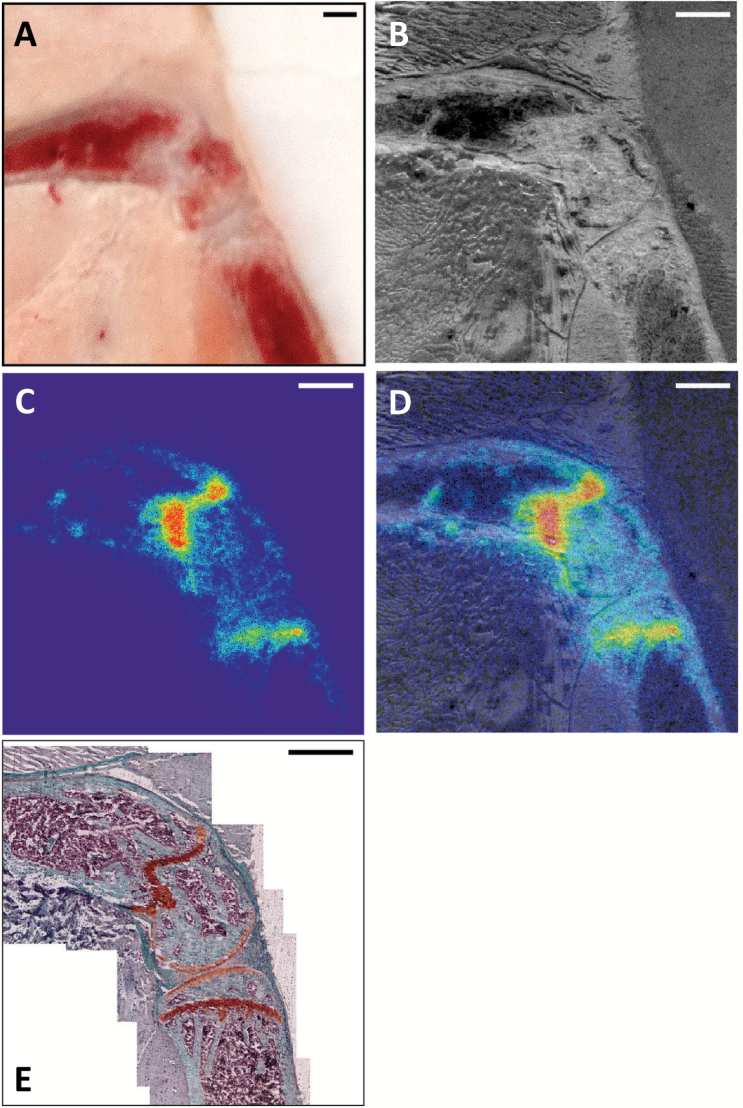
(223)Ra uptake in the bones (>30% injected activity per gram) at 24 hours was also accompanied by non-negligible remnant activity in the kidney (2.33% ± 0.36%), intestines (5.73% ± 2.04%), and spleen (10.5% ± 5.9%) Skeletal accumulation across strains did not correspond with bone volume or surface area but instead to local blood vessel density (P = .04). Microdistribution analysis by autoradiography and α camera revealed targeting of the ossifying surfaces adjacent to the epiphyseal growth plate. In models of PCa metastasis, radioactivity does not localize directly within tumors but instead at the apposite bone surface. Osteoblastic and lytic lesions display similar intensity, which is comparable with uptake at sites of normal bone remodeling.
Profiling the macro- and microdistribution of (223)Ra in healthy and diseased models has important implications to guide precision application of this emerging α-therapy approach for bmCRPC and other bone metastastic diseases.
骨转移性去势抵抗性前列腺癌(bmCRPC)是男性最常见的非皮肤癌的致命阶段。最近引入的二氯化镭-223是一种亲骨性发射α粒子的放射性药物,对bmCRPC患者显示出具有统计学意义的生存获益和姑息效果。临床结果已证实其安全性和有效性,但关于药效学和给药以实现患者最大获益仍存在问题。
我们阐明了镭-223在骨骼成熟小鼠(C57Bl/6和CD-1,n = 3 - 6)以及转移模型(LNCaP和PC3,n = 4)中的生物分布以及与骨骼和肿瘤区域的相互作用。通过μCT和组织学研究评估摄取差异。利用新技术对未脱钙的全层冰冻切片进行研究,以确定镭-223的微观分布。所有统计检验均为双侧检验。
24小时时,骨骼中镭-223的摄取量(每克注射活性>30%)同时伴随着肾脏(2.33%±0.36%)、肠道(5.73%±2.04%)和脾脏(10.5%±5.9%)中不可忽视的残留活性。各品系间的骨骼蓄积与骨体积或表面积无关,而是与局部血管密度相关(P = 0.04)。通过放射自显影和α相机进行的微观分布分析显示,镭-223靶向骨骺生长板附近的骨化表面。在前列腺癌转移模型中,放射性并非直接定位于肿瘤内,而是定位于相对的骨表面。成骨和溶骨性病变显示出相似的强度,这与正常骨重塑部位的摄取相当。
分析镭-223在健康和疾病模型中的宏观和微观分布对于指导这种新兴的α治疗方法在bmCRPC和其他骨转移性疾病中的精准应用具有重要意义。