Nagano Katsuhito
Department of Physical Therapy, Faculty of Rehabilitation, Fukui College of Health Sciences, Japan.
J Phys Ther Sci. 2015 Nov;27(11):3585-91. doi: 10.1589/jpts.27.3585. Epub 2015 Nov 30.
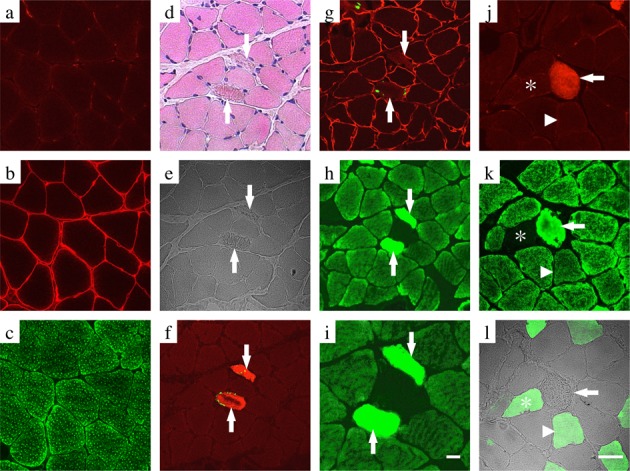
[Purpose] The purpose of this study was to elucidate the cathepsin-D involvement in signaling pathways for the survival and apoptosis of myofibers in rats with hindlimb-unloading in a low-temperature environment. [Subjects and Methods] Wistar rats were divided into two groups: a control group and a group that underwent hindlimb unloading in a low-temperature environment to induce muscle apoptosis. Cathepsin-D localization in the soleus and extensor digitorum longus muscles, along with the expression of cathepsin-D in apoptotic myofibers, was examined. Expression of the active and inactive forms of cathepsin-D was also analyzed. [Results] Cathepsin-D was mainly expressed in type I myofibers and was observed to have punctate patterns in the control group. In the hindlimb unloading in a low-temperature environment group, the type I myofiber composition ratio decreased, and caspase-3 activation and TUNEL-positive apoptotic myofibers were observed. In caspase-3-activated myofibers, cathepsin-D overexpression and leakage of it into the cytoplasm were observed. In the hindlimb unloading in a low-temperature environment group, the amount of inactive cathepsin-D decreased, whereas that of the active form increased. [Conclusion] Cathepsin-D was deduced to be indicative of a myofiber-type classification and a factor related to myofiber type maintenance. In addition, cathepsin-D leakage into the cytoplasm was appeared to be involved in caspase-3 activation in the hindlimb unloading in a low-temperature environment group.
[目的] 本研究旨在阐明组织蛋白酶D在低温环境下后肢卸载大鼠肌纤维存活和凋亡信号通路中的作用。[对象与方法] 将Wistar大鼠分为两组:对照组和在低温环境下进行后肢卸载以诱导肌肉凋亡的组。检测比目鱼肌和趾长伸肌中组织蛋白酶D的定位,以及凋亡肌纤维中组织蛋白酶D的表达。还分析了组织蛋白酶D活性和非活性形式的表达。[结果] 组织蛋白酶D主要在I型肌纤维中表达,在对照组中呈点状分布。在低温环境下后肢卸载组中,I型肌纤维组成比例降低,观察到半胱天冬酶-3激活和TUNEL阳性凋亡肌纤维。在半胱天冬酶-3激活的肌纤维中,观察到组织蛋白酶D过表达并渗漏到细胞质中。在低温环境下后肢卸载组中,非活性组织蛋白酶D的量减少,而活性形式的量增加。[结论] 推断组织蛋白酶D可指示肌纤维类型分类并与肌纤维类型维持相关。此外,在低温环境下后肢卸载组中,组织蛋白酶D渗漏到细胞质中似乎参与了半胱天冬酶-3的激活。