Mahboubi Hicham, Stochaj Ursula
Department of Physiology, McGill University , Montreal, Quebec , Canada.
PeerJ. 2015 Dec 21;3:e1530. doi: 10.7717/peerj.1530. eCollection 2015.
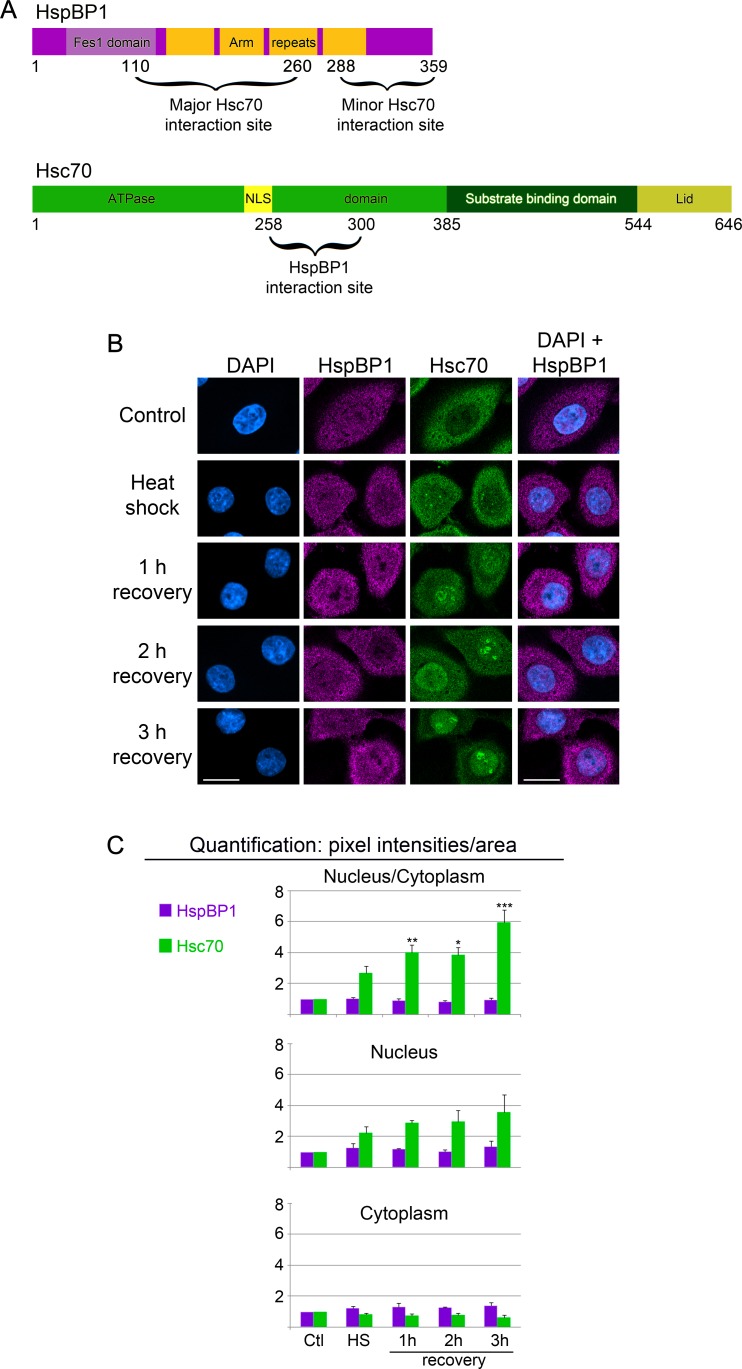
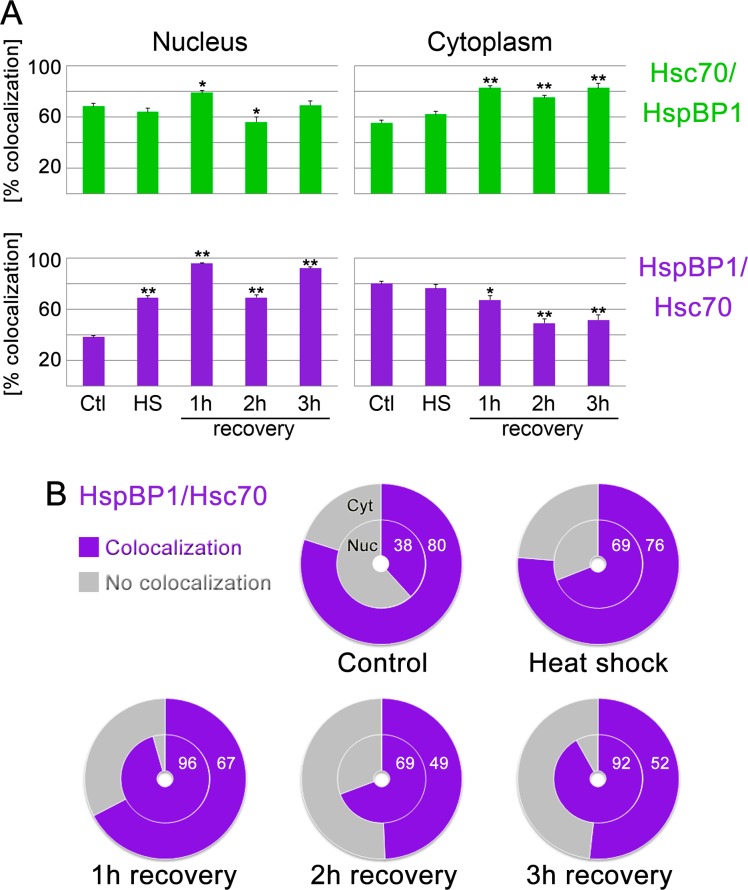
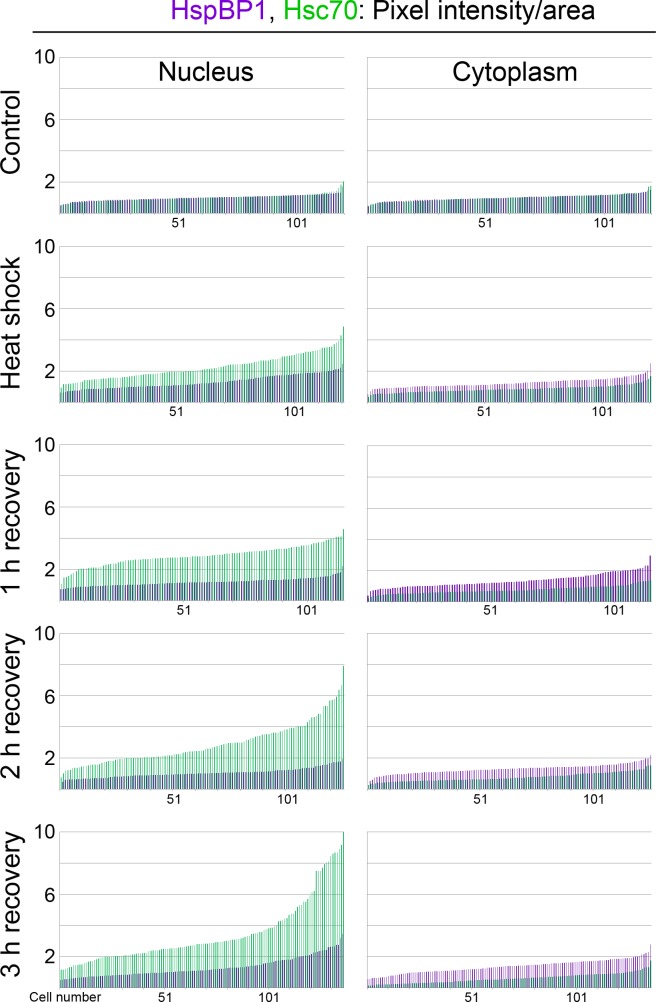
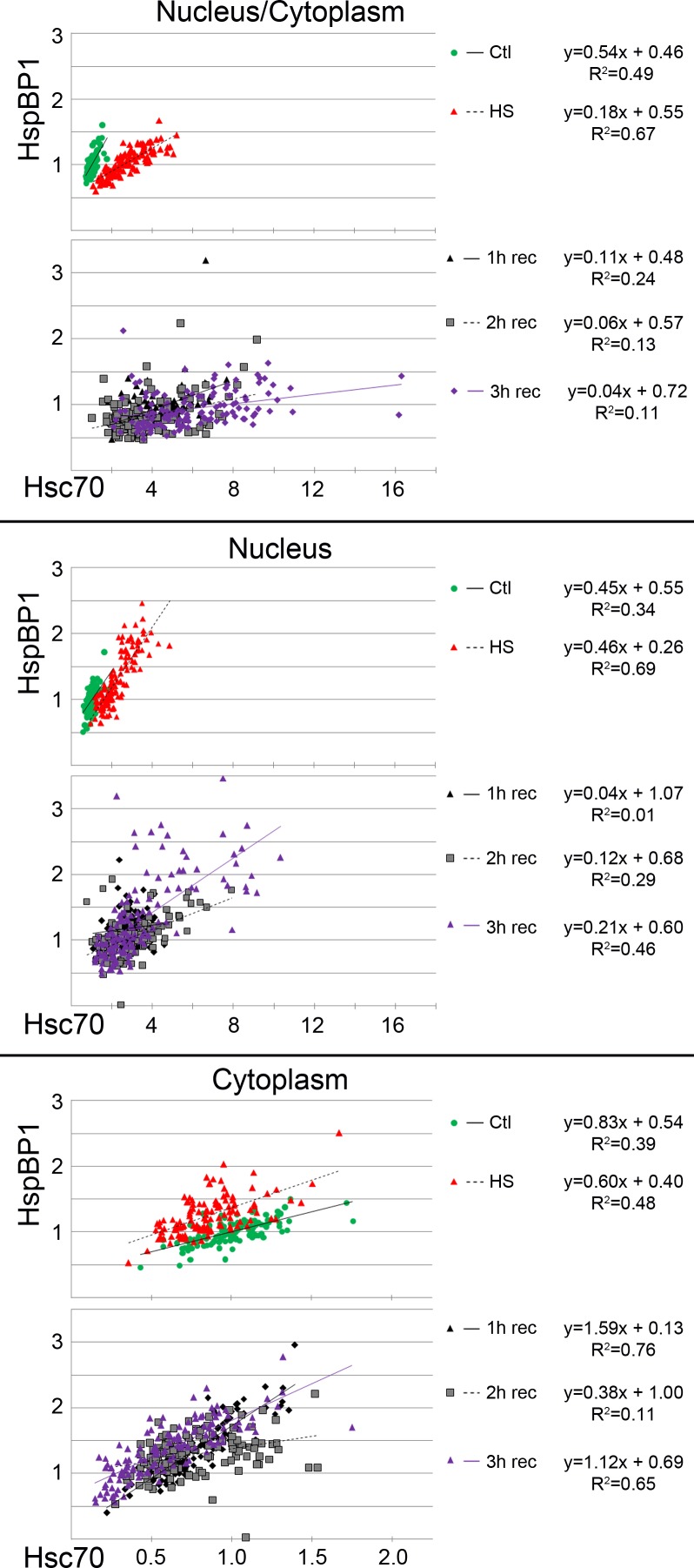
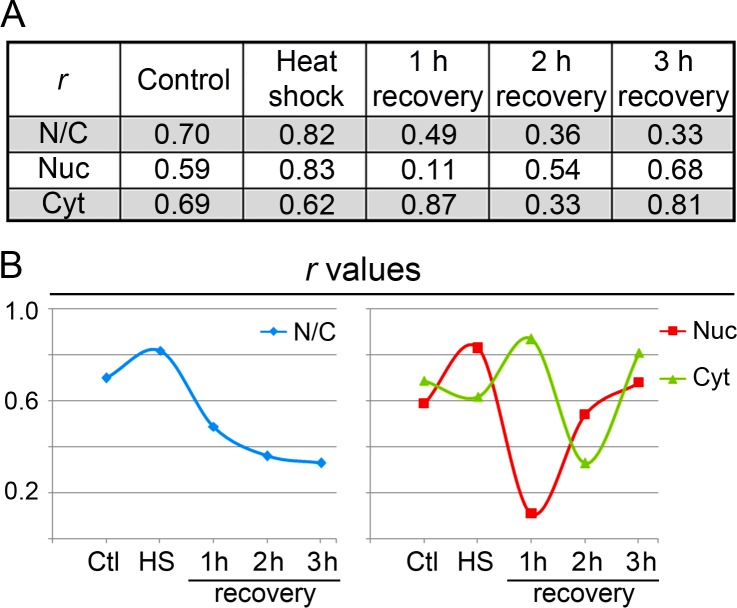
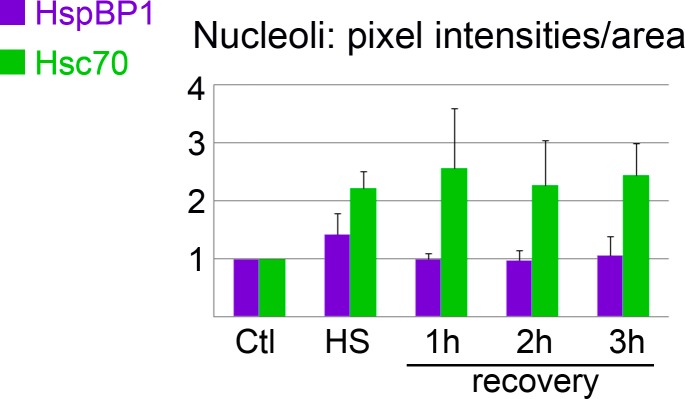
Background. Chaperones and their co-factors are components of a cellular network; they collaborate to maintain proteostasis under normal and harmful conditions. In particular, hsp70 family members and their co-chaperones are essential to repair damaged proteins. Co-chaperones are present in different subcellular compartments, where they modulate chaperone activities. Methods and Results. Our studies assessed the relationship between hsc70 and its co-factor HspBP1 in human cancer cells. HspBP1 promotes nucleotide exchange on hsc70, but has also chaperone-independent functions. We characterized the interplay between hsc70 and HspBP1 by quantitative confocal microscopy combined with automated image analyses and statistical evaluation. Stress and the recovery from insult changed significantly the subcellular distribution of hsc70, but had little effect on HspBP1. Single-cell measurements and regression analysis revealed that the links between the chaperone and its co-factor relied on (i) the physiological state of the cell and (ii) the subcellular compartment. As such, we identified a linear relationship and strong correlation between hsc70 and HspBP1 distribution in control and heat-shocked cells; this correlation changed in a compartment-specific fashion during the recovery from stress. Furthermore, we uncovered significant stress-induced changes in the colocalization between hsc70 and HspBP1 in the nucleus and cytoplasm. Discussion. Our quantitative approach defined novel properties of the co-chaperone HspBP1 as they relate to its interplay with hsc70. We propose that changes in cell physiology promote chaperone redistribution and thereby stimulate chaperone-independent functions of HspBP1.
背景。分子伴侣及其辅助因子是细胞网络的组成部分;它们协同作用以在正常和有害条件下维持蛋白质稳态。特别是,热休克蛋白70(hsp70)家族成员及其辅助分子伴侣对于修复受损蛋白质至关重要。辅助分子伴侣存在于不同的亚细胞区室中,在那里它们调节分子伴侣的活性。
方法与结果。我们的研究评估了人类癌细胞中热休克蛋白73(hsc70)及其辅助因子热休克蛋白结合蛋白1(HspBP1)之间的关系。HspBP1促进hsc70上的核苷酸交换,但也具有不依赖分子伴侣的功能。我们通过定量共聚焦显微镜结合自动图像分析和统计评估来表征hsc70与HspBP1之间的相互作用。应激和损伤恢复显著改变了hsc70的亚细胞分布,但对HspBP1影响很小。单细胞测量和回归分析表明,分子伴侣与其辅助因子之间的联系依赖于(i)细胞的生理状态和(ii)亚细胞区室。因此,我们在对照细胞和热休克细胞中确定了hsc70与HspBP1分布之间的线性关系和强相关性;在应激恢复过程中,这种相关性以区室特异性方式发生变化。此外,我们发现应激诱导细胞核和细胞质中hsc70与HspBP1共定位发生显著变化。
讨论。我们的定量方法定义了辅助分子伴侣HspBP1与其与hsc70相互作用相关的新特性。我们提出细胞生理学的变化促进分子伴侣重新分布,从而刺激HspBP1的不依赖分子伴侣的功能。