Alcântara Berenice Kussumoto, Machemer-Noonan Katja, Silva Júnior Francides Gomes, Azevedo Ricardo Antunes
Departamento de Genética, Escola Superior de Agricultura "Luiz de Queiroz", Universidade de São Paulo, Piracicaba, São Paulo, Brasil.
Center for Applied Plant Sciences, Rightmire Hall, The Ohio State University, Columbus, Ohio, United States of America.
PLoS One. 2015 Dec 29;10(12):e0145742. doi: 10.1371/journal.pone.0145742. eCollection 2015.
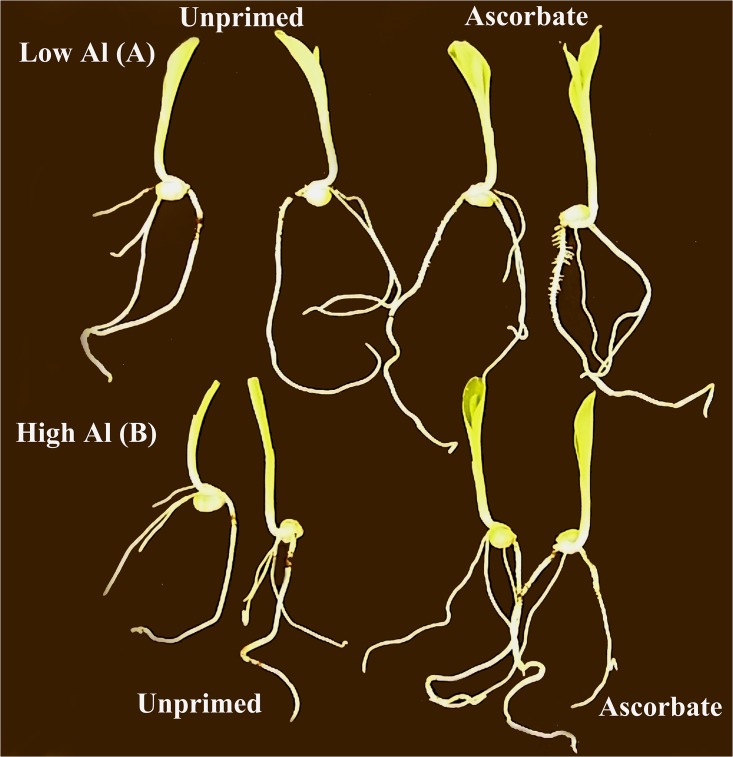
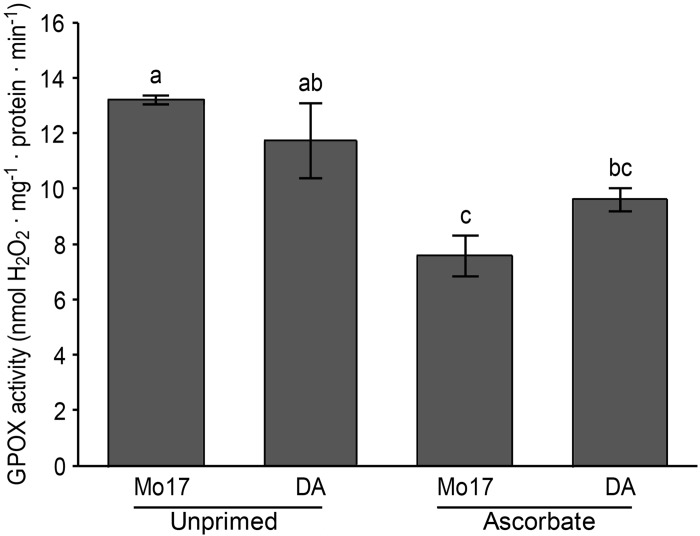
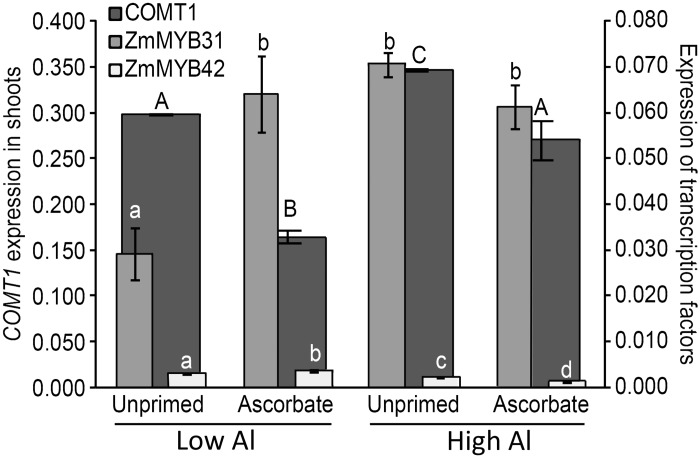
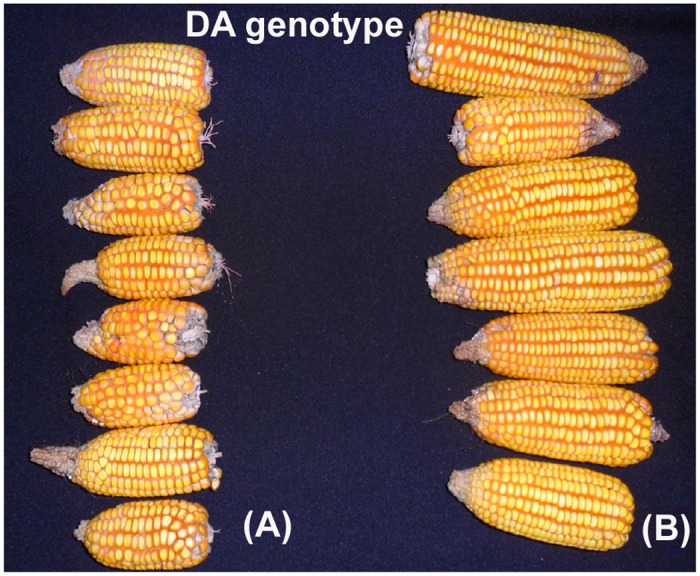
Aluminum (Al) toxicity is directly related to acidic soils and substantially limits maize yield. Earlier studies using hormones and other substances to treat the seeds of various crops have been carried out with the aim of inducing tolerance to abiotic stress, especially chilling, drought and salinity. However, more studies regarding the effects of seed treatments on the induction of Al tolerance are necessary. In this study, two independent experiments were performed to determine the effect of ascorbic acid (AsA) seed treatment on the tolerance response of maize to acidic soil and Al stress. In the first experiment (greenhouse), the AsA seed treatment was tested in B73 (Al-sensitive genotype). This study demonstrates the potential of AsA for use as a pre-sowing seed treatment (seed priming) because this metabolite increased root and shoot growth under acidic and Al stress conditions. In the second test, the evidence from field experiments using an Al-sensitive genotype (Mo17) and an Al-tolerant genotype (DA) suggested that prior AsA seed treatment increased the growth of both genotypes. Enhanced productivity was observed for DA under Al stress after priming the seeds. Furthermore, the AsA treatment decreased the activity of oxidative stress-related enzymes in the DA genotype. In this study, remarkable effects using AsA seed treatment in maize were observed, demonstrating the potential future use of AsA in seed priming.
铝(Al)毒性与酸性土壤直接相关,并严重限制玉米产量。早期使用激素和其他物质处理各种作物种子的研究旨在诱导对非生物胁迫的耐受性,特别是低温、干旱和盐度。然而,关于种子处理对诱导铝耐受性影响的更多研究是必要的。在本研究中,进行了两个独立的实验,以确定抗坏血酸(AsA)种子处理对玉米耐酸性土壤和铝胁迫的耐受性反应的影响。在第一个实验(温室)中,在B73(铝敏感基因型)中测试了AsA种子处理。本研究证明了AsA用作播种前种子处理(种子引发)的潜力,因为这种代谢物在酸性和铝胁迫条件下增加了根和地上部的生长。在第二个试验中,来自使用铝敏感基因型(Mo17)和铝耐受基因型(DA)的田间试验的证据表明,预先进行AsA种子处理增加了两种基因型的生长。在种子引发后,观察到DA在铝胁迫下的生产力提高。此外,AsA处理降低了DA基因型中氧化应激相关酶的活性。在本研究中,观察到AsA种子处理对玉米有显著影响,证明了AsA在种子引发方面未来的应用潜力。