Okuyama Kohei, Kaida Atsushi, Hayashi Yoshiki, Hayashi Yoshio, Harada Kiyoshi, Miura Masahiko
Section of Oral Radiation Oncology, Department of Oral Health Sciences, Graduate School of Medical and Dental Sciences, Tokyo Medical and Dental University, 1-5-45 Yushima, Bunkyo-ku, Tokyo, 113-8549, Japan.
Section of Maxillofacial Surgery, Department of Maxillofacial and Neck Reconstruction, Graduate School of Medical and Dental Sciences, Tokyo Medical and Dental University, 1-5-45 Yushima, Bunkyo-ku, Tokyo, 113-8549, Japan.
PLoS One. 2015 Dec 30;10(12):e0145995. doi: 10.1371/journal.pone.0145995. eCollection 2015.
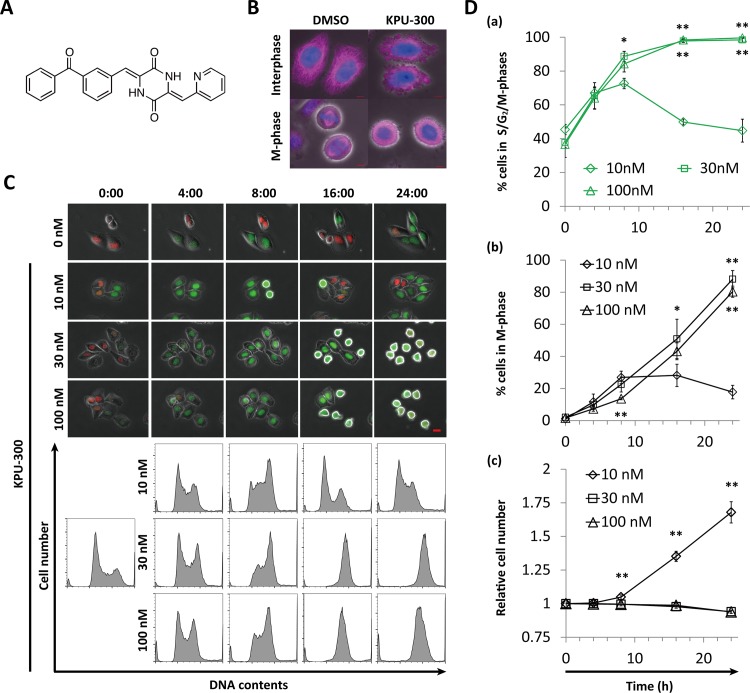
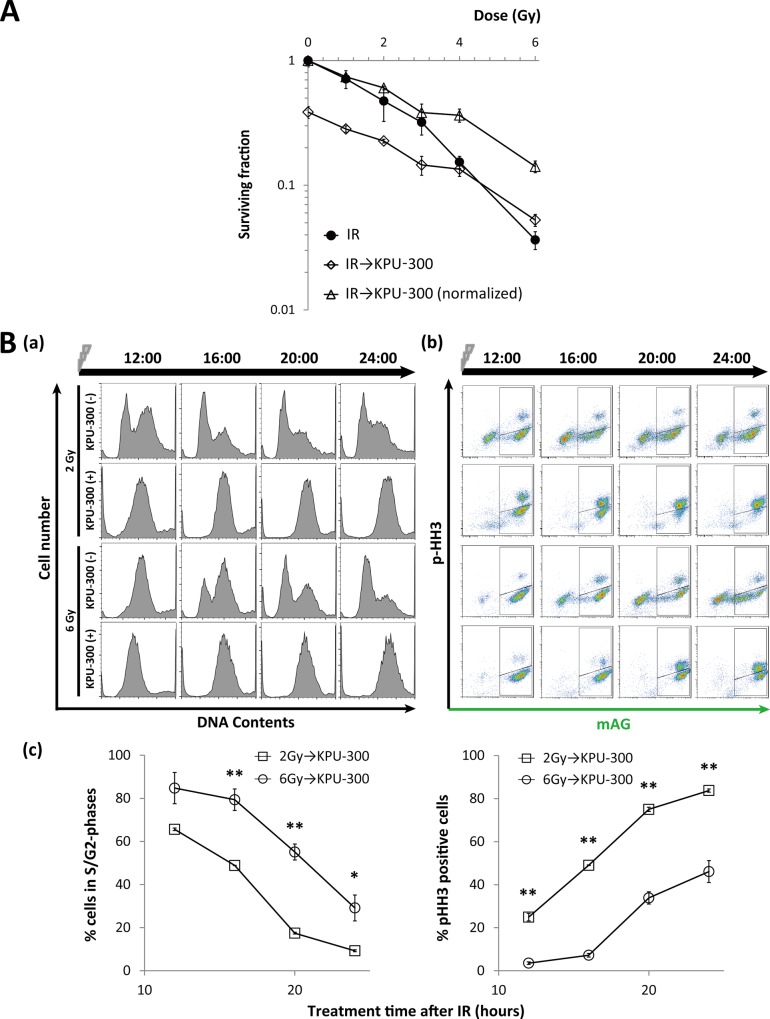
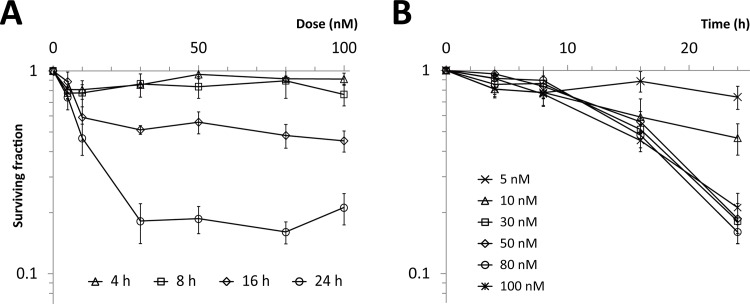
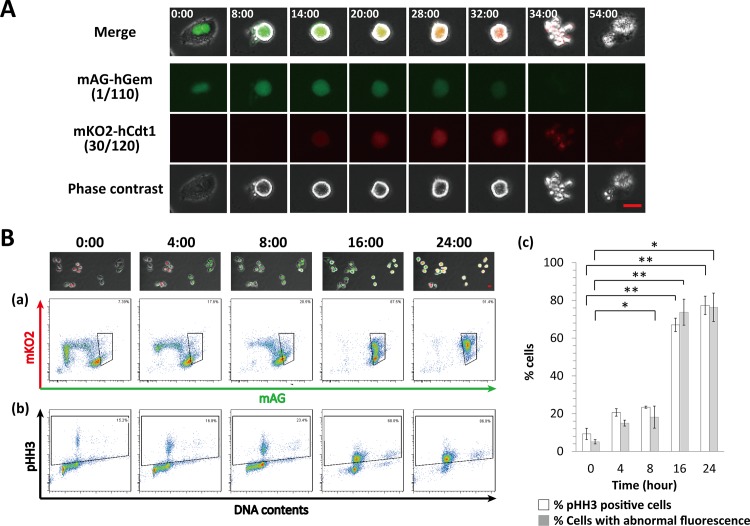
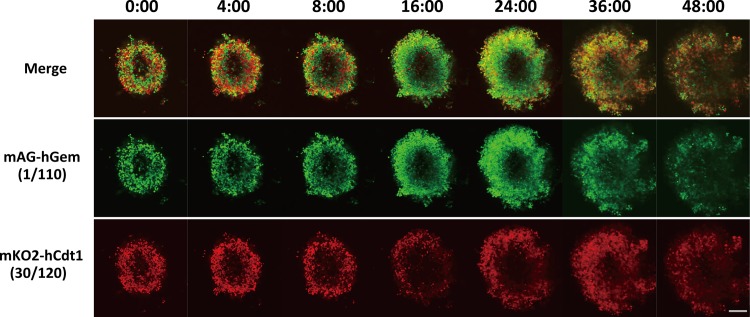
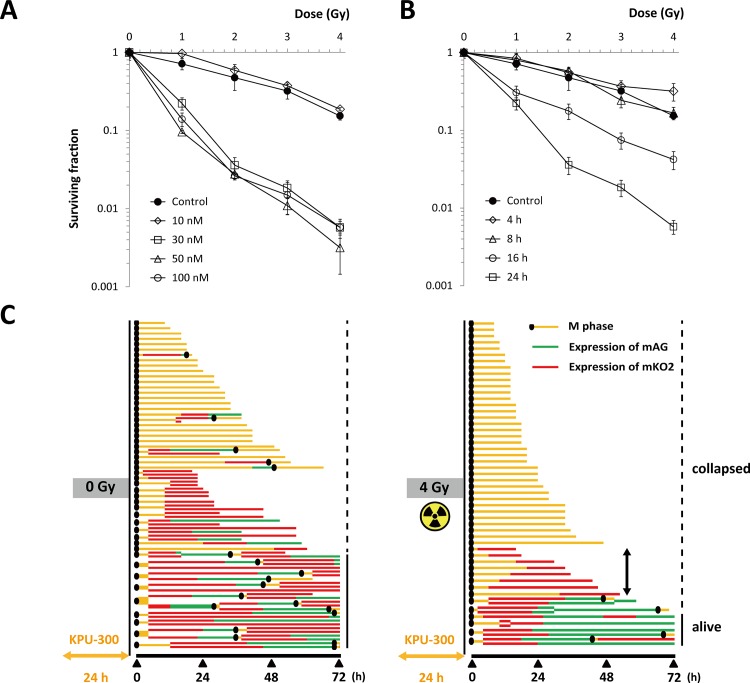
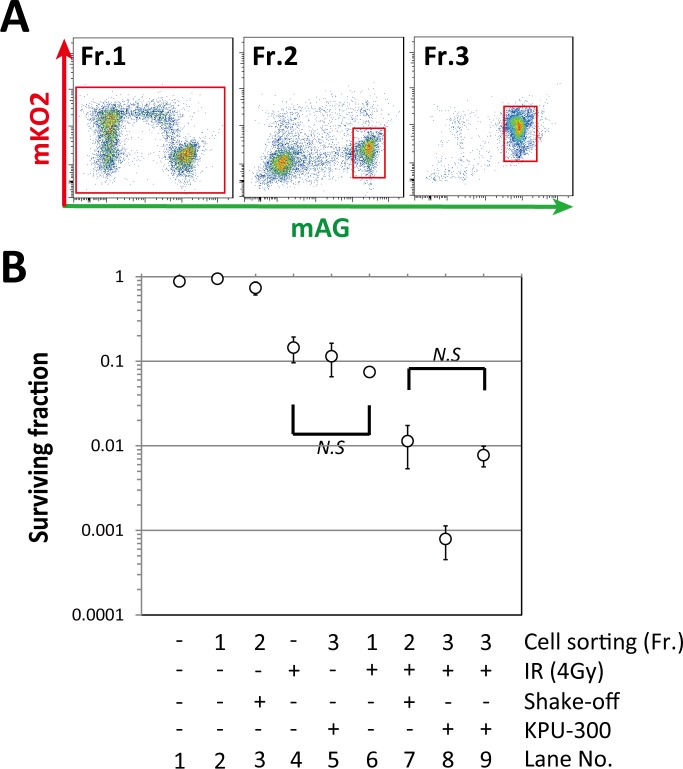
KPU-300 is a novel colchicine-type anti-microtubule agent derived from plinabulin (NPI-2358). We characterized the effects of KPU-300 on cell cycle kinetics and radiosensitization using HeLa cells expressing the fluorescent ubiquitination-based cell cycle indicator (Fucci). Cells treated with 30 nM KPU-300 for 24 h were efficiently synchronized in M phase and contained clearly detectable abnormal Fucci fluorescence. Two-dimensional flow-cytometric analysis revealed a fraction of cells distinct from the normal Fucci fluorescence pattern. Most of these cells were positive for an M phase marker, the phosphorylated form of histone H3. Cells growing in spheroids responded similarly to the drug, and the inner quiescent fraction also responded after recruitment to the growth fraction. When such drug-treated cells were irradiated in monolayer, a remarkable radiosensitization was observed. To determine whether this radiosensitization was truly due to the synchronization in M phase, we compared the radiosensitivity of cells synchronized by KPU-300 treatment and cells in early M phase isolated by a combined method that took advantage of shake-off and the properties of the Fucci system. Following normalization against the surviving fraction of cells treated with KPU-300 alone, the surviving fractions of cells irradiated in early M phase coincided. Taken together with potential vascular disrupting function in vivo, we propose a novel radiosensitizing strategy using KPU-300.
KPU-300是一种源自plinabulin(NPI-2358)的新型秋水仙碱类抗微管剂。我们使用表达基于荧光泛素化的细胞周期指示剂(Fucci)的HeLa细胞,表征了KPU-300对细胞周期动力学和放射增敏作用的影响。用30 nM KPU-300处理24小时的细胞在M期有效同步,并含有明显可检测到的异常Fucci荧光。二维流式细胞术分析揭示了一部分与正常Fucci荧光模式不同的细胞。这些细胞中的大多数对M期标志物组蛋白H3的磷酸化形式呈阳性。在球体中生长的细胞对该药物有类似反应,并且内部静止部分在被募集到生长部分后也有反应。当这种经药物处理的细胞在单层中接受照射时,观察到显著的放射增敏作用。为了确定这种放射增敏作用是否真的是由于M期同步引起的,我们比较了经KPU-300处理同步的细胞与通过利用摇落和Fucci系统特性的联合方法分离的早期M期细胞的放射敏感性。在用单独的KPU-300处理的细胞的存活分数进行归一化后,早期M期照射的细胞的存活分数一致。结合其在体内潜在的血管破坏功能,我们提出了一种使用KPU-300的新型放射增敏策略。