Faghih Mahya, Hosseini Sayed M, Smith Barbara, Ansari Amir Mehdi, Lay Frank, Ahmed Ali Karim, Inagami Tedashi, Marti Guy P, Harmon John W, Walston Jeremy D, Abadir Peter M
Division of Geriatric Medicine and Gerontology, Johns Hopkins University School of Medicine, Baltimore, MD 21224, USA.
Department of Surgery and Hendrix Burn/Wound Laboratory, Johns Hopkins University School of Medicine, Baltimore, MD 21224, USA.
Aging (Albany NY). 2015 Dec;7(12):1185-97. doi: 10.18632/aging.100868.
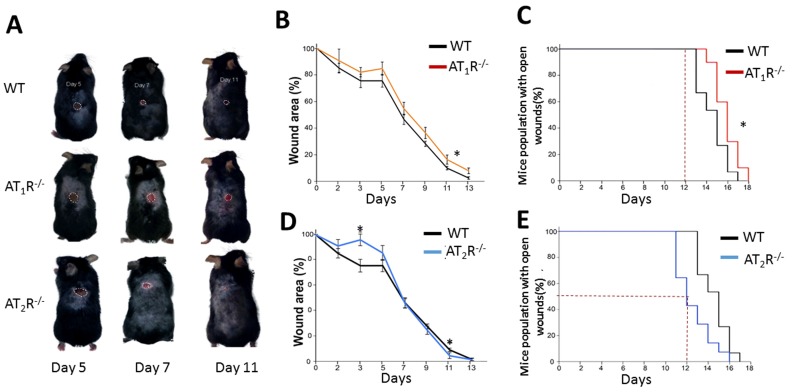
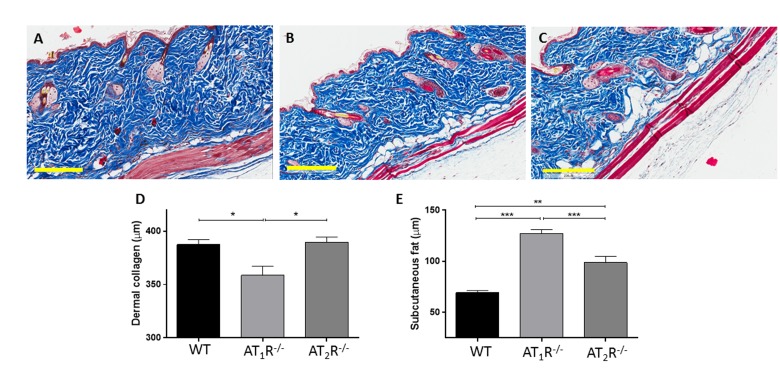
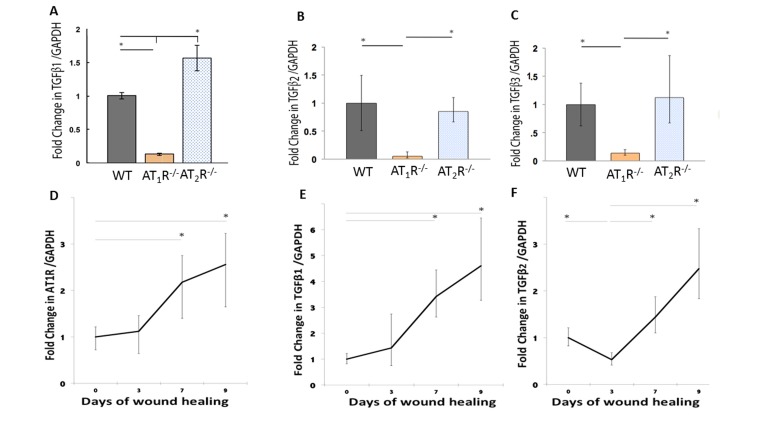
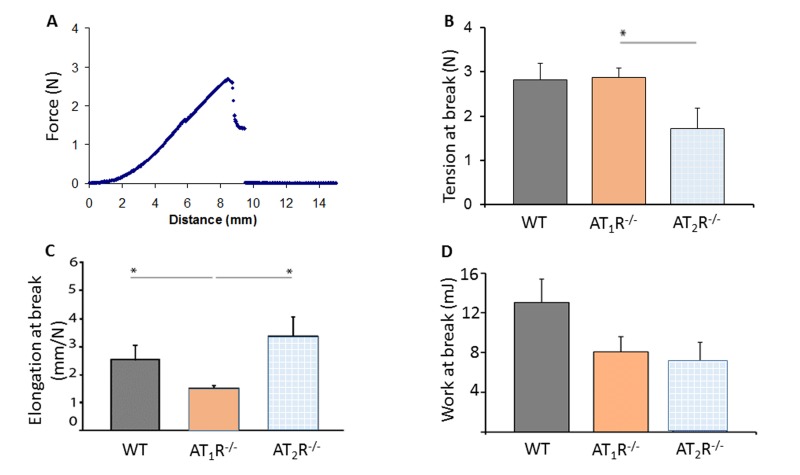
Wounds are among the most common, painful, debilitating and costly conditions in older adults. Disruption of the angiotensin type 1 receptors (AT1R), has been associated with impaired wound healing, suggesting a critical role for AT1R in this repair process. Biological functions of angiotensin type 2 receptors (AT2R) are less studied. We investigated effects of genetically disrupting AT2R on rate and quality of wound healing. Our results suggest that AT2R effects on rate of wound closure depends on the phase of wound healing. We observed delayed healing during early phase of wound healing (inflammation). An accelerated healing rate was seen during later stages (proliferation and remodeling). By day 12, fifty percent of AT2R(-/-) mice had complete wound closure as compared to none in either C57/BL6 or AT1R(-/-) mice. There was a significant increase in AT1R, TGFβ1 and TGFβ2 expression during the proliferative and remodeling phases in AT2R(-/-) mice. Despite the accelerated closure rate, AT2R(-/-) mice had more fragile healed skin. Our results suggest that in the absence of AT2R, wound healing rate is accelerated, but yielded worse skin quality. Elucidating the contribution of both of the angiotensin receptors may help fine tune future intervention aimed at wound repair in older individuals.
伤口是老年人中最常见、最疼痛、最使人衰弱且成本最高的病症之一。血管紧张素1型受体(AT1R)的破坏与伤口愈合受损有关,这表明AT1R在这一修复过程中起关键作用。血管紧张素2型受体(AT2R)的生物学功能研究较少。我们研究了基因敲除AT2R对伤口愈合速度和质量的影响。我们的结果表明,AT2R对伤口闭合速度的影响取决于伤口愈合的阶段。我们观察到在伤口愈合的早期阶段(炎症期)愈合延迟。在后期阶段(增殖期和重塑期)则观察到愈合速度加快。到第12天时,50%的AT2R基因敲除小鼠伤口完全闭合,而C57/BL6小鼠或AT1R基因敲除小鼠中均无伤口完全闭合的情况。在AT2R基因敲除小鼠的增殖期和重塑期,AT1R、转化生长因子β1(TGFβ1)和转化生长因子β2(TGFβ2)的表达显著增加。尽管闭合速度加快,但AT2R基因敲除小鼠愈合后的皮肤更脆弱。我们的结果表明,在没有AT2R的情况下,伤口愈合速度加快,但皮肤质量较差。阐明这两种血管紧张素受体的作用可能有助于优化未来针对老年人伤口修复的干预措施。