Maekawa Tomoki, Briones Ruel A, Resuello Ranillo R G, Tuplano Joel V, Hajishengallis Evlambia, Kajikawa Tetsuhiro, Koutsogiannaki Sophia, Garcia Cristina A G, Ricklin Daniel, Lambris John D, Hajishengallis George
Department of Microbiology, School of Dental Medicine, University of Pennsylvania, Philadelphia, PA, USA.
Research Center for Advanced Oral Science, Graduate School of Medical and Dental Sciences, Niigata University, Niigata, Japan.
J Clin Periodontol. 2016 Mar;43(3):238-49. doi: 10.1111/jcpe.12507. Epub 2016 Mar 3.
Human periodontitis is associated with overactivation of complement, which is triggered by different mechanisms converging on C3, the central hub of the system. We assessed whether the C3 inhibitor Cp40 inhibits naturally occurring periodontitis in non-human primates (NHPs).
Non-human primates with chronic periodontitis were intra-gingivally injected with Cp40 either once (5 animals) or three times (10 animals) weekly for 6 weeks followed by a 6-week follow-up period. Clinical periodontal examinations and collection of gingival crevicular fluid and biopsies of gingiva and bone were performed at baseline and during the study. A one-way repeated-measures anova was used for data analysis.
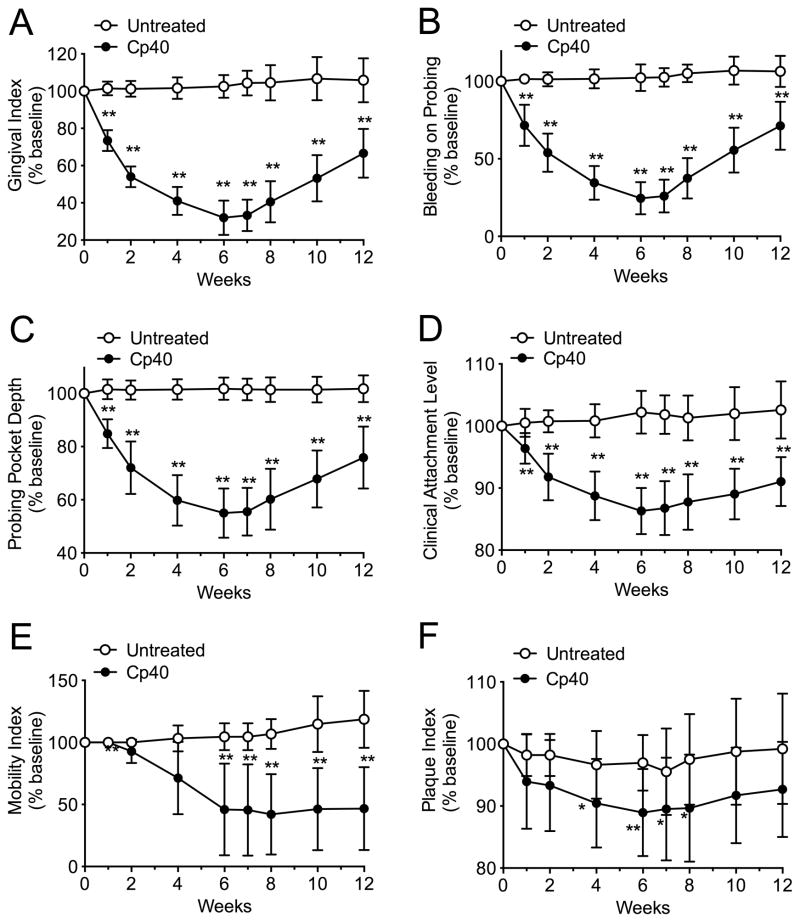
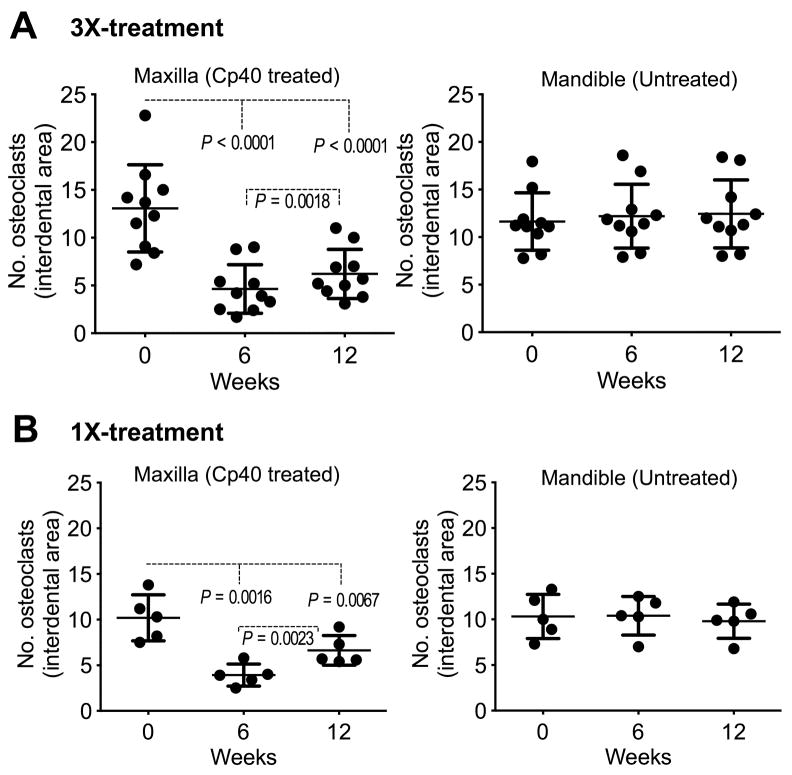
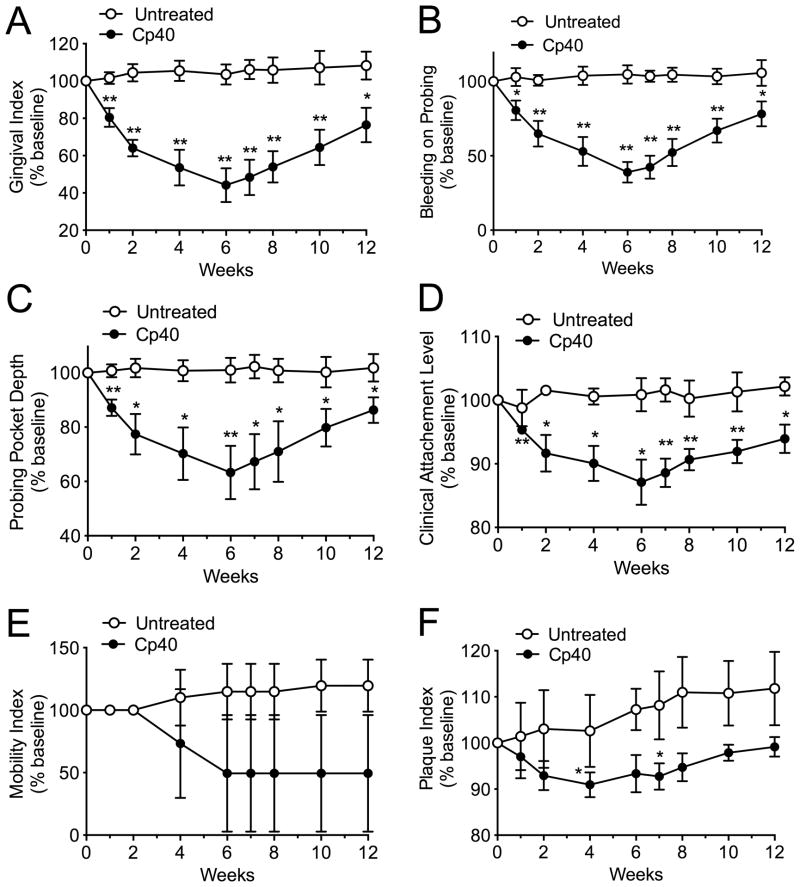
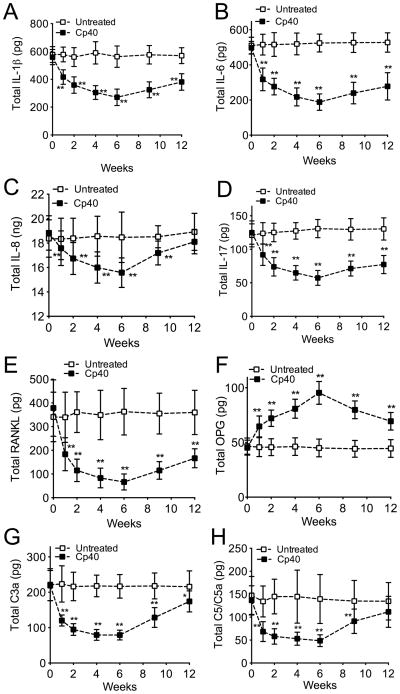
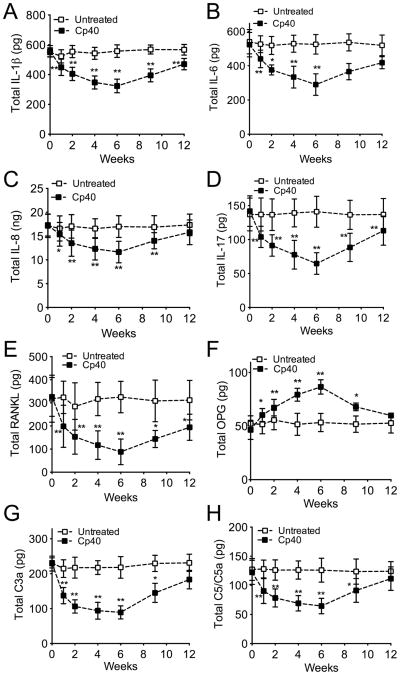
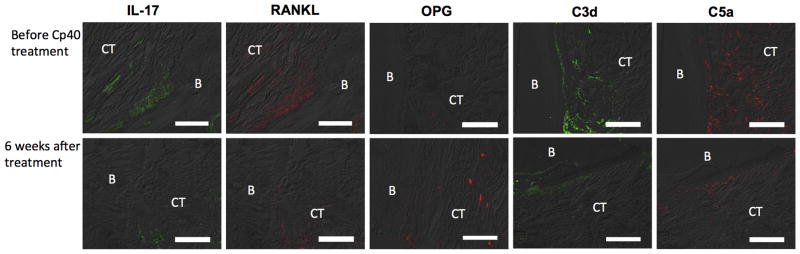
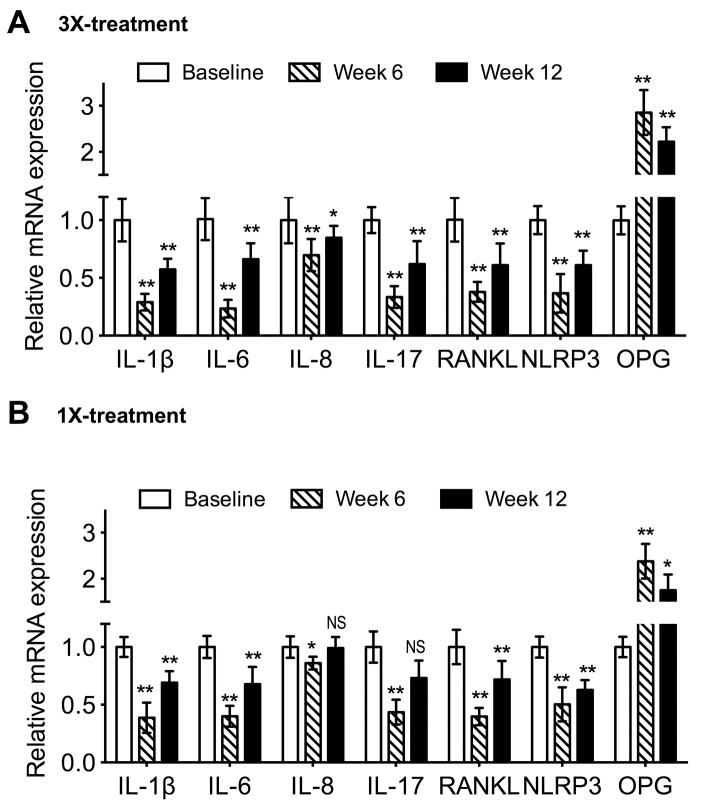
Whether administered once or three times weekly, Cp40 caused a significant reduction in clinical indices that measure periodontal inflammation (gingival index and bleeding on probing), tissue destruction (probing pocket depth and clinical attachment level) or tooth mobility. These clinical changes were associated with significantly reduced levels of pro-inflammatory mediators and decreased numbers of osteoclasts in bone biopsies. The protective effects of Cp40 persisted, albeit at reduced efficacy, for at least 6 weeks following drug discontinuation.
Cp40 inhibits pre-existing chronic periodontal inflammation and osteoclastogenesis in NHPs, suggesting a novel adjunctive anti-inflammatory therapy for treating human periodontitis.
人类牙周炎与补体过度激活有关,补体激活由多种不同机制引发,这些机制均汇聚于补体系统的中心枢纽C3。我们评估了C3抑制剂Cp40是否能抑制非人类灵长类动物(NHP)自然发生的牙周炎。
对患有慢性牙周炎的非人类灵长类动物进行龈内注射Cp40,每周注射一次(5只动物)或每周注射三次(10只动物),持续6周,随后进行6周的随访期。在基线期和研究期间进行临床牙周检查、收集龈沟液以及获取牙龈和骨组织活检样本。采用单向重复测量方差分析进行数据分析。
无论每周注射一次还是三次,Cp40均能显著降低测量牙周炎症(牙龈指数和探诊出血)、组织破坏(探诊深度和临床附着水平)或牙齿松动度的临床指标。这些临床变化与促炎介质水平显著降低以及骨活检中破骨细胞数量减少有关。停药后,Cp40的保护作用至少持续6周,尽管效果有所减弱。
Cp40可抑制NHP中已存在的慢性牙周炎症和破骨细胞生成,提示其可能成为治疗人类牙周炎的一种新型辅助抗炎疗法。