Mejia-Ariza Raquel, Kronig Gavin A, Huskens Jurriaan
Molecular NanoFabrication group, MESA+ Institute for Nanotechnology University of Twente, P.O. Box 217, 7500 AE Enschede, The Netherlands.
Beilstein J Org Chem. 2015 Dec 1;11:2388-2399. doi: 10.3762/bjoc.11.260. eCollection 2015.
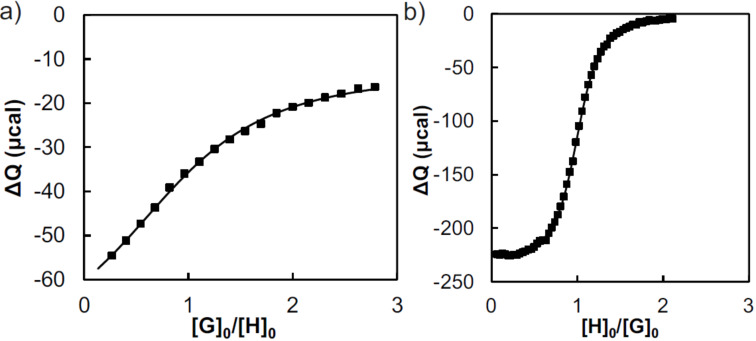
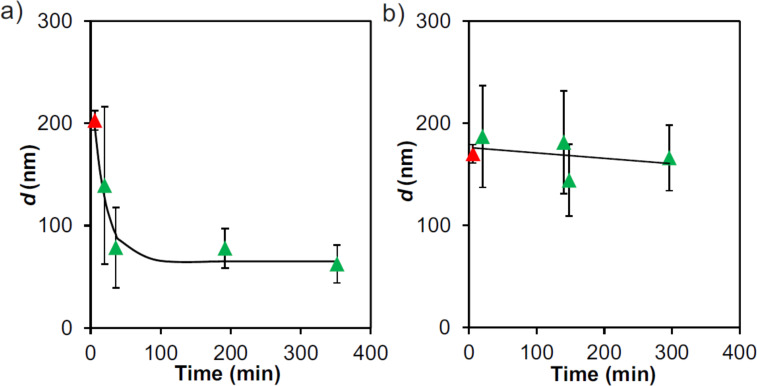
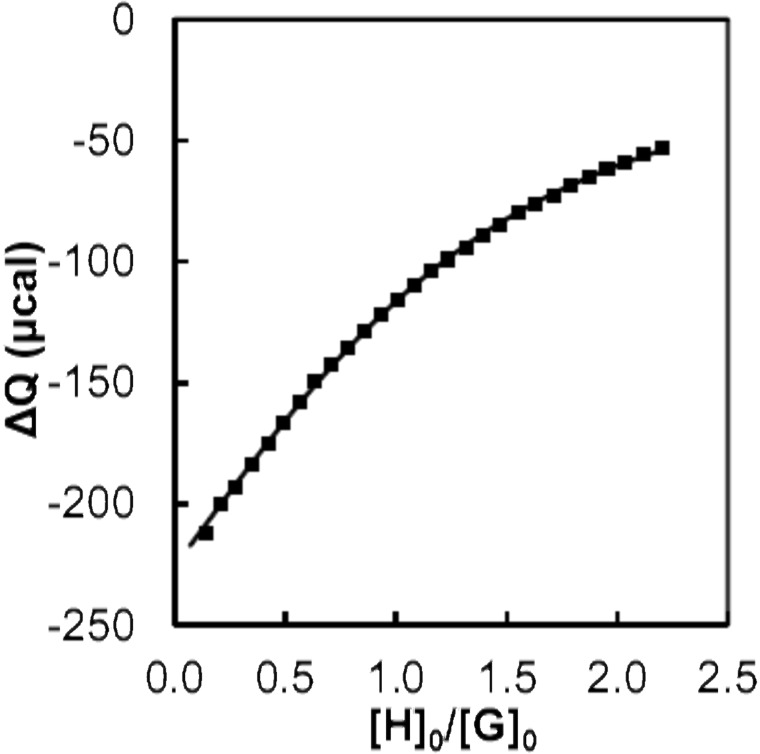
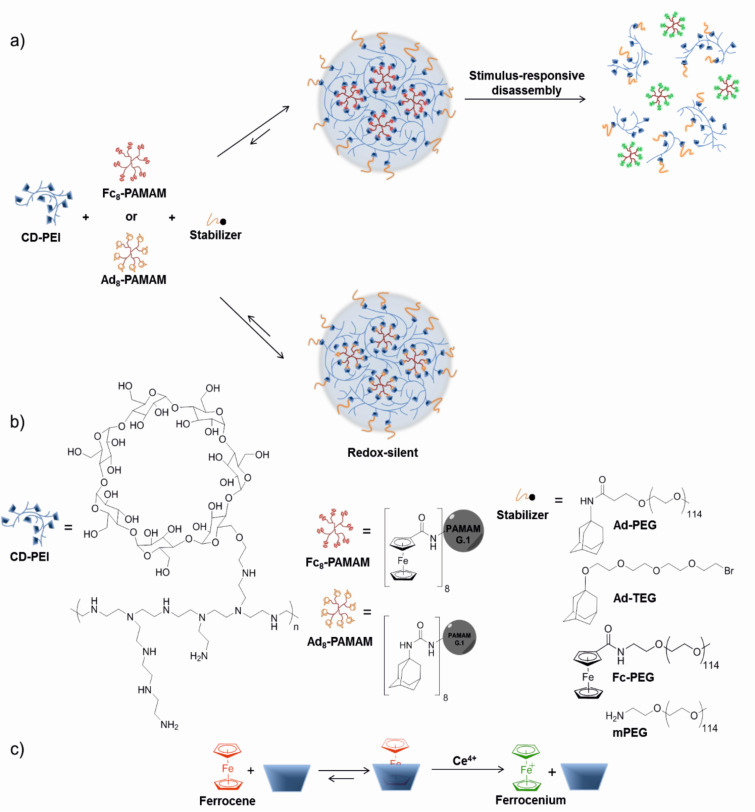
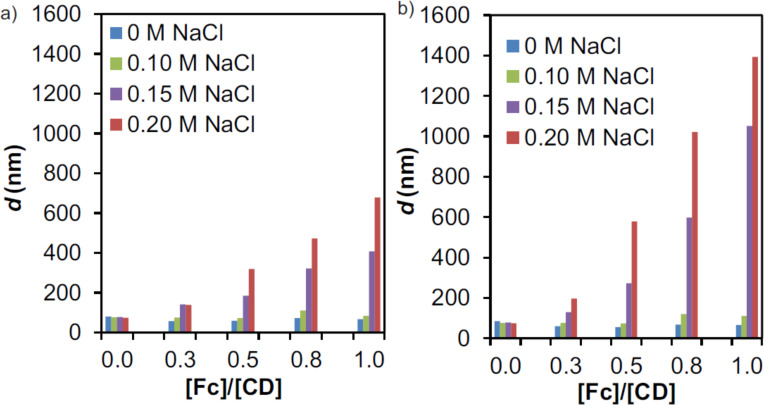
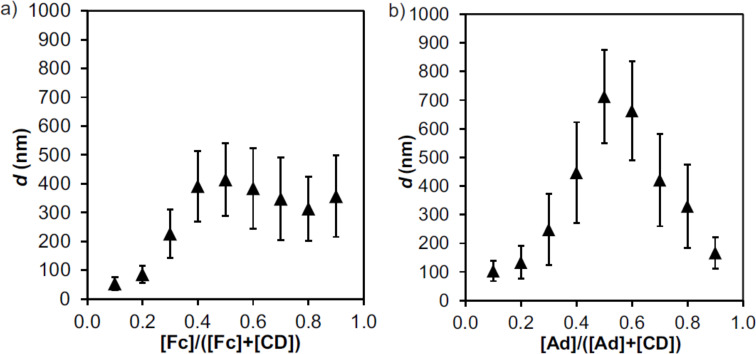
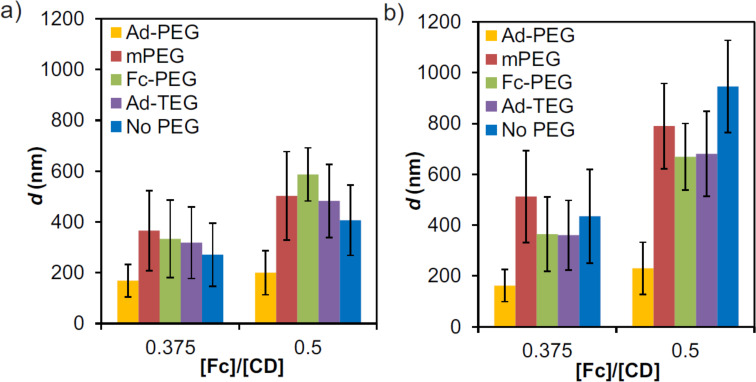
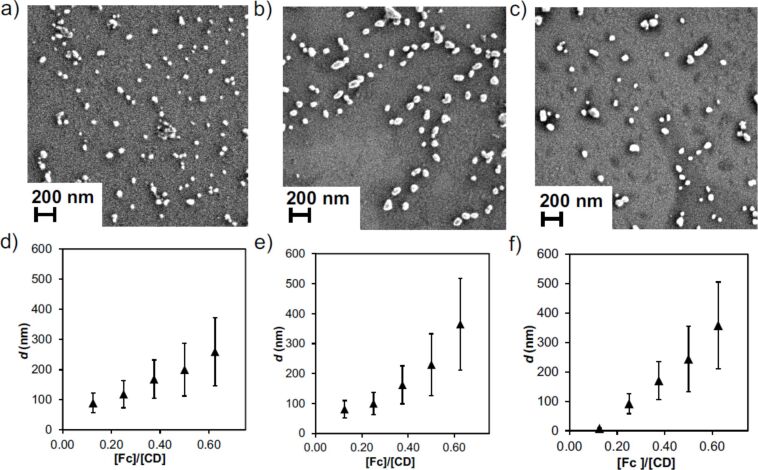
Control over the assembly and disassembly of nanoparticles is pivotal for their use as drug delivery vehicles. Here, we aim to form supramolecular nanoparticles (SNPs) by combining advantages of the reversible assembly properties of SNPs using host-guest interactions and of a stimulus-responsive moiety. The SNPs are composed of a core of positively charged poly(ethylene imine) grafted with β-cyclodextrin (CD) and a positively charged ferrocene (Fc)-terminated poly(amidoamine) dendrimer, with a monovalent stabilizer at the surface. Fc was chosen for its loss of CD-binding properties when oxidizing it to the ferrocenium cation. The ionic strength was shown to play an important role in controlling the aggregate growth. The attractive supramolecular and repulsive electrostatic interactions constitute a balance of forces in this system at low ionic strengths. At higher ionic strengths, the increased charge screening led to a loss of electrostatic repulsion and therefore to faster aggregate growth. A Job plot showed that a 1:1 stoichiometry of host and guest moieties gave the most efficient aggregate growth. Different stabilizers were used to find the optimal stopper to limit the growth. A weaker guest moiety was shown to be less efficient in stabilizing the SNPs. Also steric repulsion is important for achieving SNP stability. SNPs of controlled particle size and good stability (up to seven days) were prepared by fine-tuning the ratio of multivalent and monovalent interactions. Finally, reversibility of the SNPs was confirmed by oxidizing the Fc guest moieties in the core of the SNPs.
对纳米颗粒的组装和拆卸进行控制对于其作为药物递送载体的应用至关重要。在此,我们旨在通过结合超分子纳米颗粒(SNP)利用主客体相互作用的可逆组装特性以及刺激响应部分的优势来形成超分子纳米颗粒。这些SNP由接枝有β-环糊精(CD)的带正电荷的聚(乙烯亚胺)核心和带正电荷的二茂铁(Fc)封端的聚(酰胺胺)树枝状大分子组成,表面有一价稳定剂。选择Fc是因为其氧化成二茂铁阳离子时会失去与CD结合的特性。结果表明离子强度在控制聚集体生长中起重要作用。在低离子强度下,有吸引力的超分子相互作用和排斥性静电相互作用在该体系中构成了力的平衡。在较高离子强度下,电荷屏蔽增加导致静电排斥丧失,从而使聚集体生长更快。Job曲线表明主客体部分1:1的化学计量比能实现最有效的聚集体生长。使用不同的稳定剂来寻找限制生长的最佳终止剂。结果表明较弱的客体部分在稳定SNP方面效率较低。空间排斥对于实现SNP稳定性也很重要。通过微调多价和单价相互作用的比例,制备了粒径可控且稳定性良好(长达七天)的SNP。最后,通过氧化SNP核心中的Fc客体部分证实了SNP的可逆性。