Zimmer Márta, Zbanţ Adriana, Németh Kornél, Kovács Gyula
Department of Cognitive Science, Budapest University of Technology and Economics Budapest, Hungary.
Faculty of Philosophy and Education, University of Vienna Vienna, Austria.
Front Psychol. 2015 Dec 22;6:1945. doi: 10.3389/fpsyg.2015.01945. eCollection 2015.
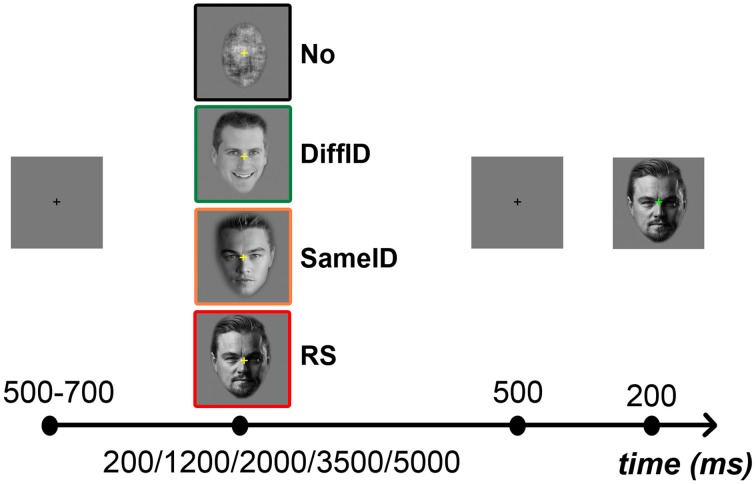
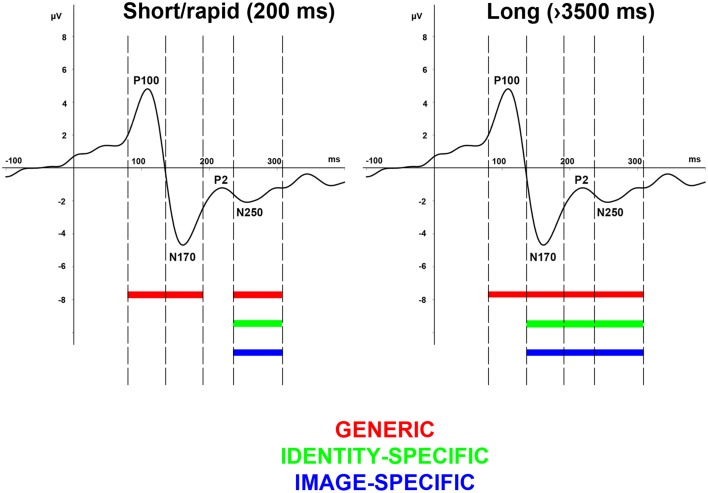
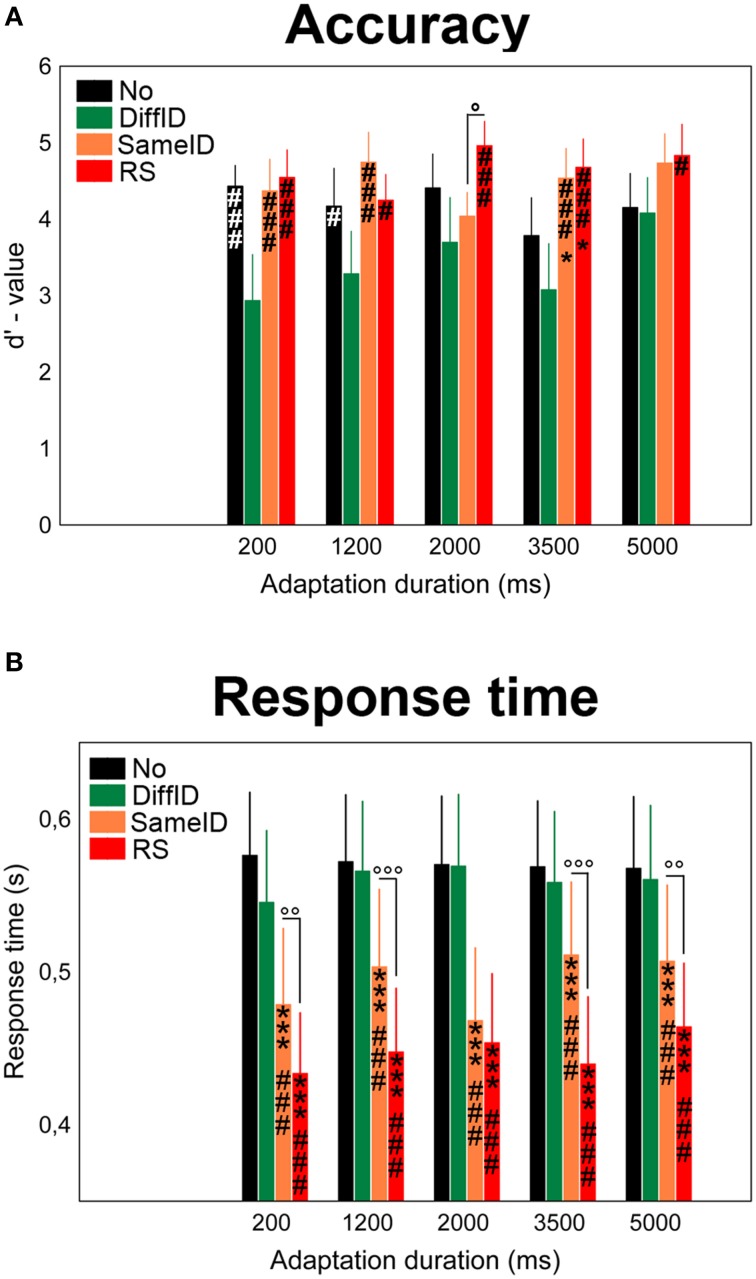
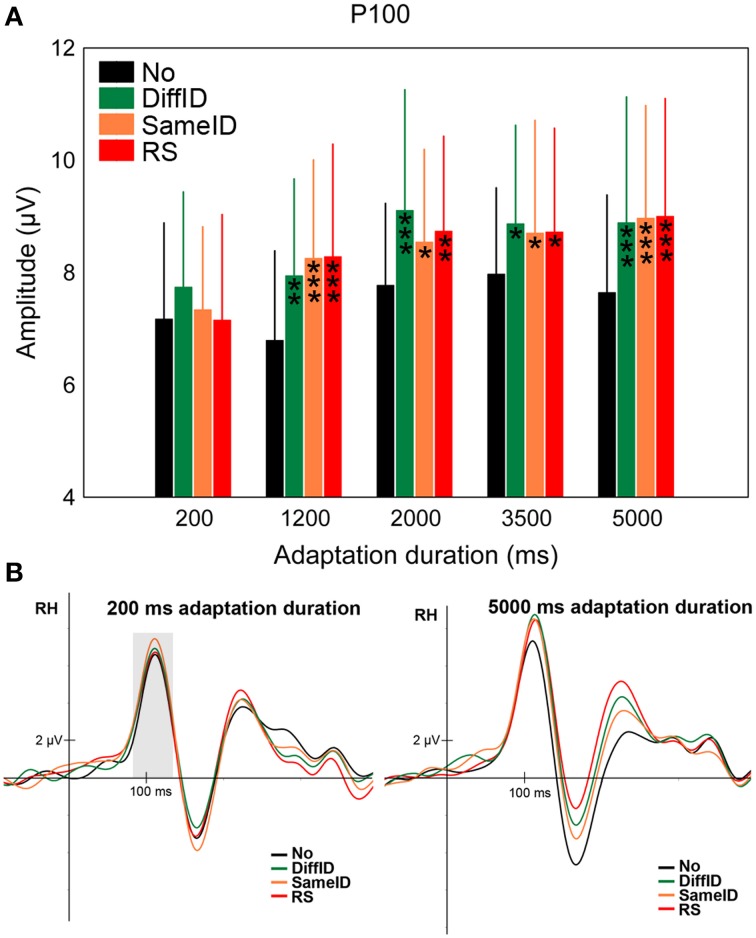
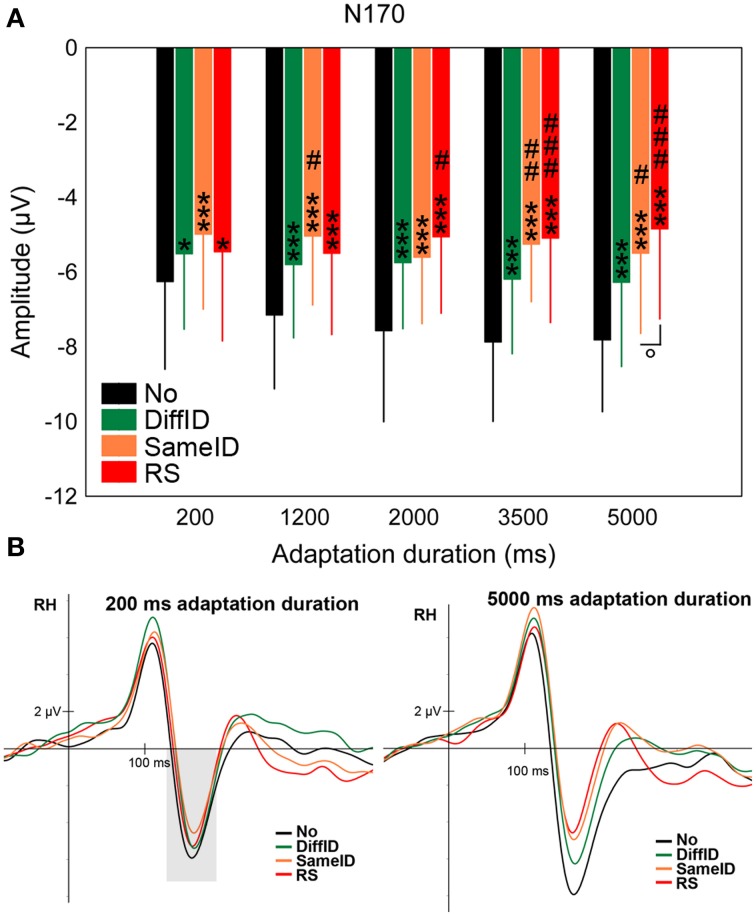
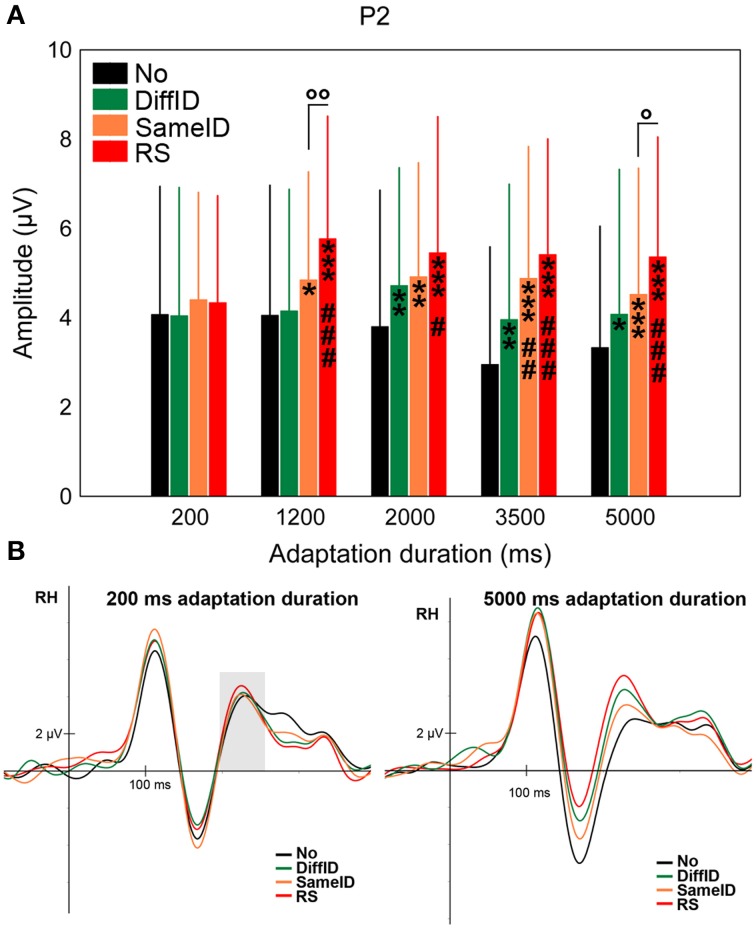
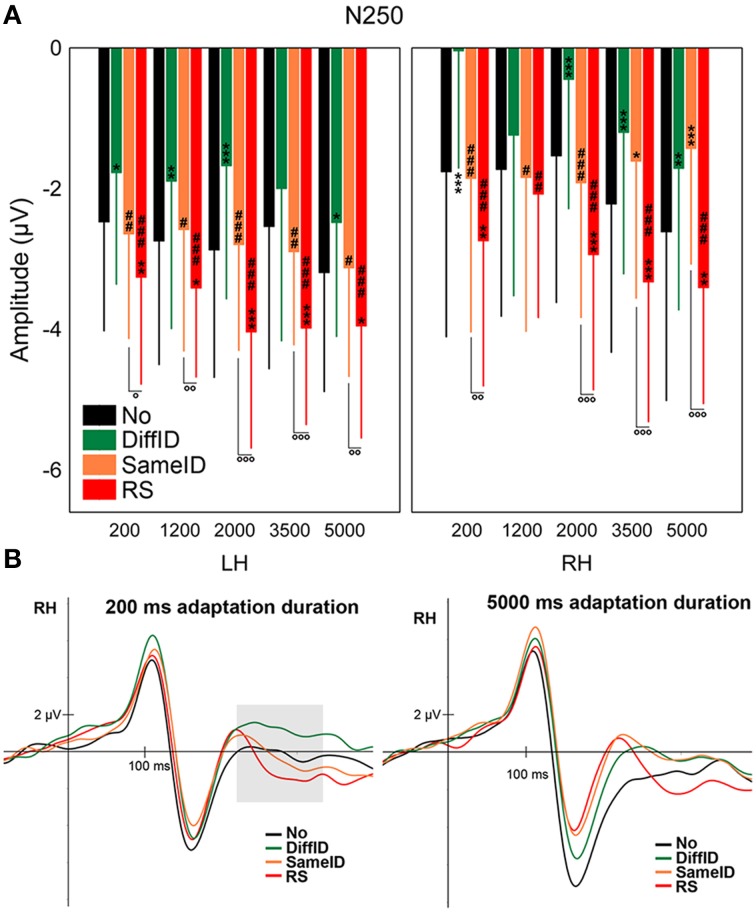
Several studies demonstrated that face perception is biased by the prior presentation of another face, a phenomenon termed as face-related after-effect (FAE). FAE is linked to a neural signal-reduction at occipito-temporal areas and it can be observed in the amplitude modulation of the early event-related potential (ERP) components. Recently, macaque single-cell recording studies suggested that manipulating the duration of the adaptor makes the selective adaptation of different visual motion processing steps possible. To date, however, only a few studies tested the effects of adaptor duration on the electrophysiological correlates of human face processing directly. The goal of the current study was to test the effect of adaptor duration on the image-, identity-, and generic category-specific face processing steps. To this end, in a two-alternative forced choice familiarity decision task we used five adaptor durations (ranging from 200-5000 ms) and four adaptor categories: adaptor and test were identical images-Repetition Suppression (RS); adaptor and test were different images of the Same Identity (SameID); adaptor and test images depicted Different Identities (DiffID); the adaptor was a Fourier phase-randomized image (No). Behaviorally, a strong priming effect was observed in both accuracy and response times for RS compared with both DiffID and No. The electrophysiological results suggest that rapid adaptation leads to a category-specific modulation of P100, N170, and N250. In addition, both identity and image-specific processes affected the N250 component during rapid adaptation. On the other hand, prolonged (5000 ms) adaptation enhanced, and extended category-specific adaptation processes over all tested ERP components. Additionally, prolonged adaptation led to the emergence of image-, and identity-specific modulations on the N170 and P2 components as well. In other words, there was a clear dissociation among category, identity-, and image-specific processing steps in the case of longer (3500 and 5000 ms) but not for shorter durations (< 3500 ms), reflected in the gradual reduction of N170 and enhancement of P2 in the No, DiffID, SameID, and RS conditions. Our findings imply that by manipulating adaptation duration one can dissociate the various steps of human face processing, reflected in the ERP response.
多项研究表明,面部感知会受到另一张面孔先前呈现的影响,这种现象被称为面部相关后效应(FAE)。FAE与枕颞区的神经信号减少有关,并且可以在早期事件相关电位(ERP)成分的幅度调制中观察到。最近,猕猴单细胞记录研究表明,操纵适应刺激的持续时间可以使不同视觉运动处理步骤的选择性适应成为可能。然而,迄今为止,只有少数研究直接测试了适应刺激持续时间对人脸处理电生理相关性的影响。本研究的目的是测试适应刺激持续时间对图像、身份和通用类别特定的人脸处理步骤的影响。为此,在一个二选一的强制选择熟悉度决策任务中,我们使用了五种适应刺激持续时间(范围从200 - 5000毫秒)和四种适应刺激类别:适应刺激和测试刺激是相同图像 - 重复抑制(RS);适应刺激和测试刺激是同一身份的不同图像(SameID);适应刺激和测试图像描绘的是不同身份(DiffID);适应刺激是傅里叶相位随机化图像(No)。在行为上,与DiffID和No相比,RS在准确性和反应时间上都观察到了强烈的启动效应。电生理结果表明,快速适应会导致P100、N170和N250的类别特异性调制。此外,在快速适应过程中,身份和图像特异性过程都会影响N250成分。另一方面,长时间(5000毫秒)的适应增强了所有测试ERP成分上的类别特异性适应过程,并使其扩展。此外,长时间适应还导致了N170和P2成分上图像和身份特异性调制的出现。换句话说,在较长时间(3500和5000毫秒)而非较短时间(< 3500毫秒)的情况下,类别、身份和图像特异性处理步骤之间存在明显的分离,这反映在No、DiffID、SameID和RS条件下N170的逐渐降低和P2的增强上。我们的研究结果表明,通过操纵适应持续时间,可以分离人脸处理的各个步骤,这在ERP反应中得到体现。