Kim Hyun Soo, Kim Yeo Jin, Seo Young Rok
Institute of Environmental Medicine for Green Chemistry, Department of Life Science, Dongguk University Biomedical Campus, Goyang, Korea.
J Cancer Prev. 2015 Dec;20(4):232-40. doi: 10.15430/JCP.2015.20.4.232. Epub 2015 Dec 30.
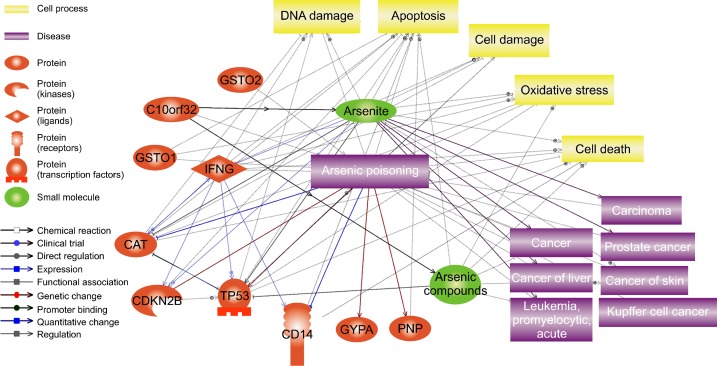
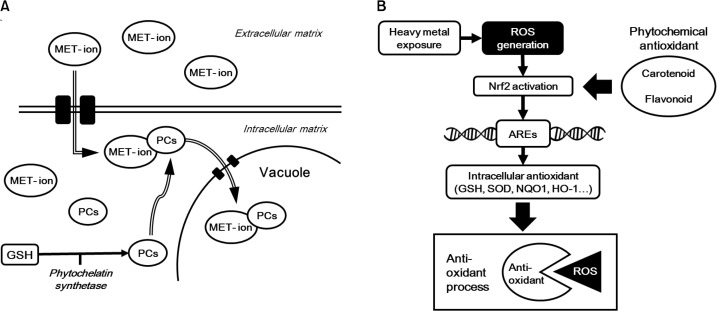
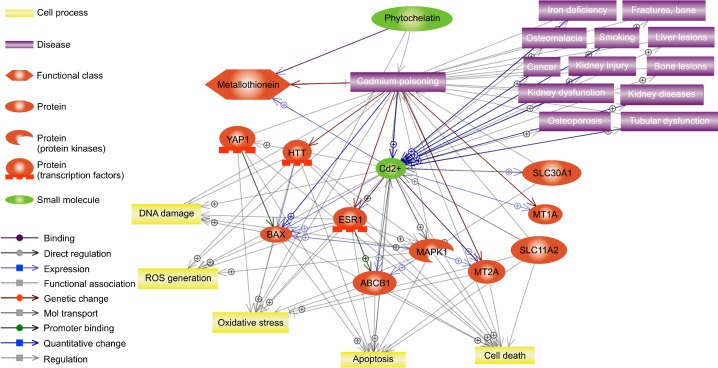
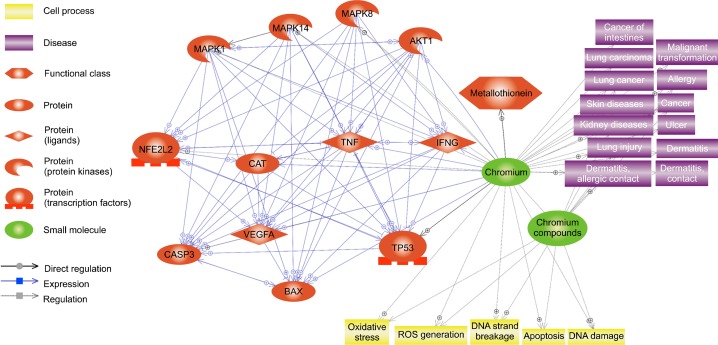
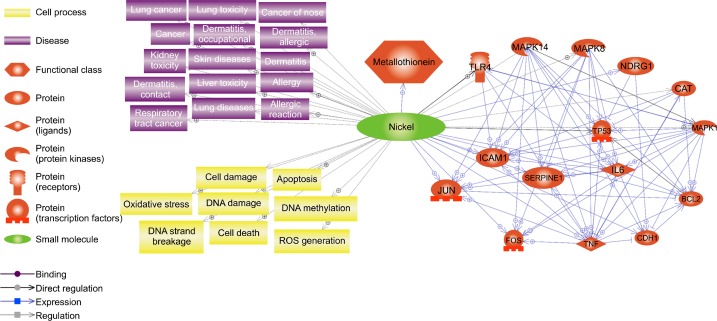
Almost all heavy metals are serious toxicants as carcinogens. However, due to their chemical and physiological properties, heavy metals are useful in industrial areas including alloy, smelting and production of commercial products. Such applications increase the opportunity for heavy metal exposure. Waste from industrial processes is also a major source of environmental contamination and accumulation in the human body. Arsenic, cadmium, chromium, and nickel are classified as group 1 carcinogens by the International Agency for Research on Cancer, and are utilized commercially. In this review, we used molecular pathway analysis to understand the toxicity and carcinogenic mechanisms of these metals. Our analyzed data showed that above-mentioned metallic substances induce oxidative stress, DNA damage, and cell death processes, resulting in increase the risk of cancer and cancer-related diseases. Thus, we might think phytochelatin molecules and antioxidative phytochemical substances are helpful for prevention of heavy metal-induced cancer.
几乎所有重金属作为致癌物都是严重的毒物。然而,由于其化学和生理特性,重金属在包括合金、冶炼和商业产品生产在内的工业领域中很有用。此类应用增加了重金属暴露的机会。工业过程产生的废物也是环境污染和人体积累的主要来源。砷、镉、铬和镍被国际癌症研究机构列为1类致癌物,并在商业上得到利用。在本综述中,我们使用分子途径分析来了解这些金属的毒性和致癌机制。我们的分析数据表明,上述金属物质会诱导氧化应激、DNA损伤和细胞死亡过程,从而增加患癌症和癌症相关疾病的风险。因此,我们可能认为植物螯合素分子和抗氧化植物化学物质有助于预防重金属诱发的癌症。