Borges Marisa de Carvalho, Terra Guilherme Azevedo, Takeuti Tharsus Dias, Ribeiro Betânia Maria, Silva Alex Augusto, Terra-Júnior Júverson Alves, Rodrigues-Júnior Virmondes, Crema Eduardo
Department of Surgery, Federal University of Triângulo Mineiro, Uberaba, MG, Brazil.
Department of Immunology.
Arq Bras Cir Dig. 2015 Nov-Dec;28(4):266-9. doi: 10.1590/S0102-6720201500040012.
Immunological and inflammatory mechanisms play a key role in the development and progression of type 2 diabetes mellitus.
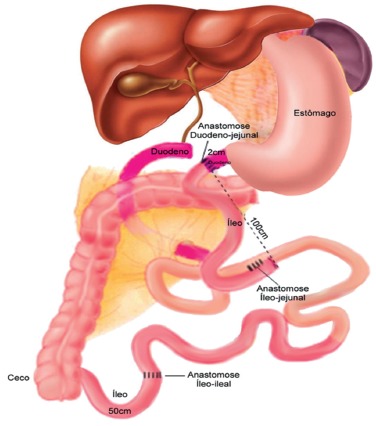
To raise the hypothesis that alterations in immunological parameters occur after duodenojejunal bypass surgery combined with ileal interposition without gastrectomy, and influences the insulin metabolism of betacells.
Seventeen patients with type 2 diabetes mellitus under clinical management were submitted to surgery and blood samples were collected before and six months after surgery for evaluation of the serum profile of proinflammatory (IFN-γ, TNF-α, IL-17A) and anti-inflammatory cytokines (IL-4, IL-10). In addition, anthropometric measures, glucose levels and insulin use were evaluated in each patient.
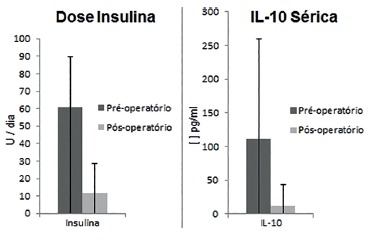
No changes in the expression pattern of proinflammatory cytokines were observed before and after surgery. In contrast, there was a significant decrease in IL-10 expression, which coincided with a reduction in the daily insulin dose, glycemic index, and BMI of the patients. Early presentation of food to the ileum may have induced the production of incretins such as GLP-1 and PYY which, together with glycemic control, contributed to weight loss, diabetes remission and the consequent good surgical prognosis of these patients. In addition, the control of metabolic syndrome was responsible for the reduction of IL-10 expression in these patients.
These findings suggest the presence of low-grade inflammation in these patients during the postoperative period, certainly as a result of adequate glycemic control and absence of obesity, contributing to a good outcome of surgery.
免疫和炎症机制在2型糖尿病的发生和发展中起关键作用。
提出假说,即在未行胃切除术的十二指肠空肠旁路术联合回肠插入术后,免疫参数会发生改变,并影响β细胞的胰岛素代谢。
对17例接受临床管理的2型糖尿病患者进行手术,并在术前和术后6个月采集血样,以评估促炎细胞因子(IFN-γ、TNF-α、IL-17A)和抗炎细胞因子(IL-4、IL-10)的血清水平。此外,对每位患者进行人体测量、血糖水平和胰岛素使用情况评估。
手术前后促炎细胞因子的表达模式未观察到变化。相反,IL-10表达显著降低,这与患者每日胰岛素剂量、血糖指数和体重指数的降低相一致。食物早期进入回肠可能诱导了肠促胰岛素如GLP-1和PYY的产生,这些与血糖控制一起,促成了体重减轻、糖尿病缓解以及这些患者良好的手术预后。此外,代谢综合征的控制导致了这些患者IL-10表达的降低。
这些发现表明这些患者在术后存在低度炎症,这肯定是血糖控制良好和无肥胖的结果,有助于手术取得良好效果。