Çağlayan Ahmet O, Tüysüz Beyhan, Coşkun Süleyman, Quon Jennifer, Harmancı Akdes S, Baranoski Jacob F, Baran Burçin, Erson-Omay E Zeynep, Henegariu Octavian, Mane Shrikant M, Bilgüvar Kaya, Yasuno Katsuhito, Günel Murat
Departments of Neurosurgery, Neurobiology and Genetics, Yale Program in Brain Tumor Research, Yale School of Medicine, New Haven, CT, USA.
Department of Medical Genetics, School of Medicine, Istanbul Bilim University, Istanbul, Turkey.
J Hum Genet. 2016 May;61(5):395-403. doi: 10.1038/jhg.2015.160. Epub 2016 Jan 7.
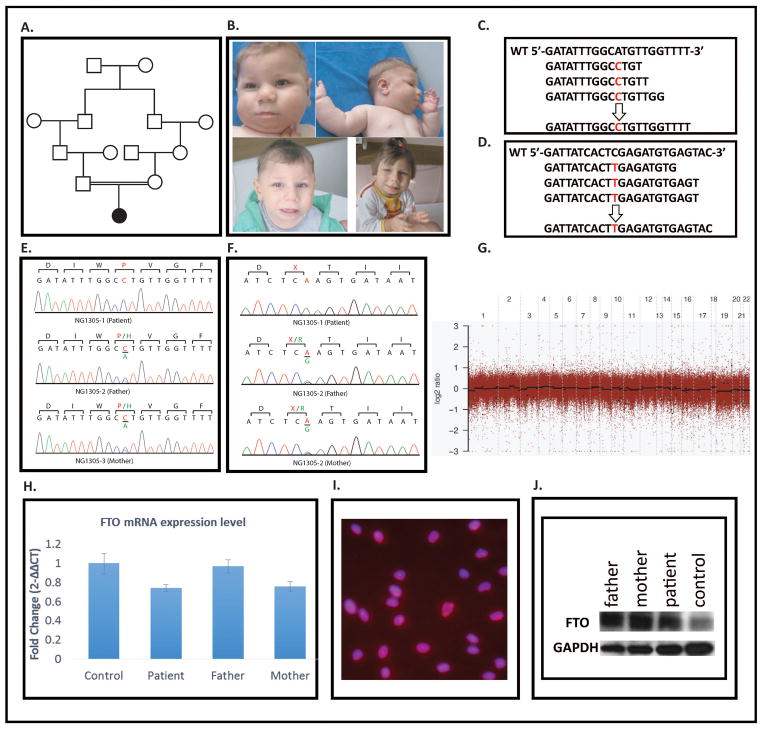
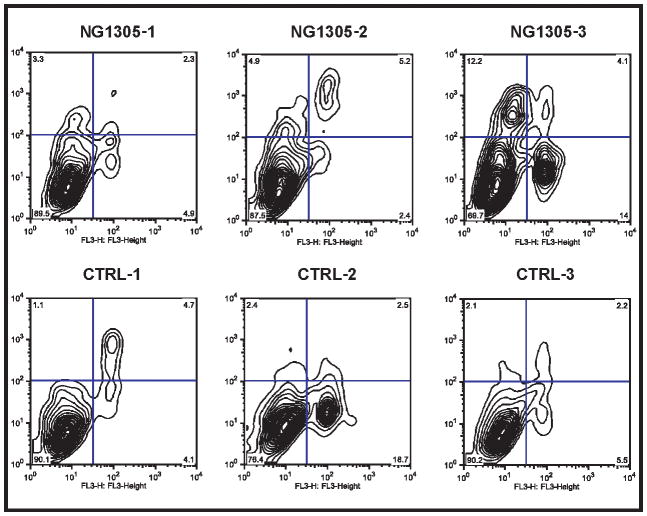
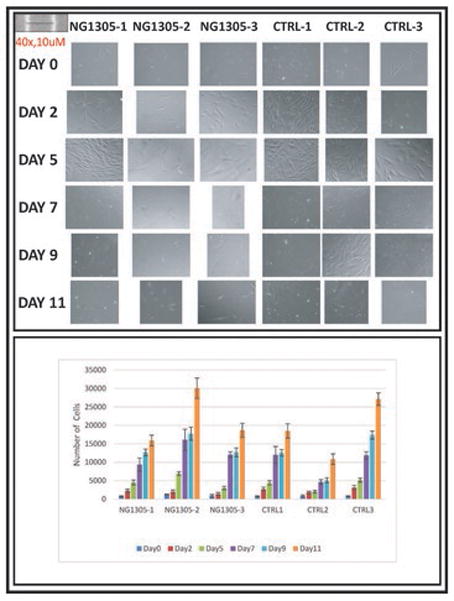
The fat mass and obesity associated (FTO) gene has previously been associated with a variety of diseases and conditions, notably obesity, acute coronary syndrome and metabolic syndrome. Reports describing mutations in FTO as well as in FTO animal models have further demonstrated a role for FTO in the development of the brain and other organs. Here, we describe a patient born of consanguineous union who presented with microcephaly, developmental delay, behavioral abnormalities, dysmorphic facial features, hypotonia and other various phenotypic abnormalities. Whole-exome sequencing revealed a novel homozygous missense mutation in FTO and a nonsense mutation in the cholesteryl ester transfer protein (CETP). Exome copy number variation analysis revealed no disease-causing large duplications or deletions within coding regions. Patient's, her parents' and non-related control' fibroblasts were analyzed for morphologic defects, abnormal proliferation, apoptosis and transcriptome profile. We have shown that FTO is located in the nucleus of cells from each tested sample. Western blot analysis demonstrated no changes in patient FTO. Quantitative (qPCR) analysis revealed slightly decreased levels of FTO expression in patient cells compared with controls. No morphological or proliferation differences between the patient and control fibroblasts were observed. There is still much to be learned about the molecular mechanisms by which mutations in FTO contribute to such severe phenotypes.
脂肪量和肥胖相关(FTO)基因先前已与多种疾病和病症相关联,尤其是肥胖症、急性冠状动脉综合征和代谢综合征。描述FTO突变以及FTO动物模型的报告进一步证明了FTO在大脑和其他器官发育中的作用。在此,我们描述了一名近亲结婚出生的患者,其表现为小头畸形、发育迟缓、行为异常、面部畸形特征、肌张力减退和其他各种表型异常。全外显子测序揭示了FTO中一个新的纯合错义突变以及胆固醇酯转运蛋白(CETP)中的一个无义突变。外显子拷贝数变异分析显示编码区域内没有导致疾病的大片段重复或缺失。对患者、其父母和无关对照的成纤维细胞进行了形态学缺陷、异常增殖、凋亡和转录组谱分析。我们已经表明FTO位于每个测试样本的细胞核中。蛋白质印迹分析显示患者的FTO没有变化。定量(qPCR)分析显示与对照相比,患者细胞中FTO表达水平略有下降。未观察到患者和对照成纤维细胞之间的形态学或增殖差异。关于FTO突变导致此类严重表型的分子机制仍有许多有待了解之处。