Zhou Hongxuan, Dai Yun, Zhu Liqun, Wang Chun, Fei Xiaodong, Pan Qin, Chen Juxiang, Shi Xianqing, Yang Yanfeng, Tao Xiaoxing, Shi Pinghuai
Department of Oncology, Liyang People's Hospital, Liyang, Jiangsu, China.
Department of Pathology, Liyang People's Hospital, Liyang, Jiangsu, China.
J Int Med Res. 2016 Feb;44(1):89-98. doi: 10.1177/0300060515607383. Epub 2016 Jan 5.
To evaluate treatment response, survival, and the associations between KRAS mutation status and tumour expression levels of BRCA1, TYMS and SRC retrospectively in a cohort of patients with non-small cell lung cancer (NSCLC), treated exclusively with conjunctive platinum-based doublet chemotherapy.
KRAS mutation status was determined via amplification refractory mutation and multiple quantitative polymerase chain reaction (PCR) analysis. Tumour expression levels of BRCA1, TYMS and SRC were determined via real time quantitative PCR.
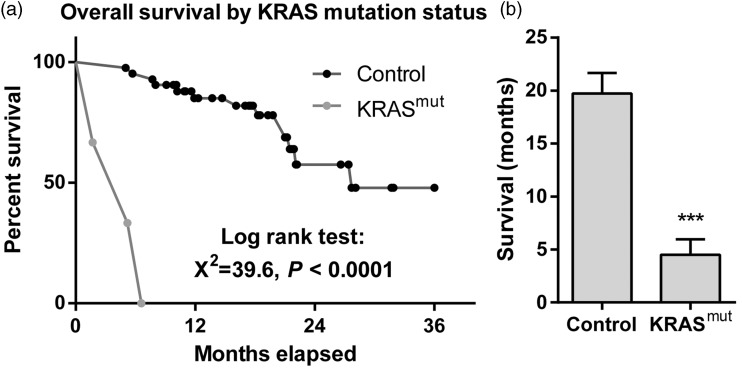
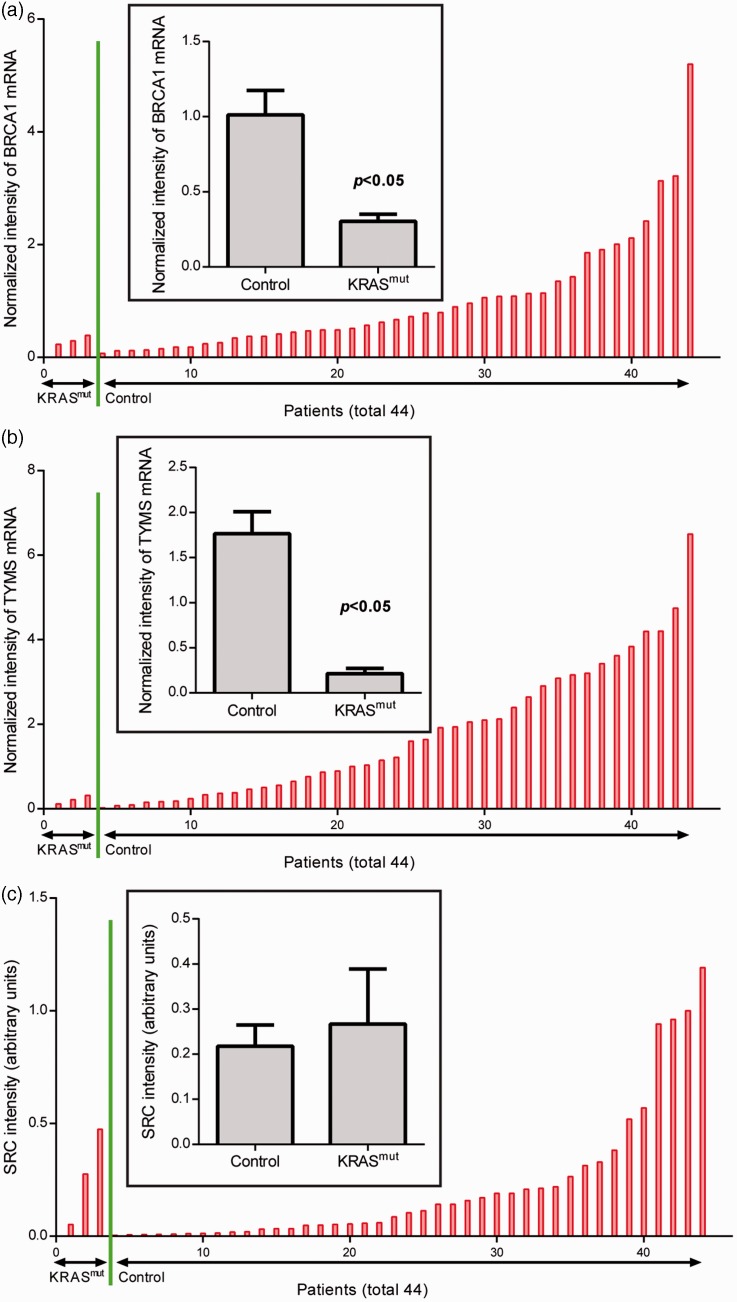
Patients with KRAS mutations (n = 3) had significantly shorter survival duration than patients with wild type KRAS (n = 42). Tumour expression levels of BRCA1 and TYMS, but not SRC, were significantly lower in patients with, than in those without, KRAS mutations. Tumour expression level of BRCA1 was positively correlated with survival duration.
KRAS mutation status and BRCA1 tumour expression are potential biomarkers for tailoring chemotherapy and predicting clinical outcome.
在一组仅接受联合铂类双药化疗的非小细胞肺癌(NSCLC)患者中,回顾性评估治疗反应、生存率以及KRAS突变状态与BRCA1、TYMS和SRC肿瘤表达水平之间的关联。
通过扩增阻滞突变系统和多重定量聚合酶链反应(PCR)分析确定KRAS突变状态。通过实时定量PCR确定BRCA1、TYMS和SRC的肿瘤表达水平。
KRAS突变患者(n = 3)的生存时间明显短于野生型KRAS患者(n = 42)。KRAS突变患者的BRCA1和TYMS肿瘤表达水平显著低于无KRAS突变患者,而SRC的肿瘤表达水平无显著差异。BRCA1的肿瘤表达水平与生存时间呈正相关。
KRAS突变状态和BRCA1肿瘤表达是用于调整化疗方案和预测临床结果的潜在生物标志物。