Ohkouchi Shinya, Ono Manabu, Kobayashi Makoto, Hirano Taizou, Tojo Yutaka, Hisata Shu, Ichinose Masakazu, Irokawa Toshiya, Ogawa Hiromasa, Kurosawa Hajime
Department of Respiratory Medicine, Graduate School of Medicine, Tohoku University, Sendai, Japan; Department of Occupational Health, Graduate School of Medicine, Tohoku University, Sendai, Japan.
Department of Respiratory Medicine, Graduate School of Medicine, Tohoku University, Sendai, Japan.
Clin Med Insights Circ Respir Pulm Med. 2015 Dec 29;9(Suppl 1):91-6. doi: 10.4137/CCRPM.S23285. eCollection 2015.
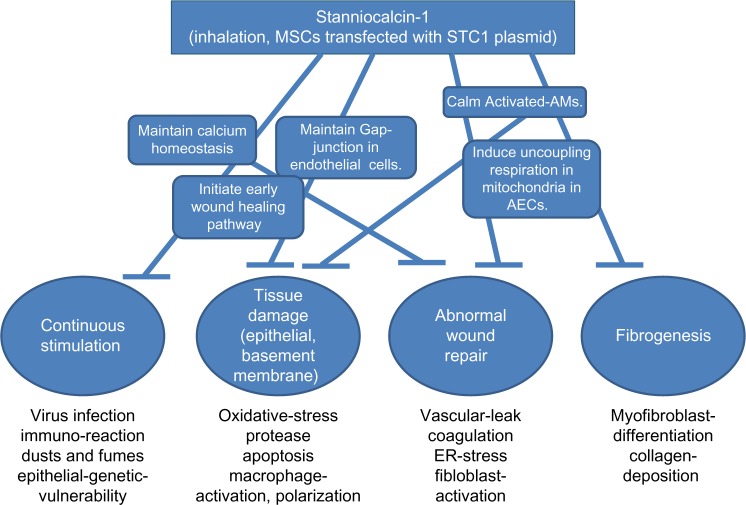
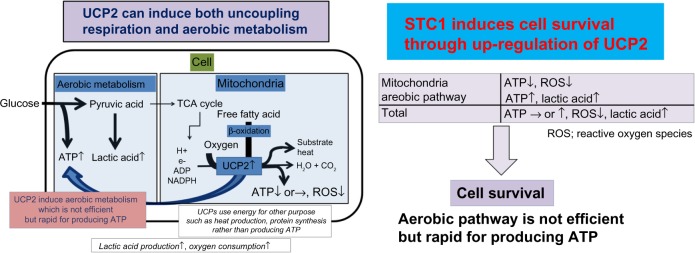
Idiopathic pulmonary fibrosis (IPF) is an intractable disease for which the pathological findings are characterized by temporal and spatial heterogeneity. The pathogenesis is composed of myriad factors, including repetitive injuries to epithelial cells, alterations in immunity, the formation of vascular leakage and coagulation, abnormal wound healing, fibrogenesis, and collagen accumulation. Therefore, the molecular target drugs that are used or attempted for treatment or clinical trials may not cover the myriad therapeutic targets of IPF. In addition, the complicated pathogenesis results in a lack of informative biomarkers to diagnose accurately the status of IPF. These facts point out the necessity of using a combination of drugs, that is, each single drug with molecular targets or a single drug with multiple therapeutic targets. In this review, we introduce a humoral factor, stanniocalcin-1 (STC1), which has myriad functions, including the maintenance of calcium homeostasis, the promotion of early wound healing, uncoupling respiration (aerobic glycolysis), reepithelialization in damaged tissues, the inhibition of vascular leakage, and the regulation of macrophage functions to keep epithelial and endothelial homeostasis, which may adequately cover the myriad therapeutic targets of IPF.
特发性肺纤维化(IPF)是一种难治性疾病,其病理表现具有时间和空间异质性。其发病机制由多种因素组成,包括上皮细胞的反复损伤、免疫改变、血管渗漏和凝血形成、异常伤口愈合、纤维化形成以及胶原蛋白积累。因此,用于治疗或临床试验的分子靶向药物可能无法涵盖IPF的众多治疗靶点。此外,复杂的发病机制导致缺乏准确诊断IPF状态的信息性生物标志物。这些事实表明使用联合药物的必要性,即每种具有分子靶点的单一药物或具有多个治疗靶点的单一药物。在本综述中,我们介绍一种体液因子,1型鲟鱼钙蛋白(STC1),它具有多种功能,包括维持钙稳态、促进早期伤口愈合、解偶联呼吸(有氧糖酵解)、受损组织的再上皮化、抑制血管渗漏以及调节巨噬细胞功能以维持上皮和内皮稳态,这可能充分涵盖IPF的众多治疗靶点。