Carroll E L, Fewster R M, Childerhouse S J, Patenaude N J, Boren L, Baker C S
School of Biological Sciences, University of Auckland, Auckland, New Zealand.
Scottish Oceans Institute, University of St Andrews, East Sands, St Andrews, Scotland.
PLoS One. 2016 Jan 11;11(1):e0146590. doi: 10.1371/journal.pone.0146590. eCollection 2016.
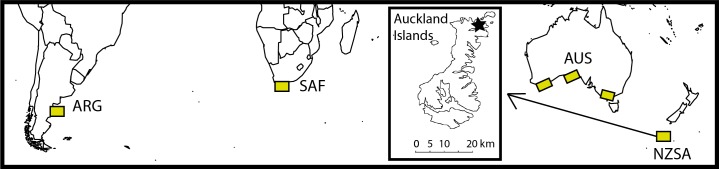
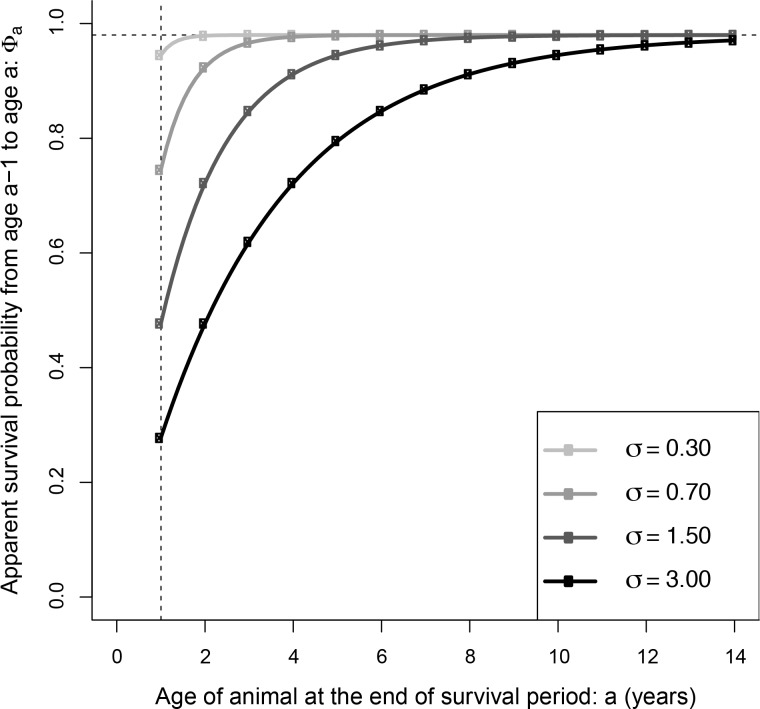
Juvenile survival and recruitment can be more sensitive to environmental, ecological and anthropogenic factors than adult survival, influencing population-level processes like recruitment and growth rate in long-lived, iteroparous species such as southern right whales. Conventionally, Southern right whales are individually identified using callosity patterns, which do not stabilise until 6-12 months, by which time the whale has left its natal wintering grounds. Here we use DNA profiling of skin biopsy samples to identify individual Southern right whales from year of birth and document their return to the species' primary wintering ground in New Zealand waters, the Subantarctic Auckland Islands. We find evidence of natal fidelity to the New Zealand wintering ground by the recapture of 15 of 57 whales, first sampled in year of birth and available for subsequent recapture, during winter surveys to the Auckland Islands in 1995-1998 and 2006-2009. Four individuals were recaptured at the ages of 9 to 11, including two females first sampled as calves in 1998 and subsequently resampled as cows with calves in 2007. Using these capture-recapture records of known-age individuals, we estimate changes in survival with age using Cormack-Jolly-Seber models. Survival is modelled using discrete age classes and as a continuous function of age. Using a bootstrap method to account for uncertainty in model selection and fitting, we provide the first direct estimate of juvenile survival for this population. Our analyses indicate a high annual apparent survival for juveniles at between 0.87 (standard error (SE) 0.17, to age 1) and 0.95 (SE 0.05: ages 2-8). Individual identification by DNA profiling is an effective method for long-term demographic and genetic monitoring, particularly in animals that change identifiable features as they develop or experience tag loss over time.
与成年个体的存活相比,幼年个体的存活和补充对环境、生态和人为因素可能更为敏感,这会影响诸如南露脊鲸等长寿、多次繁殖物种的种群补充和增长率等种群水平的过程。传统上,南露脊鲸是通过胼胝模式进行个体识别的,而这种模式直到6 - 12个月大时才会稳定下来,此时鲸鱼已经离开了其出生时的越冬地。在此,我们利用皮肤活检样本的DNA分析,从出生年份识别南露脊鲸个体,并记录它们返回新西兰水域该物种主要越冬地——亚南极奥克兰群岛的情况。我们通过在1995 - 1998年和2006 - 2009年对奥克兰群岛的冬季调查中,重新捕获了57头出生年份首次采样且可供后续重新捕获的鲸鱼中的15头,发现了对新西兰越冬地的出生地忠诚证据。有4头个体在9至11岁时被重新捕获,其中包括2头雌性,它们于1998年首次作为幼鲸被采样,随后在2007年作为带着幼崽的母鲸再次被采样。利用这些已知年龄个体的重捕记录,我们使用Cormack - Jolly - Seber模型估计随年龄变化的存活率。存活率通过离散年龄组进行建模,并作为年龄的连续函数。通过一种自举方法来考虑模型选择和拟合中的不确定性,我们首次直接估计了该种群幼年个体的存活率。我们的分析表明,幼年个体的年表观存活率很高,在0.87(标准误差(SE)0.17,至1岁)和0.95(SE 0.05:2 - 8岁)之间。通过DNA分析进行个体识别是长期进行种群统计学和遗传学监测的有效方法,特别是对于那些随着发育会改变可识别特征或随着时间推移经历标记丢失的动物。