Pothula Srinivasa P, Xu Zhihong, Goldstein David, Biankin Andrew V, Pirola Romano C, Wilson Jeremy S, Apte Minoti V
Pancreatic Research Group, South Western Sydney Clinical School, Faculty of Medicine, University of New South Wales, Sydney, New South Wales, Australia.
Ingham Institute for Applied Medical Research, Liverpool, New South Wales, Australia.
Br J Cancer. 2016 Feb 2;114(3):269-80. doi: 10.1038/bjc.2015.478. Epub 2016 Jan 14.
Pancreatic stellate cells (PSCs, which produce the stroma of pancreatic cancer (PC)) interact with cancer cells to facilitate PC growth. A candidate growth factor pathway that may mediate this interaction is the HGF-c-MET pathway.
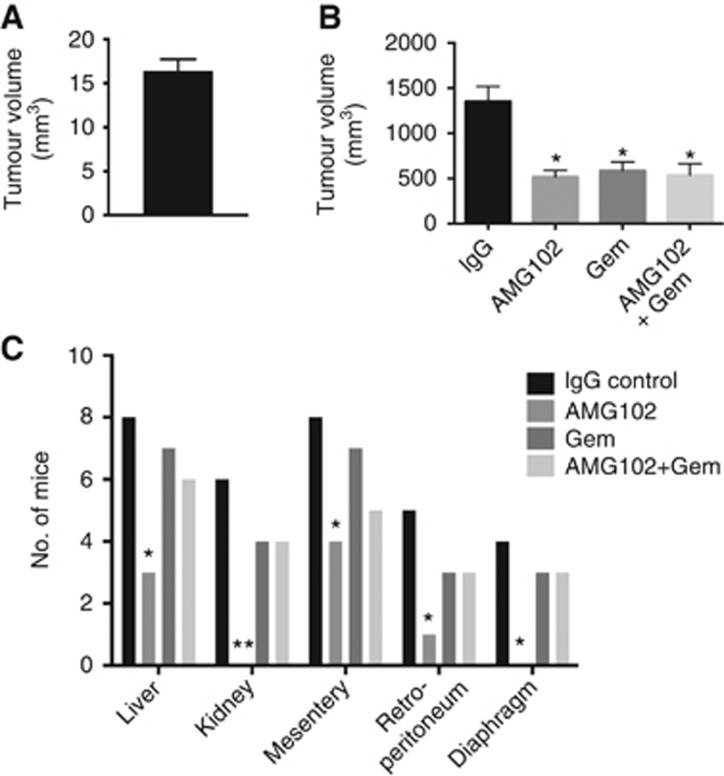
Effects of HGF inhibition (using a neutralising antibody AMG102) alone or in combination with gemcitabine were assessed (i) in vivo using an orthotopic model of PC, and (ii) in vitro using cultured PC cells (AsPC-1) and human PSCs.
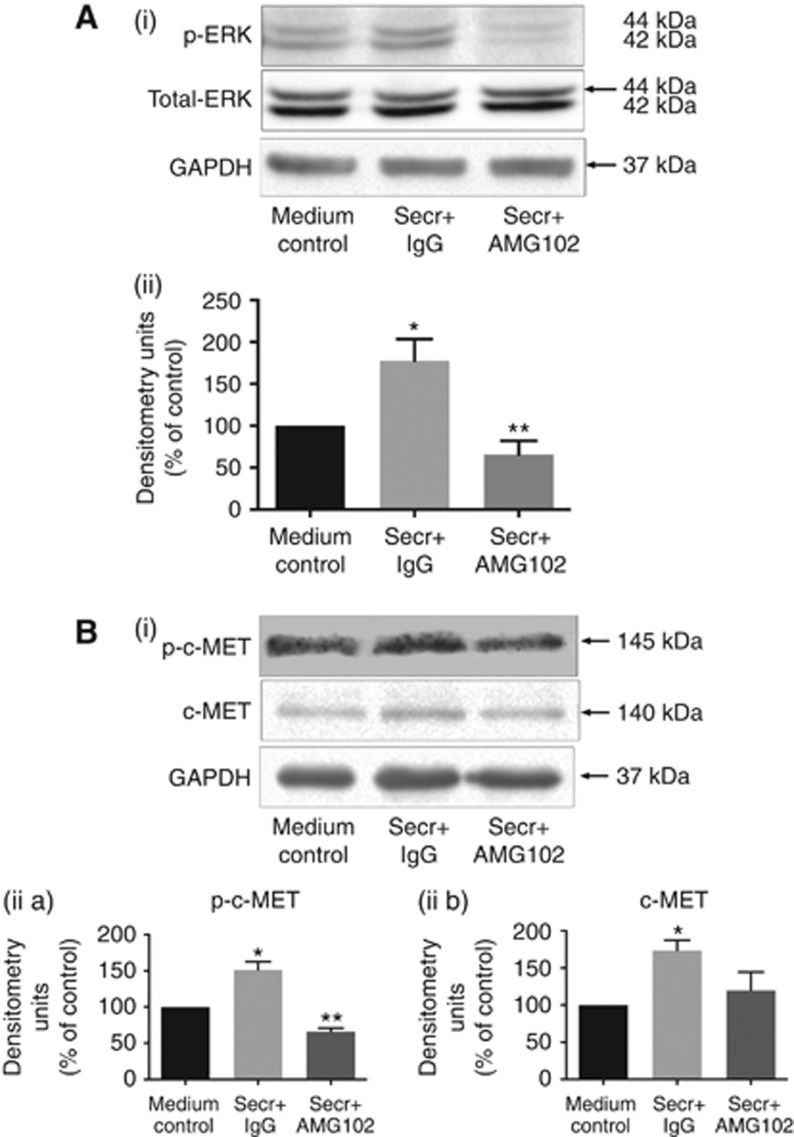
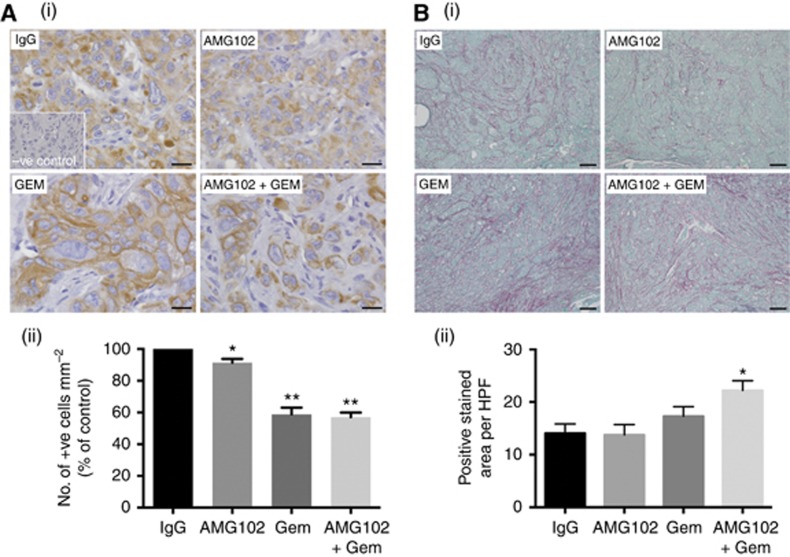
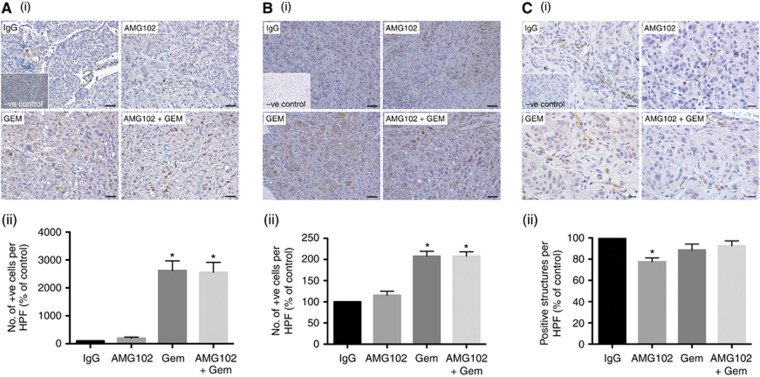
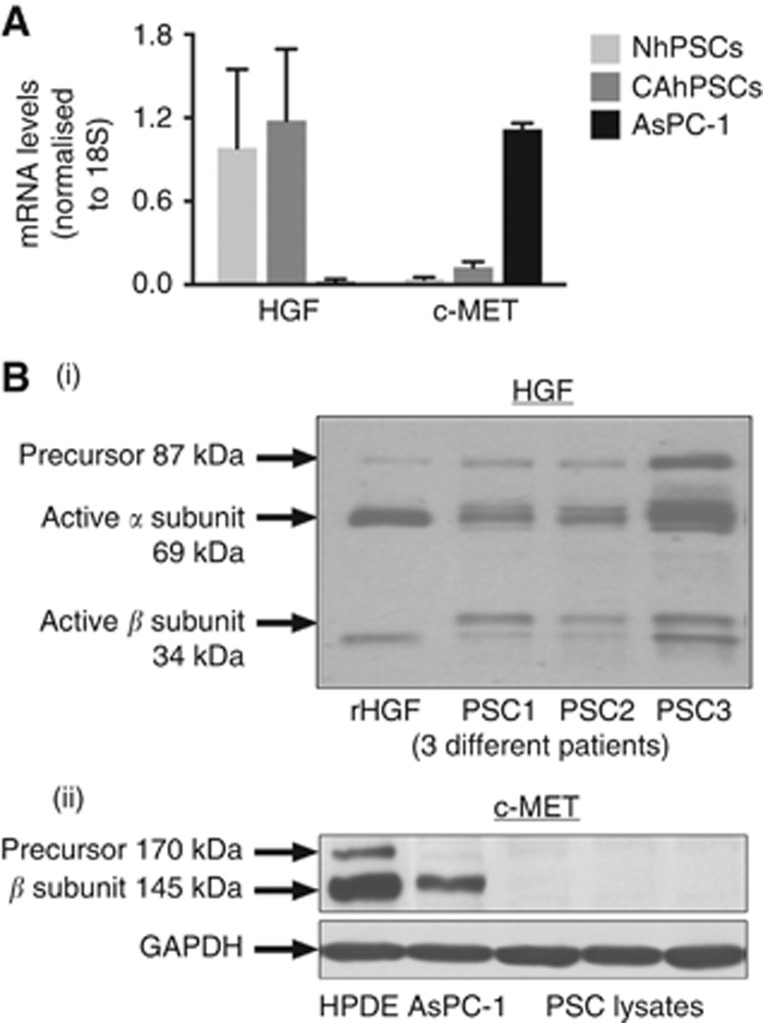
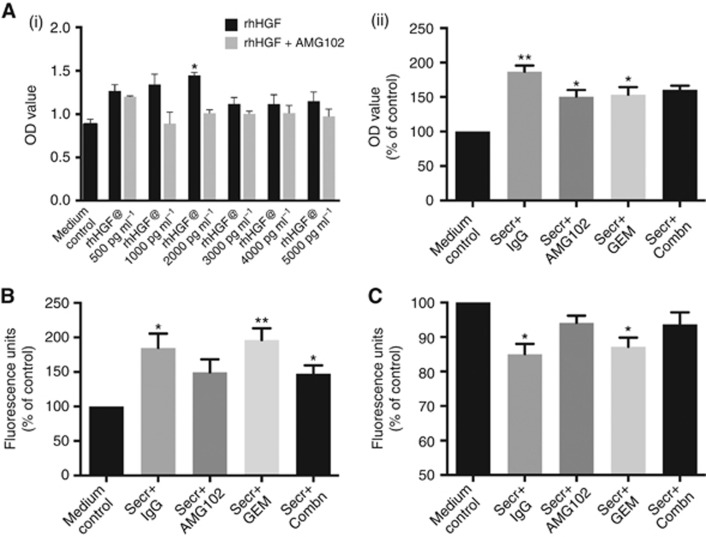
We have shown that human PSCs (hPSCs) secrete HGF but do not express the receptor c-MET, which is present predominantly on cancer cells. HGF inhibition was as effective as standard chemotherapy in inhibiting local tumour growth but was significantly more effective than gemcitabine in reducing tumour angiogenesis and metastasis. HGF inhibition has resulted in reduced metastasis; however, interestingly this antimetastatic effect was lost when combined with gemcitabine. This suggests that gemcitabine treatment selects out a subpopulation of cancer cells with increased epithelial-mesenchymal transition (EMT) and stem-cell characteristics, as supported by our findings of increased expression of EMT and stem-cell markers in tumour sections from our animal model. In vitro studies showed that hPSC secretions induced proliferation and migration, but inhibited apoptosis, of cancer cells. These effects were countered by pretreatment of hPSC secretions with a HGF-neutralising antibody but not by gemcitabine, indicating a key role for HGF in PSC-PC interactions.
Our studies suggest that targeted therapy to inhibit stromal-tumour interactions mediated by the HGF-c-MET pathway may represent a novel therapeutic approach in PC that will require careful modelling for optimal integration with existing treatment modalities.
胰腺星状细胞(PSCs,其产生胰腺癌(PC)的基质)与癌细胞相互作用以促进PC生长。一种可能介导这种相互作用的候选生长因子途径是HGF-c-MET途径。
评估HGF抑制(使用中和抗体AMG102)单独或与吉西他滨联合使用的效果:(i)在体内使用PC原位模型,以及(ii)在体外使用培养的PC细胞(AsPC-1)和人PSCs。
我们已经表明,人PSCs(hPSCs)分泌HGF,但不表达受体c-MET,c-MET主要存在于癌细胞上。HGF抑制在抑制局部肿瘤生长方面与标准化疗一样有效,但在减少肿瘤血管生成和转移方面比吉西他滨显著更有效。HGF抑制导致转移减少;然而,有趣的是,当与吉西他滨联合使用时,这种抗转移作用消失了。这表明吉西他滨治疗选择出了具有增加的上皮-间质转化(EMT)和干细胞特征的癌细胞亚群,我们在动物模型肿瘤切片中发现EMT和干细胞标志物表达增加支持了这一发现。体外研究表明,hPSC分泌物诱导癌细胞增殖和迁移,但抑制其凋亡。用HGF中和抗体预处理hPSC分泌物可抵消这些作用,而吉西他滨则不能,这表明HGF在PSC-PC相互作用中起关键作用。
我们的研究表明,靶向抑制由HGF-c-MET途径介导的基质-肿瘤相互作用的治疗可能代表PC中的一种新型治疗方法,但需要仔细建模以与现有治疗模式进行最佳整合。