Gaudet Cynthia M, Lim Yow-Pin, Stonestreet Barbara S, Threlkeld Steven W
Department of Biology, Rhode Island College, 600 Mount Pleasant Ave., Providence, RI 02904, USA.
ProThera Biologics, Inc., 349 Eddy Street, Providence, RI 02903, USA.
Behav Brain Res. 2016 Apr 1;302:88-99. doi: 10.1016/j.bbr.2016.01.016. Epub 2016 Jan 8.
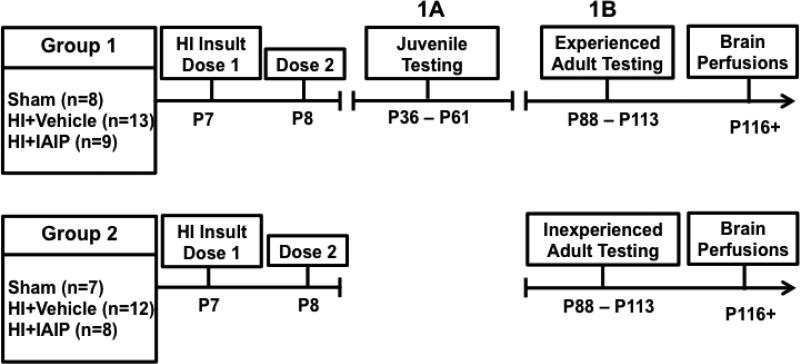
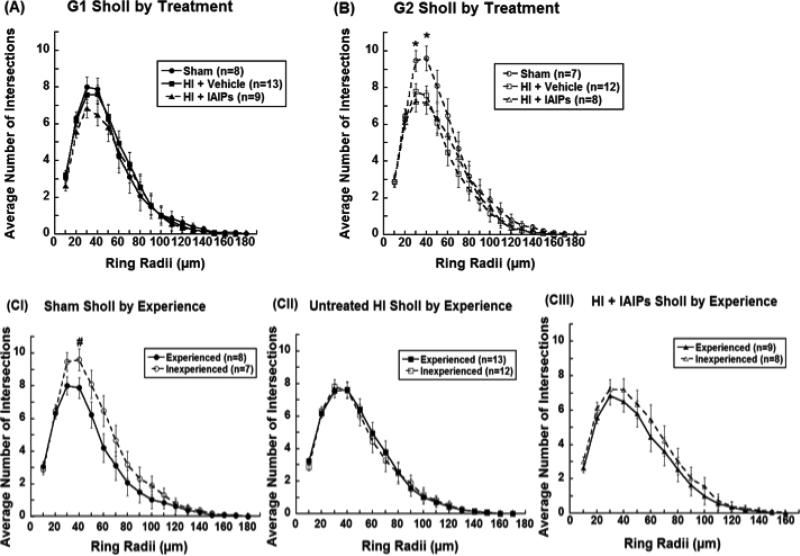
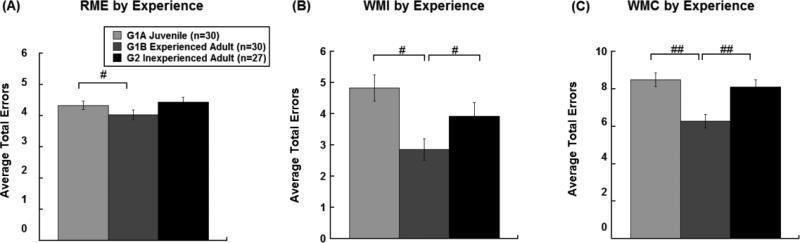
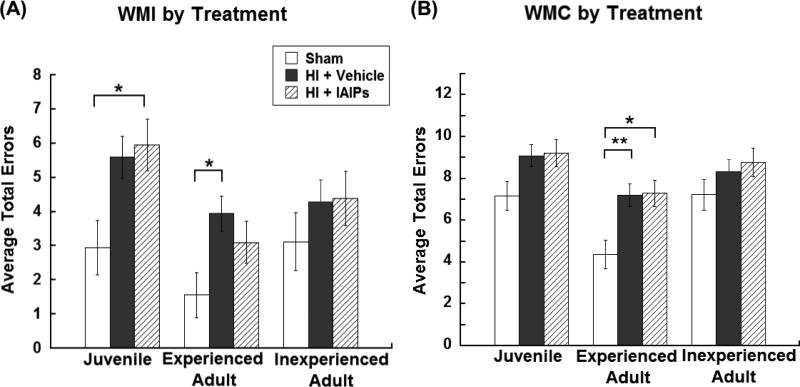
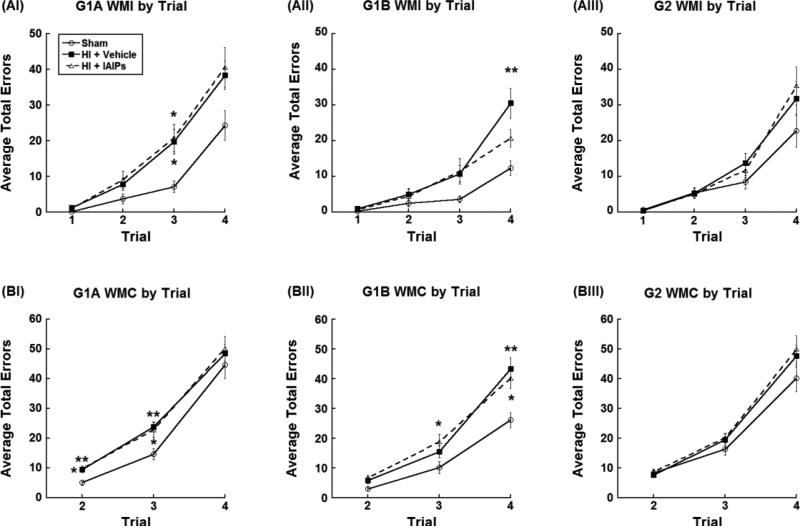
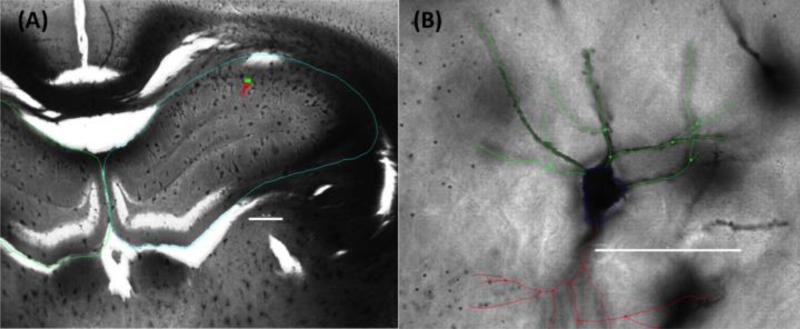
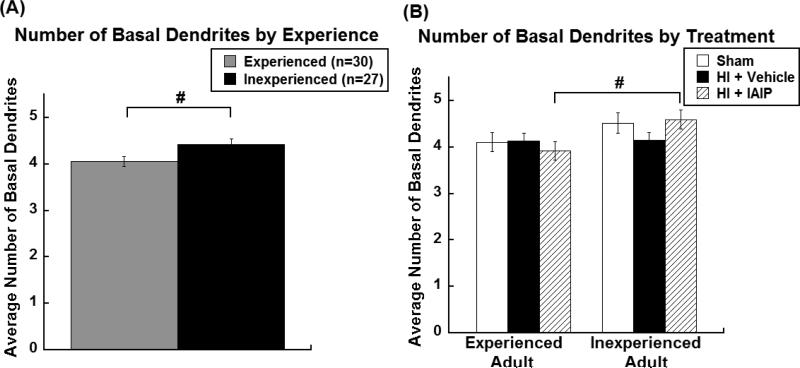
Neonatal cerebral hypoxia-ischemia (HI) commonly results in cognitive and sensory impairments. Early behavioral experience has been suggested to improve cognitive and sensory outcomes in children and animal models with perinatal neuropathology. In parallel, we previously showed that treatment with immunomodulator Inter-alpha Inhibitor Proteins (IAIPs) improves cellular and behavioral outcomes in neonatal HI injured rats. The purpose of the current study was to evaluate the influences of early experience and typical maturation in combination with IAIPs treatment on spatial working and reference memory after neonatal HI injury. A second aim was to determine the effects of these variables on hippocampal CA1 neuronal morphology. Subjects were divided into two groups that differed with respect to the time when exposed to eight arm radial water maze testing: Group one was tested as juveniles (early experience, Postnatal day (P) 36-61) and adults (P88-113), and Group two was tested in adulthood only (P88-113; without early experience). Three treatment conditions were included in each experience group (HI+Vehicle, HI+IAIPs, and Sham subjects). Incorrect arm entries (errors) were compared between treatment and experience groups across three error types (reference memory (RM), working memory incorrect (WMI), working memory correct (WMC)). Early experience led to improved working memory performance regardless of treatment. Combining IAIPs intervention with early experience provided a long-term behavioral advantage on the WMI component of the task in HI animals. Anatomically, early experience led to a decrease in the average number of basal dendrites per CA1 pyramidal neuron for IAIP treated subjects and a significant reduction in basal dendritic length in control subjects, highlighting the importance of pruning in typical early life learning. Our results support the hypothesis that early behavioral experience combined with IAIPs improve outcome on a relativity demanding cognitive task, beyond that of a single intervention strategy, and appears to facilitate neuronal plasticity following neonatal brain injury.
新生儿脑缺氧缺血(HI)通常会导致认知和感觉障碍。已有研究表明,早期行为经历可改善患有围产期神经病理学的儿童和动物模型的认知和感觉结果。与此同时,我们之前的研究表明,用免疫调节剂α-干扰素抑制蛋白(IAIPs)进行治疗可改善新生HI损伤大鼠的细胞和行为结果。本研究的目的是评估早期经历和典型成熟过程与IAIPs治疗相结合对新生HI损伤后空间工作记忆和参考记忆的影响。第二个目的是确定这些变量对海马CA1神经元形态的影响。将实验对象分为两组,这两组在接受八臂放射状水迷宫测试的时间上有所不同:第一组在幼年(早期经历,出生后第(P)36 - 61天)和成年期(P88 - 113天)进行测试,第二组仅在成年期(P88 - 113天;无早期经历)进行测试。每个经历组包含三种治疗条件(HI + 载体、HI + IAIPs和假手术组)。在三种错误类型(参考记忆(RM)、工作记忆错误(WMI)、工作记忆正确(WMC))下,比较治疗组和经历组之间的错误手臂进入次数(错误)。无论治疗情况如何,早期经历都会导致工作记忆表现得到改善。将IAIPs干预与早期经历相结合,为HI动物在该任务的WMI部分提供了长期的行为优势。在解剖学上,早期经历导致接受IAIP治疗的受试者每个CA1锥体神经元的基底树突平均数量减少,而对照组受试者的基底树突长度显著缩短,这突出了在典型早期生命学习中修剪的重要性。我们的结果支持这样一种假设,即早期行为经历与IAIPs相结合,在相对要求较高的认知任务上比单一干预策略更能改善结果,并且似乎有助于新生儿脑损伤后的神经元可塑性。