Firtina Karagonlar Zeynep, Koc Dogukan, Iscan Evin, Erdal Esra, Atabey Neşe
Faculty of Engineering and Computer Science, Izmir University of Economics, Izmir.
Izmir International Biomedicine and Genome Institute, Dokuz Eylul University, Izmir.
Cancer Sci. 2016 Apr;107(4):407-16. doi: 10.1111/cas.12891. Epub 2016 Feb 23.
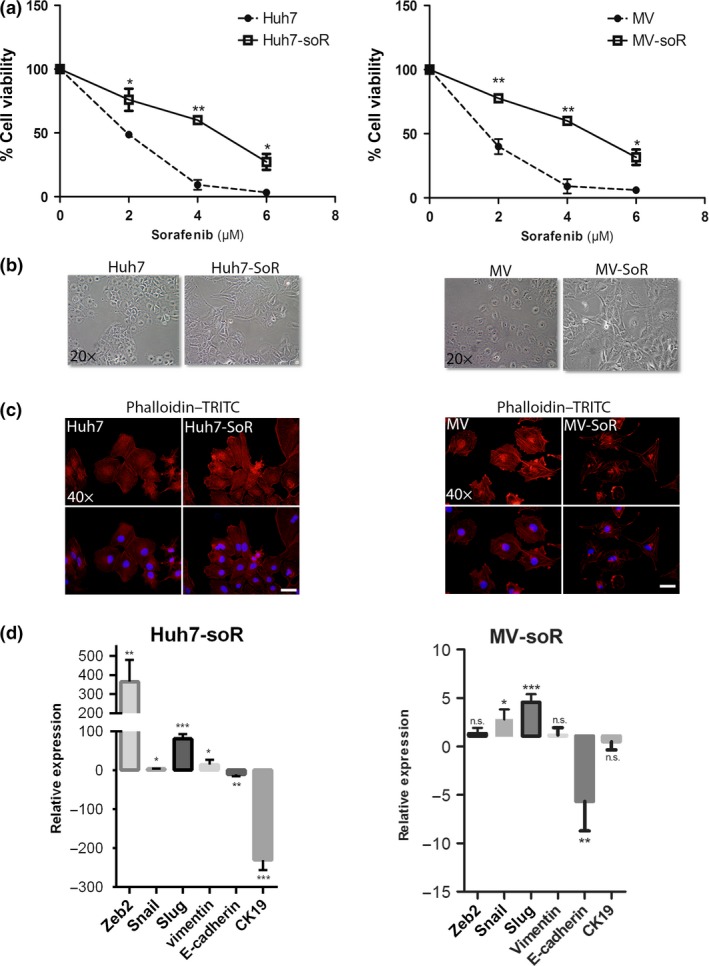
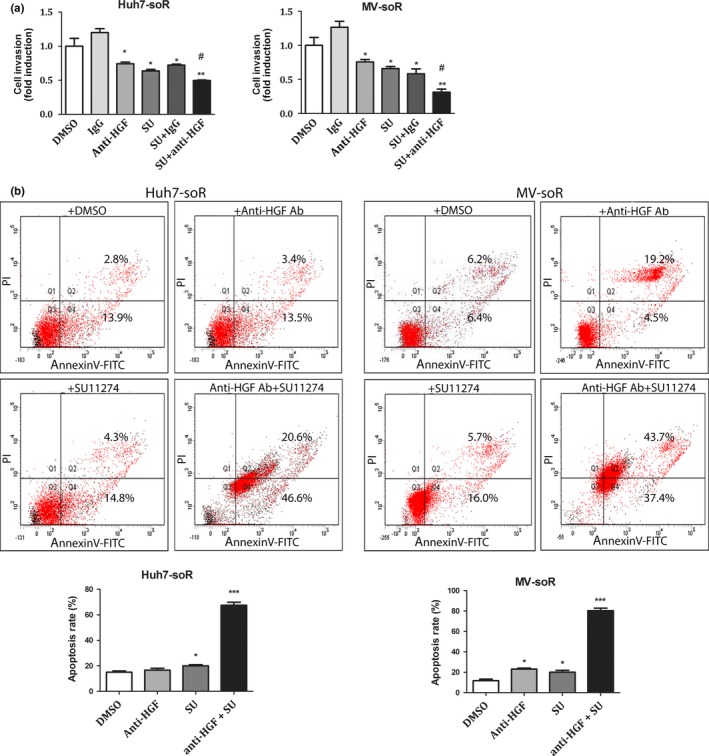
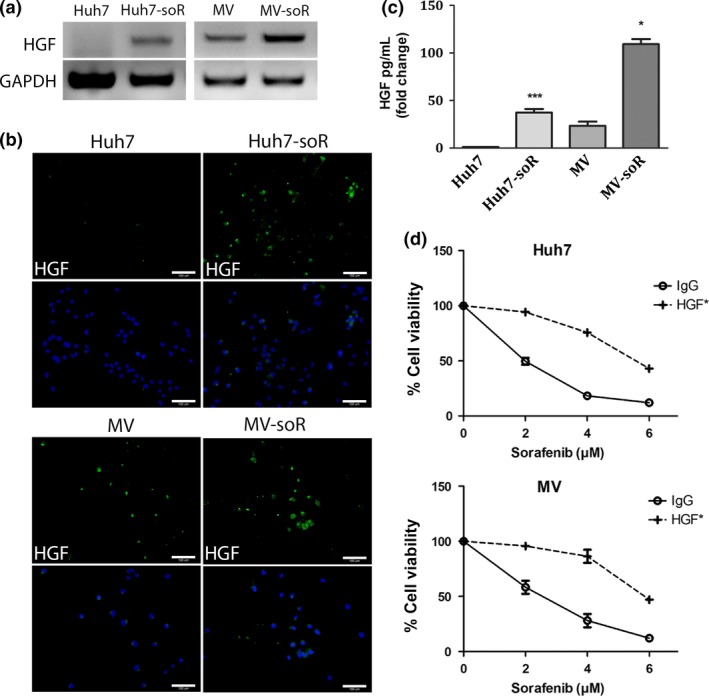
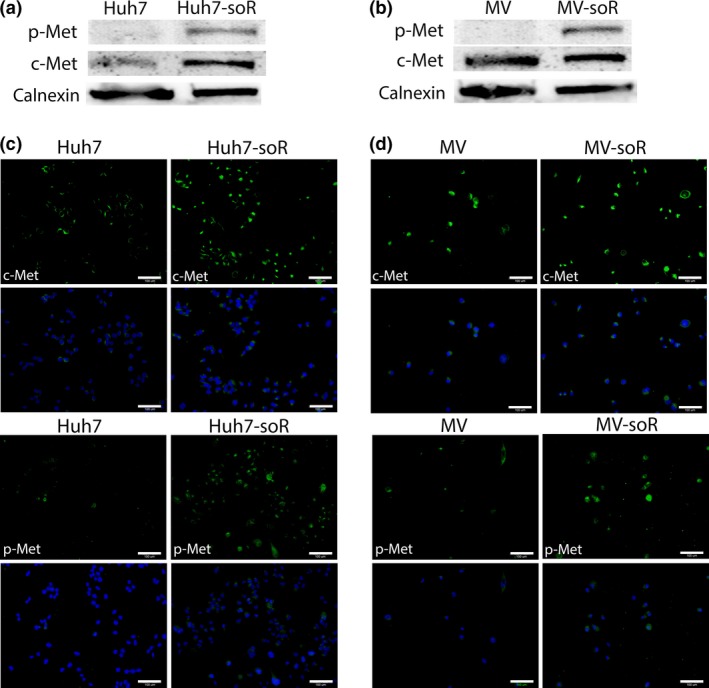
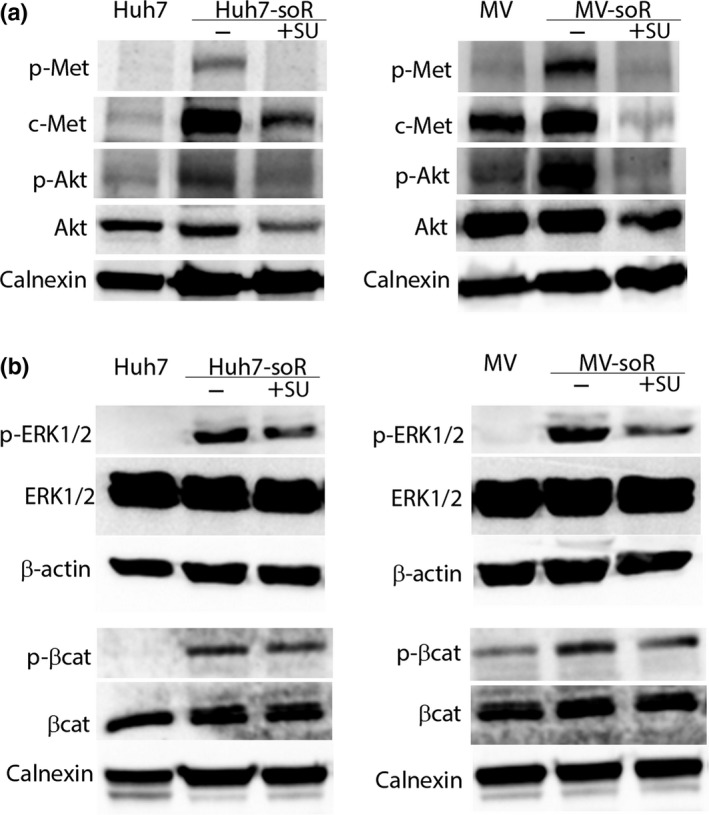
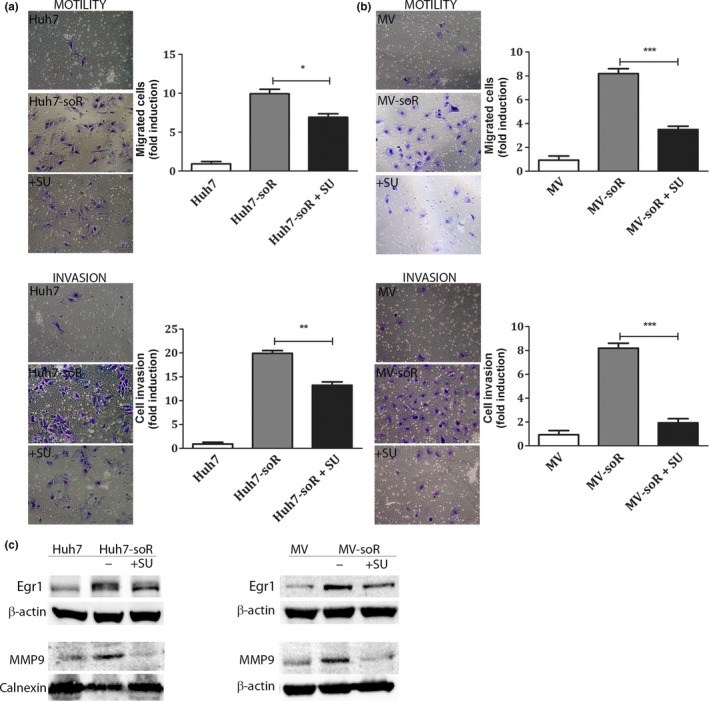
Hepatocellular carcinoma (HCC) is the most common type of primary liver cancer and the third leading cause of cancer-related deaths worldwide. Limitations in HCC treatment result due to poor prognosis and resistance against traditional radiotherapy and chemotherapies. The multikinase inhibitor sorafenib is the only FDA approved drug available for advanced HCC patients, and development of second-line treatment options for patients who cannot tolerate or develop resistance to sorafenib is an urgent medical need. In this study, we established sorafenib-resistant cells from Huh7 and Mahlavu cell lines by long-term sorafenib exposure. Sorafenib-resistant HCC cells acquired spindle-shape morphology, upregulated mesenchymal markers, and showed significant increase in both migration and invasion abilities compared to their parental counterparts. Moreover, after long-term sorafenib treatment, HCC cells showed induction of hepatocyte growth factor (HGF) synthesis and secretion along with increased levels of c-Met kinase and its active phosphorylated form, indicating autocrine activation of HGF/c-Met signaling. Importantly, the combined treatment of the resistant cells with c-Met kinase inhibitor SU11274 and HGF neutralizing antibody significantly reversed the increased invasion ability of the cells. The combined treatment also significantly augmented sorafenib-induced apoptosis, suggesting restoration of sorafenib sensitivity. These results describe, for the first time, compensatory upregulation of HGF synthesis leading to autocrine activation of HGF/c-Met signaling as a novel cellular strategy in the acquisition of sorafenib resistance. Therefore, we suggest that combinatorial therapeutic strategies with HGF and c-Met inhibitors comprise promising candidates for overcoming sorafenib resistance.
肝细胞癌(HCC)是原发性肝癌最常见的类型,也是全球癌症相关死亡的第三大主要原因。由于预后不良以及对传统放疗和化疗的耐药性,HCC治疗存在局限性。多激酶抑制剂索拉非尼是唯一获得美国食品药品监督管理局(FDA)批准用于晚期HCC患者的药物,因此,为无法耐受索拉非尼或对其产生耐药性的患者开发二线治疗方案成为一项迫切的医疗需求。在本研究中,我们通过长期暴露于索拉非尼,从Huh7和Mahlavu细胞系中建立了索拉非尼耐药细胞。与亲代细胞相比,索拉非尼耐药的HCC细胞呈现纺锤形形态,间充质标志物上调,迁移和侵袭能力显著增强。此外,长期索拉非尼治疗后,HCC细胞显示肝细胞生长因子(HGF)合成和分泌增加,同时c-Met激酶及其活性磷酸化形式的水平升高,表明HGF/c-Met信号通路的自分泌激活。重要的是,用c-Met激酶抑制剂SU11274和HGF中和抗体联合处理耐药细胞,可显著逆转细胞增加的侵袭能力。联合处理还显著增强了索拉非尼诱导的细胞凋亡,提示索拉非尼敏感性得以恢复。这些结果首次描述了HGF合成的代偿性上调导致HGF/c-Met信号通路的自分泌激活,这是获得索拉非尼耐药性的一种新的细胞策略。因此,我们认为HGF和c-Met抑制剂联合治疗策略有望克服索拉非尼耐药性。