Albert Adrien, Huyghe Ivan, Stroobants Sigrid, Tjalma Wiebren A A
University Multidisciplinary Breast Clinic Antwerpen, Antwerp University Hospital-University of Antwerp, Belgium.; Department of Nuclear Medicine, Antwerp University Hospital-University of Antwerp, Belgium.
Department of Nuclear Medicine, Antwerp University Hospital-University of Antwerp, Belgium.
Breast Cancer (Auckl). 2016 Jan 12;10:1-3. doi: 10.4137/BCBCR.S30471. eCollection 2016.
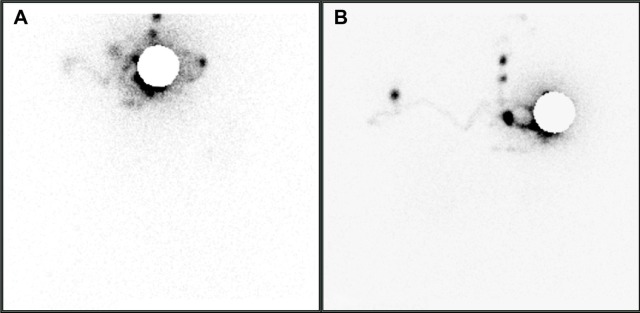
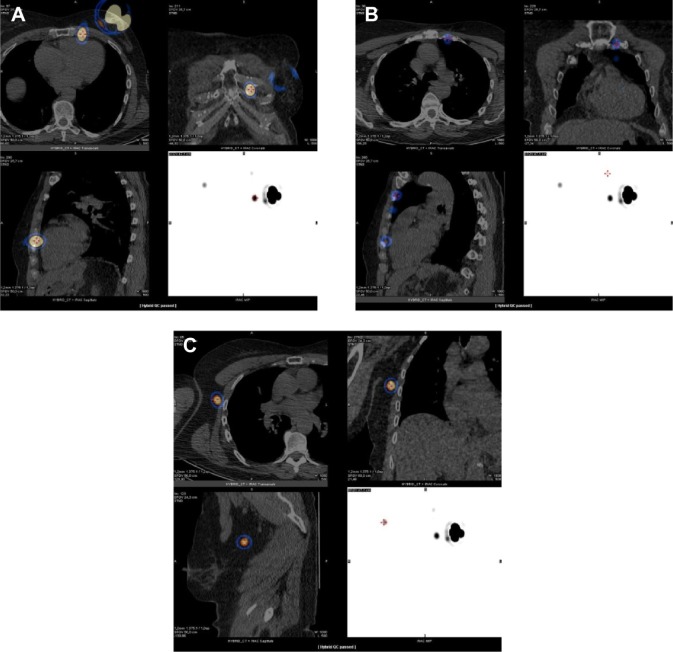
A local breast cancer recurrence or a new breast cancer in the previously treated breast is a staging challenge. Staging is important to tailor the local and the systemic treatment. Earlier treatment(s) can disrupt the primary lymphatic drainage. After the disruption, new lymphatic drainage pathways are often created. The identification of these new pathways together with their sentinel node(s) (SN) is important for retreatment. A fluorodeoxyglucose positron emission tomography-computerized tomography could be useful to identify the involved node(s), but, unfortunately, there is no evidence to support this. Ideally, in the case of a recurrence, an SN biopsy should be performed in order to identify the "new" draining lymph node(s). This new draining SN(s) can be located in unexpected places, and tumor invasion will lead to a change in the management.
局部乳腺癌复发或先前治疗过的乳房出现新发乳腺癌是一个分期难题。分期对于制定局部和全身治疗方案很重要。早期治疗可能会破坏原发性淋巴引流。破坏之后,常常会形成新的淋巴引流途径。识别这些新途径及其前哨淋巴结对于再次治疗很重要。氟脱氧葡萄糖正电子发射断层扫描-计算机断层扫描可能有助于识别受累淋巴结,但遗憾的是,尚无证据支持这一点。理想情况下,对于复发患者,应进行前哨淋巴结活检以识别“新的”引流淋巴结。这些新的引流前哨淋巴结可能位于意想不到的位置,肿瘤侵犯会导致治疗方案的改变。