Rogacev Kyrill S, Heine Gunnar H, Silbernagel Günther, Kleber Marcus E, Seiler Sarah, Emrich Insa, Lennartz Simone, Werner Christian, Zawada Adam M, Fliser Danilo, Böhm Michael, März Winfried, Scharnagl Hubert, Laufs Ulrich
Department of Internal Medicine III, Cardiology, Angiology and Intensive Care Medicine, Saarland University Medical Center, Homburg, Germany.
Department of Internal Medicine IV, Nephrology and Hypertension, Saarland University Medical Center, Homburg, Germany.
PLoS One. 2016 Jan 22;11(1):e0146920. doi: 10.1371/journal.pone.0146920. eCollection 2016.
Impaired renal function causes dyslipidemia that contributes to elevated cardiovascular risk in patients with chronic kidney disease (CKD). The proprotein convertase subtilisin/kexin type 9 (PCSK9) is a regulator of the LDL receptor and plasma cholesterol concentrations. Its relationship to kidney function and cardiovascular events in patients with reduced glomerular filtration rate (GFR) has not been explored.
Lipid parameters including PCSK9 were measured in two independent cohorts. CARE FOR HOMe (Cardiovascular and Renal Outcome in CKD 2-4 Patients-The Forth Homburg evaluation) enrolled 443 patients with reduced GFR (between 90 and 15 ml/min/1.73 m2) referred for nephrological care that were prospectively followed for the occurrence of a composite cardiovascular endpoint. As a replication cohort, PCSK9 was quantitated in 1450 patients with GFR between 90 and 15 ml/min/1.73 m2 enrolled in the Ludwigshafen Risk and Cardiovascular Health Study (LURIC) that were prospectively followed for cardiovascular deaths.
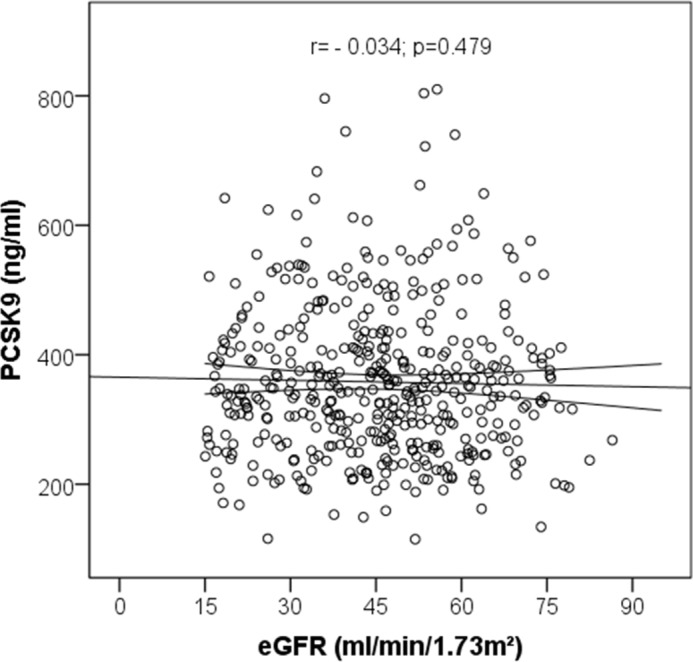
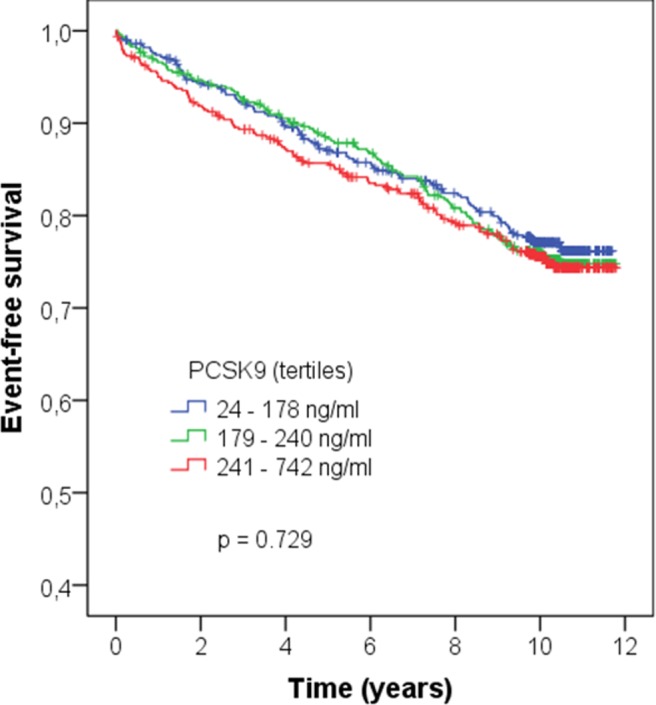
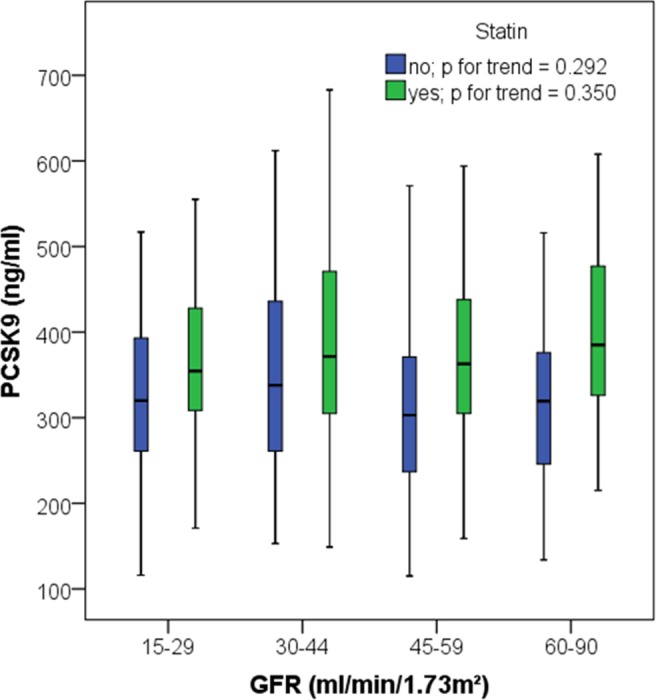
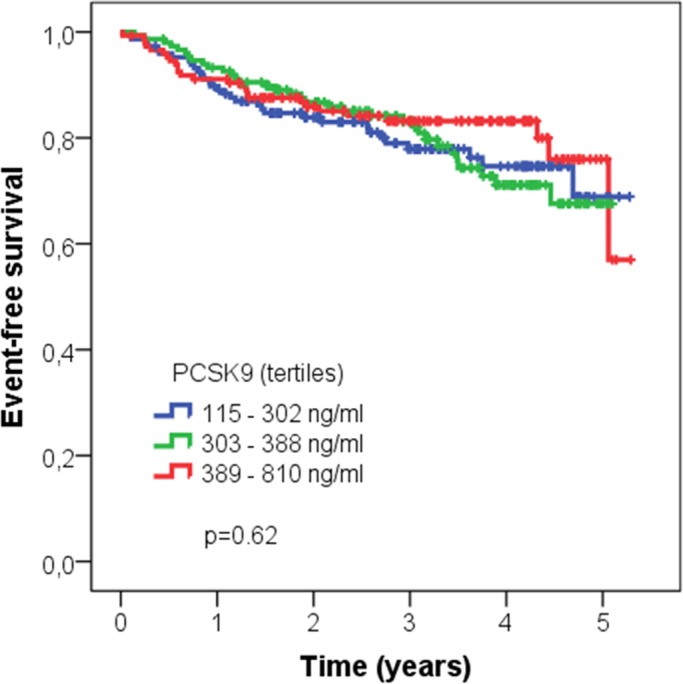
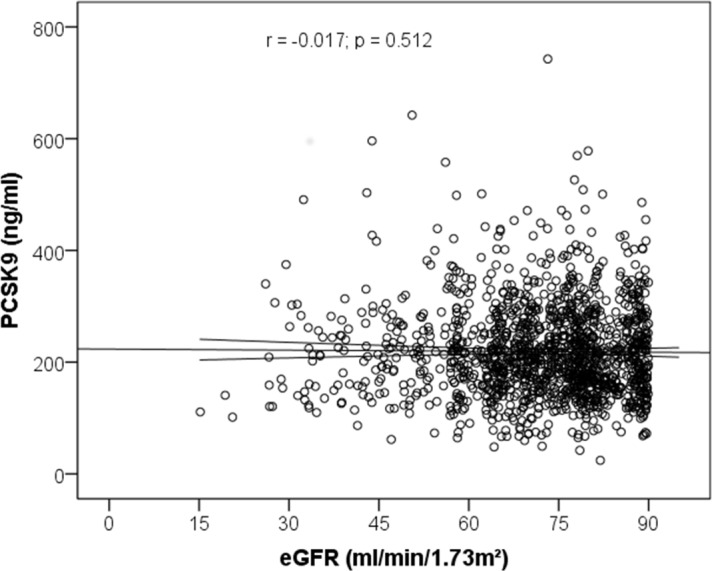
PCSK9 concentrations did not correlate with baseline GFR (CARE FOR HOMe: r = -0.034; p = 0.479; LURIC: r = -0.017; p = 0.512). 91 patients in CARE FOR HOMe and 335 patients in LURIC reached an endpoint during a median follow-up of 3.0 [1.8-4.1] years and 10.0 [7.3-10.6] years, respectively. Kaplan-Meier analyses showed that PCSK9 concentrations did not predict cardiovascular events in either cohort [CARE FOR HOMe (p = 0.622); LURIC (p = 0.729)]. Sensitivity analyses according to statin intake yielded similar results.
In two well characterized independent cohort studies, PCSK9 plasma levels did not correlate with kidney function. Furthermore, PCSK9 plasma concentrations were not associated with cardiovascular events in patients with reduced renal function.
肾功能受损会导致血脂异常,这会增加慢性肾脏病(CKD)患者的心血管疾病风险。前蛋白转化酶枯草溶菌素/克新9型(PCSK9)是低密度脂蛋白受体和血浆胆固醇浓度的调节剂。尚未探讨其与肾小球滤过率(GFR)降低患者的肾功能及心血管事件之间的关系。
在两个独立队列中测量包括PCSK9在内的血脂参数。CARE FOR HOMe(CKD 2 - 4期患者的心血管和肾脏结局 - 第四洪堡评估)纳入了443例GFR降低(90至15 ml/min/1.73 m²)的患者,这些患者因肾脏病护理前来就诊,并对其复合心血管终点事件的发生进行前瞻性随访。作为重复队列,在路德维希港风险与心血管健康研究(LURIC)中纳入的1450例GFR在90至15 ml/min/1.73 m²的患者中对PCSK9进行定量,这些患者也对心血管死亡进行前瞻性随访。
PCSK9浓度与基线GFR不相关(CARE FOR HOMe:r = -0.034;p = 0.479;LURIC:r = -0.017;p = 0.512)。CARE FOR HOMe队列中的91例患者和LURIC队列中的335例患者在中位随访时间分别为3.0 [1.8 - 4.1]年和10.0 [7.3 - 10.6]年期间达到终点。Kaplan - Meier分析表明,PCSK9浓度在两个队列中均不能预测心血管事件[CARE FOR HOMe(p = 0.622);LURIC(p = 0.729)]。根据他汀类药物摄入情况进行的敏感性分析得出了类似结果。
在两项特征明确的独立队列研究中,PCSK9血浆水平与肾功能不相关。此外,肾功能降低患者的PCSK9血浆浓度与心血管事件无关。