Ingram J R, Woo P N, Chua S L, Ormerod A D, Desai N, Kai A C, Hood K, Burton T, Kerdel F, Garner S E, Piguet V
Institute of Infection & Immunity, Cardiff University, Cardiff, U.K.
Department of Dermatology, Northampton General Hospital NHS Trust, Northampton, U.K.
Br J Dermatol. 2016 May;174(5):970-8. doi: 10.1111/bjd.14418. Epub 2016 Mar 30.
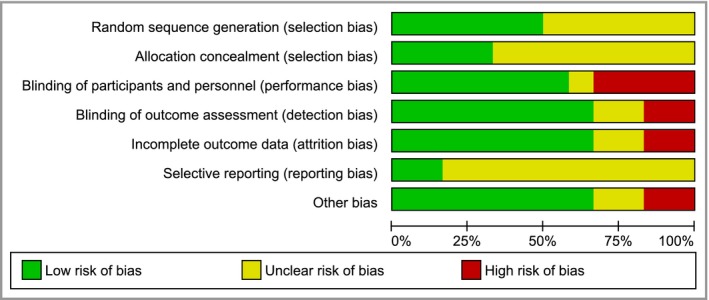
More than 50 interventions have been used to treat hidradenitis suppurativa (HS), and so therapy decisions can be challenging. Our objective was to summarize and appraise randomized controlled trial (RCT) evidence for HS interventions in adults. Searches were conducted in Medline, Embase, CENTRAL, LILACS, five trials registers and abstracts from eight dermatology conferences until 13 August 2015. Two review authors independently assessed study eligibility, extracted data and assessed methodological quality. Primary outcomes were quality of life and adverse effects of the interventions. Twelve trials, from 1983 to 2015, investigating 15 different interventions met our inclusion criteria. The median trial duration was 16 weeks and the median number of participants was 27. Adalimumab 40 mg weekly improved the Dermatology Life Quality Index (DLQI) by 4·0 points, which equates to the minimal clinically important difference for the scale, compared with placebo (95% confidence interval -6·5 to -1·5 points). Evidence quality was reduced to 'moderate' because the results are based on only a single study. Adalimumab 40 mg every other week was ineffective in a meta-analysis of two studies comprising 124 participants. Infliximab 5 mg kg(-1) improved the DLQI score by 8·4 points after 8 weeks in a moderate-quality study completed by 33 of 38 participants. Etanercept 50 mg twice weekly was ineffective. Inclusion of a gentamicin sponge prior to primary closure did not improve outcomes. Other interventions, including topical and oral antibiotics, were investigated by relatively small studies, preventing treatment recommendations due to imprecision. More, larger RCTs are required to investigate most HS interventions, particularly oral treatments and surgical therapy. Moderate-quality evidence suggests that adalimumab given weekly and infliximab are effective, whereas adalimumab every other week is ineffective.
已有50多种干预措施用于治疗化脓性汗腺炎(HS),因此治疗决策可能具有挑战性。我们的目的是总结和评估针对成人HS干预措施的随机对照试验(RCT)证据。检索了Medline、Embase、CENTRAL、LILACS、五个试验注册库以及来自八个皮肤病学会议的摘要,检索截止至2015年8月13日。两名综述作者独立评估研究的纳入资格、提取数据并评估方法学质量。主要结局是干预措施的生活质量和不良反应。1983年至2015年的12项试验,研究了15种不同的干预措施,符合我们的纳入标准。试验的中位持续时间为16周,参与者的中位数量为27名。与安慰剂相比,每周一次40 mg的阿达木单抗可使皮肤病生活质量指数(DLQI)提高4.0分,这相当于该量表的最小临床重要差异(95%置信区间为-6.5至-1.5分)。证据质量降至“中等”,因为结果仅基于一项研究。在一项纳入124名参与者的两项研究的荟萃分析中,每两周一次40 mg的阿达木单抗无效。在一项由38名参与者中的33名完成的中等质量研究中,英夫利昔单抗5 mg·kg⁻¹在8周后可使DLQI评分提高8.4分。每周两次50 mg的依那西普无效。在一期缝合前使用庆大霉素海绵并不能改善结局。其他干预措施,包括局部和口服抗生素,所涉及的研究相对较小,因结果不精确而无法给出治疗建议。需要更多、更大规模的RCT来研究大多数HS干预措施,尤其是口服治疗和手术治疗。中等质量的证据表明,每周使用的阿达木单抗和英夫利昔单抗有效,而每两周使用一次的阿达木单抗无效。