Azami-Aghdash Saber, Mohseni Mohammad, Etemadi Manal, Royani Sanaz, Moosavi Ahmad, Nakhaee Majid
Road Traffic Injury Research Center, Tabriz University of Medical Sciences, Tabriz, Iran.
Health Management and Economics Research Center, Isfahan University of Medical Sciences, Isfahan, Iran; School of Public Health, Tehran University of Medical Sciences, Tehran, Iran.
Iran J Public Health. 2015 Dec;44(12):1580-93.
Nowadays self-medication is one of the most common public health issues in many countries, as well as in Iran. According to need to epidemiological information about self-medication, the aim of this study was to systematic review and meta-analysis of prevalence and cause of self-medication in community setting of Iran.
Required data were collected searching following key words: medication, self-medication, over-the-counter, non-prescription, prevalence, epidemiology, etiology, occurrence and Iran in Google Scholar, PubMed, Scopus, Magiran, SID and IranMedex (from 2000 to 2015). To estimate the overall self-medication prevalence, computer software CMA: 2 applied. In order to report the results, forest plot was employed.
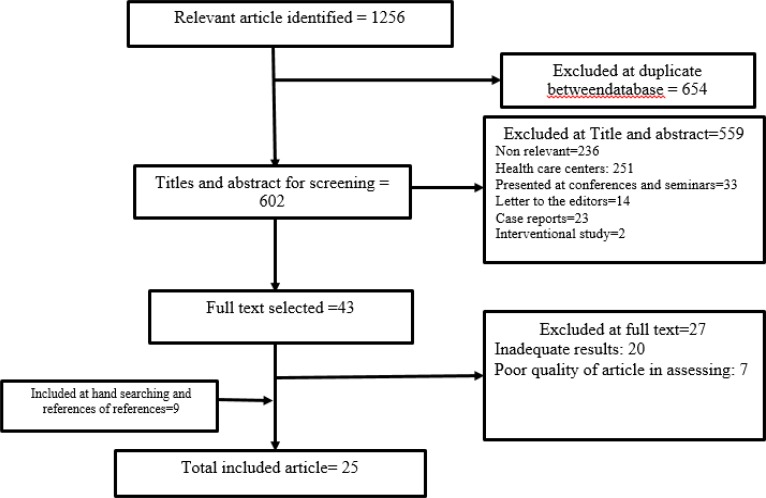
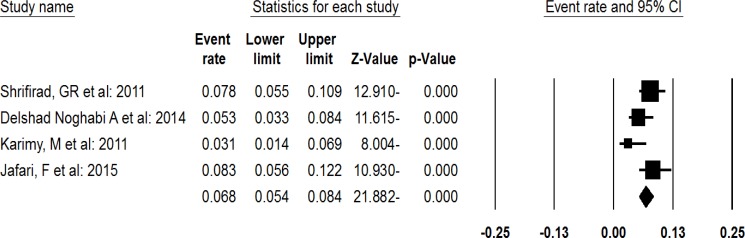
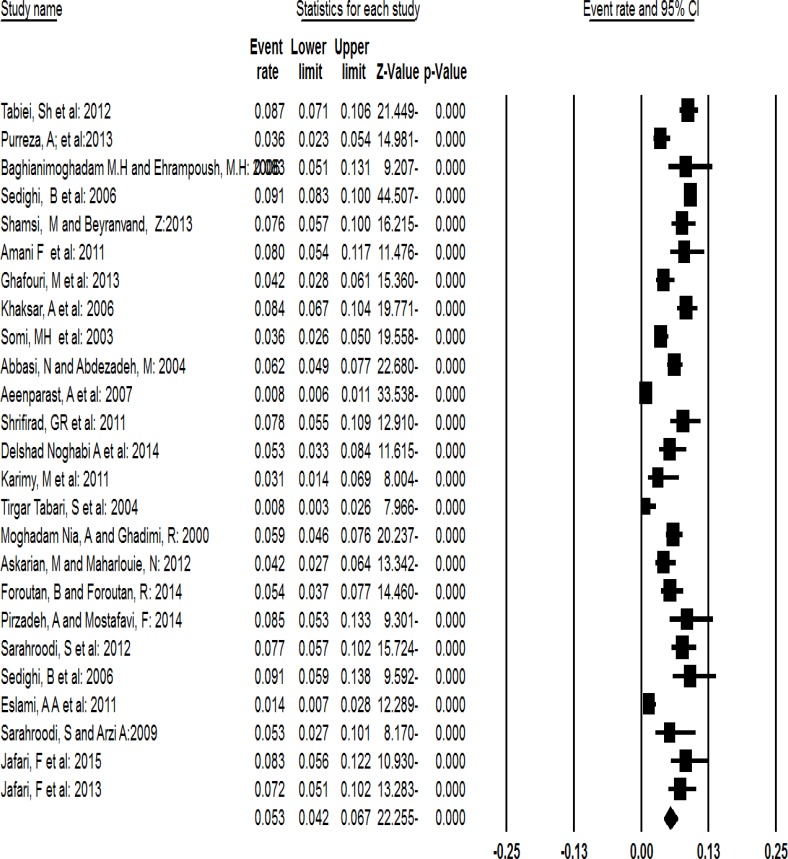
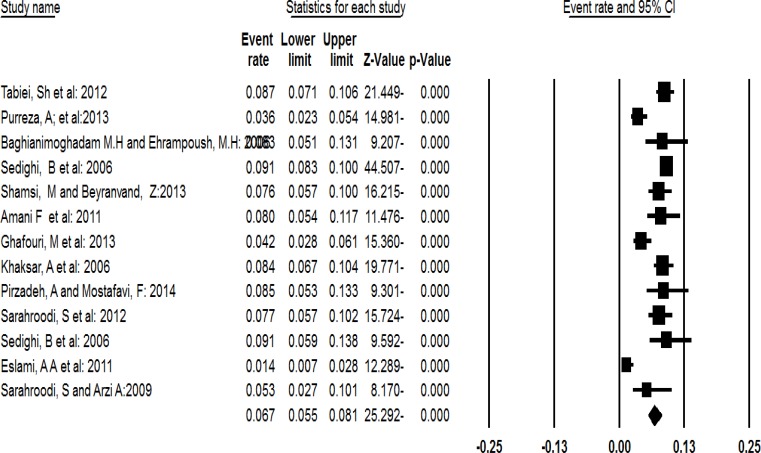
Out of 1256 articles, 25 articles entered to study. The overall prevalence of self-medication based on the random effect model was estimated to be 53% (95% CI, lowest= 42%, highest=67%). The prevalence of self-medication in students was 67% (95% CI, lowest=55%, highest=81%), in the household 36% (95% CI, lowest=17%, highest= 77%) and in the elderly people 68% (95% CI, lowest=54%, highest=84%). The most important cause of self-medication was mild symptoms of disease. The most important group of disease in which patients self-medicated was respiratory diseases and the most important group of medication was analgesics.
The results show a relatively higher prevalence of self-medication among the Iranian community setting as compared to other countries. Raising public awareness, culture building and control of physicians and pharmacies' performance can have beneficial effects in reduce of prevalence of self-medication.
如今,自我药疗在许多国家以及伊朗都是最常见的公共卫生问题之一。基于对自我药疗流行病学信息的需求,本研究旨在对伊朗社区环境中自我药疗的患病率及原因进行系统评价和荟萃分析。
通过在谷歌学术、PubMed、Scopus、Magiran、SID和IranMedex(2000年至2015年)中搜索以下关键词收集所需数据:药物治疗、自我药疗、非处方药、非处方、患病率、流行病学、病因、发生率和伊朗。为了估计总体自我药疗患病率,应用了计算机软件CMA:2。为了报告结果,采用了森林图。
在1256篇文章中,有25篇文章进入研究。基于随机效应模型估计的自我药疗总体患病率为53%(95%置信区间,最低=42%,最高=67%)。学生中的自我药疗患病率为67%(95%置信区间,最低=55%,最高=81%);家庭中的患病率为36%(95%置信区间,最低=17%,最高=77%);老年人中的患病率为68%(95%置信区间,最低=54%,最高=84%)。自我药疗的最重要原因是疾病症状较轻。患者自我药疗的最重要疾病类别是呼吸系统疾病,最重要的药物类别是镇痛药。
结果显示,与其他国家相比,伊朗社区环境中自我药疗的患病率相对较高。提高公众意识、文化建设以及对医生和药店行为的管控,可能对降低自我药疗患病率产生有益影响。