Du Zengyi, Yang Xiong, Lin Hai, Fang Delong, Du Guan, Xing Jie, Yang Huan, Zhu Xiyu, Wen Hai-Hu
Center for Superconducting Physics and Materials, National Laboratory of Solid State Microstructures and Department of Physics, Collaborative Innovation Center for Advanced Microstructures, Nanjing University, Nanjing 210093, China.
Nat Commun. 2016 Jan 29;7:10565. doi: 10.1038/ncomms10565.
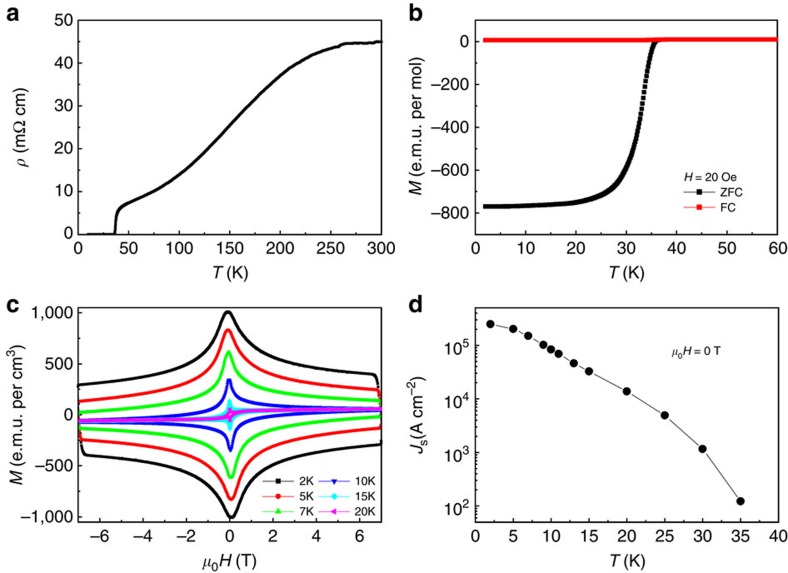
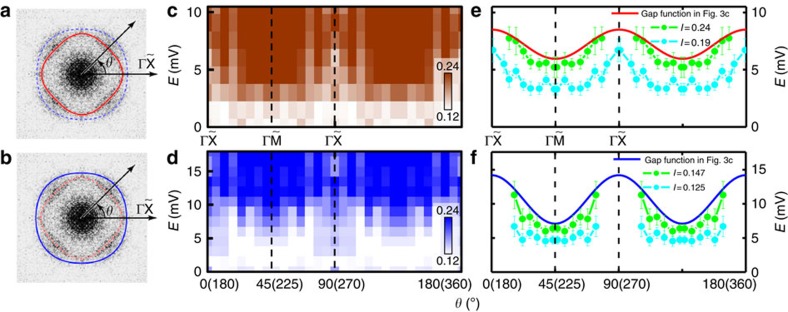
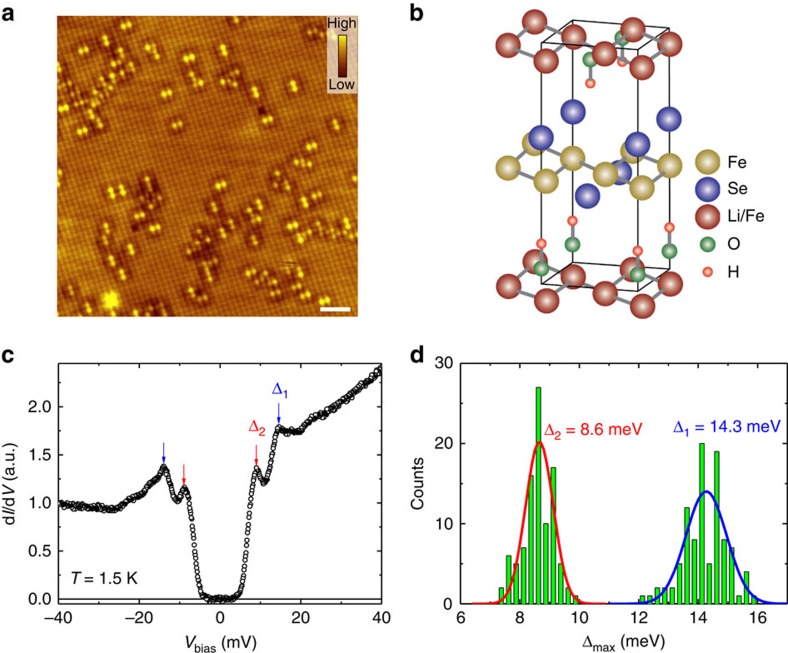
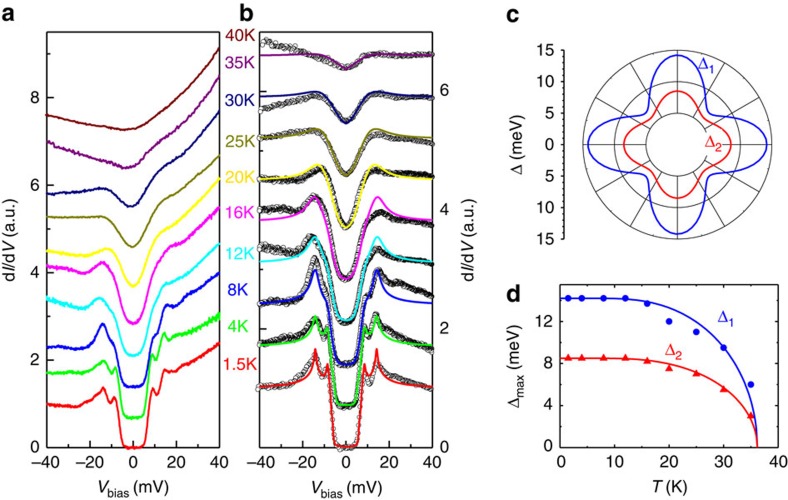
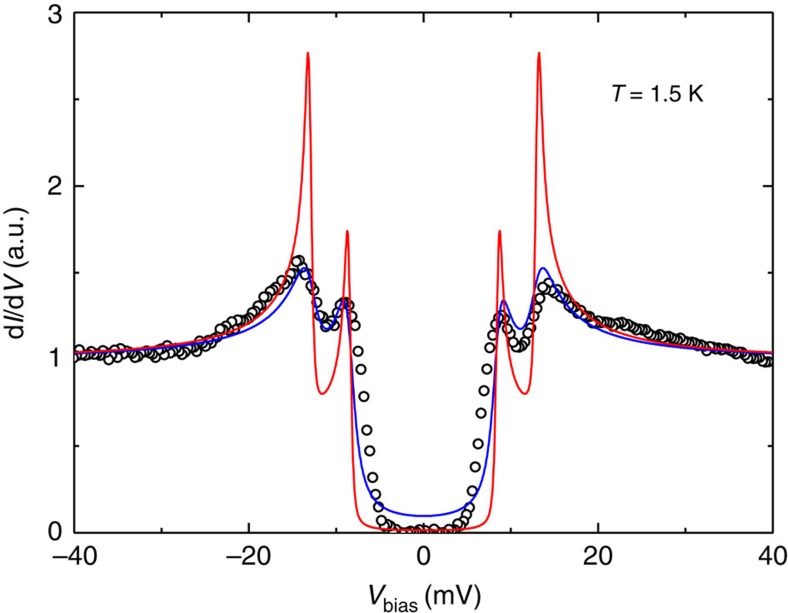
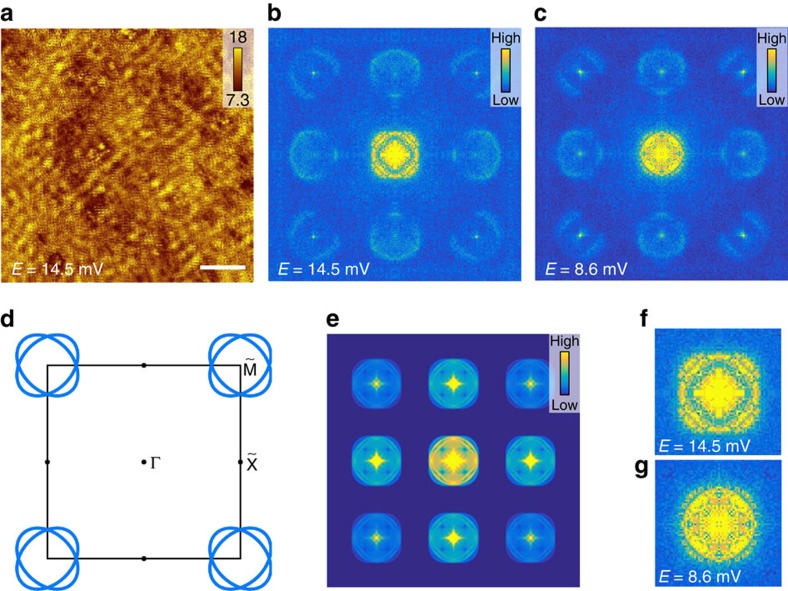
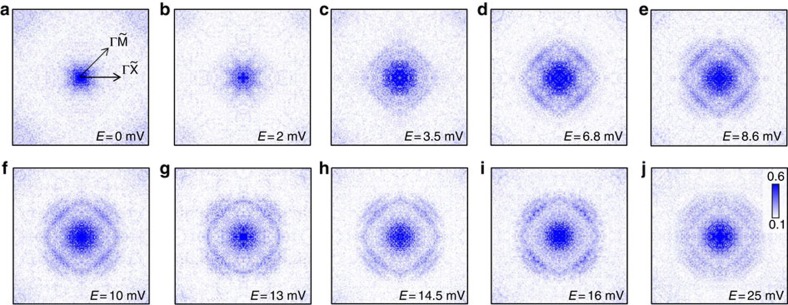
In the field of iron-based superconductors, one of the frontier studies is about the pairing mechanism. The recently discovered (Li(1-x)Fe(x))OHFeSe superconductor with the transition temperature of about 40 K provides a good platform to check the origin of double superconducting gaps and high transition temperature in the monolayer FeSe thin film. Here we report a scanning tunnelling spectroscopy study on the (Li(1-x)Fe(x))OHFeSe single crystals. The tunnelling spectrum mimics that of the monolayer FeSe thin film and shows double gaps at about 14.3 and 8.6 meV. Further analysis based on the quasiparticle interference allows us to rule out the d-wave gap, and for the first time assign the larger (smaller) gap to the outer (inner) Fermi pockets (after folding) associating with the dxy (dxz/dyz) orbitals, respectively. The gap ratio amounts to 8.7, which demonstrates the strong coupling mechanism in the present superconducting system.
在铁基超导体领域,前沿研究之一是关于配对机制。最近发现的转变温度约为40K的(Li(1 - x)Fe(x))OHFeSe超导体为研究单层FeSe薄膜中双超导能隙的起源和高转变温度提供了一个良好的平台。在此,我们报告了对(Li(1 - x)Fe(x))OHFeSe单晶的扫描隧道谱研究。隧道谱与单层FeSe薄膜的谱相似,在约14.3和8.6meV处显示出双能隙。基于准粒子干涉的进一步分析使我们能够排除d波能隙,并首次将较大(较小)的能隙分别归因于与dxy(dxz/dyz)轨道相关的(折叠后)外(内)费米面口袋。能隙比为8.7,这表明了当前超导体系中的强耦合机制。